75-ohm coaxial cable specification
RG11 Coaxial Cable: Built for Long Runs, Chosen for Signal Integrity
The thicker center conductor and lower attenuation make RG11 the cable to specify when distance matters. The stiffness, bend radius, and connector planning are the trade-offs that decide whether it performs as expected.
What RG11 Does Differently
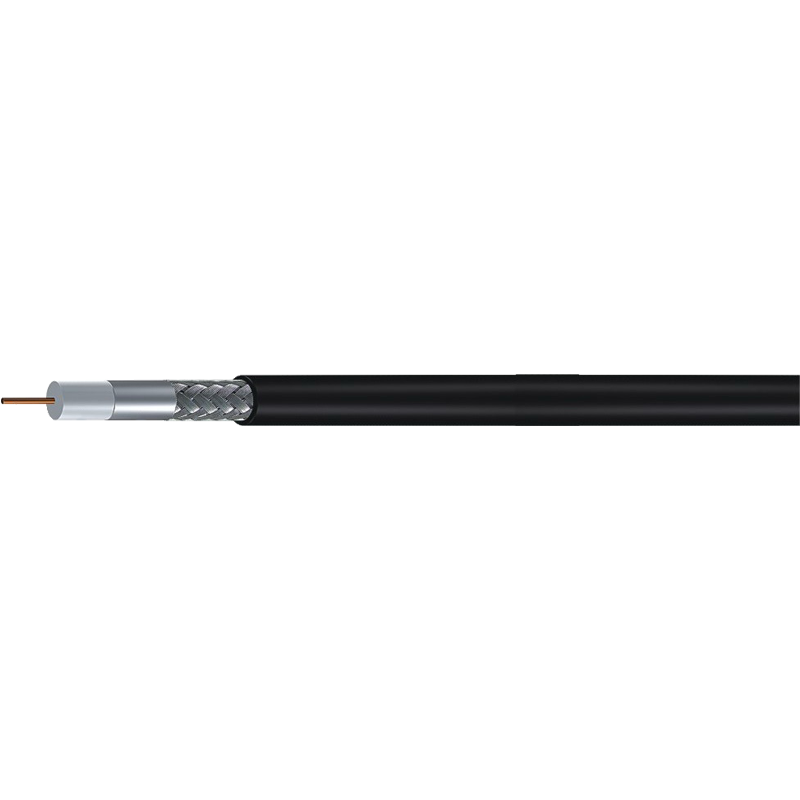
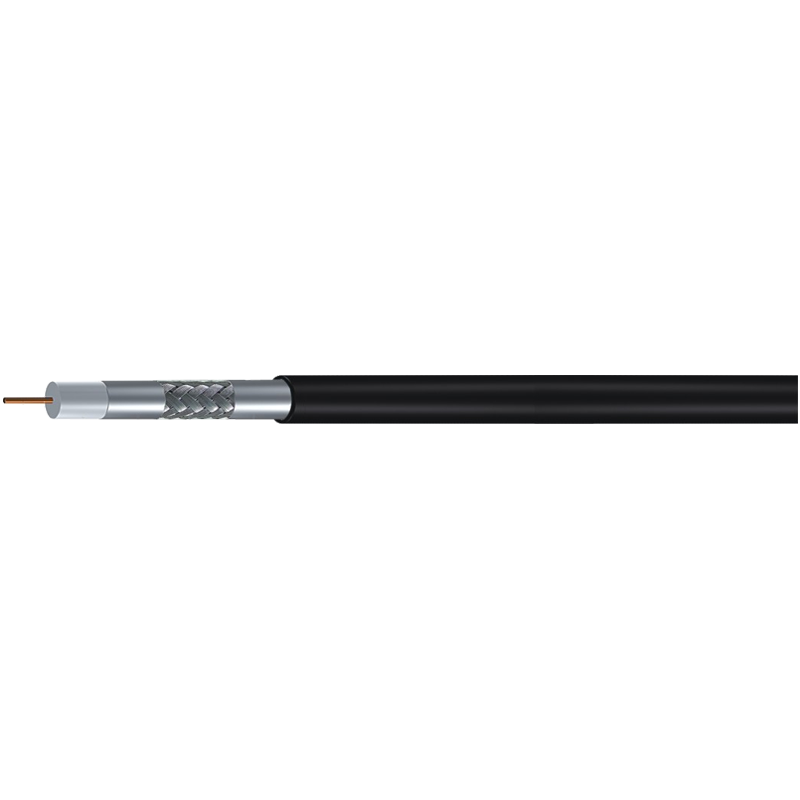
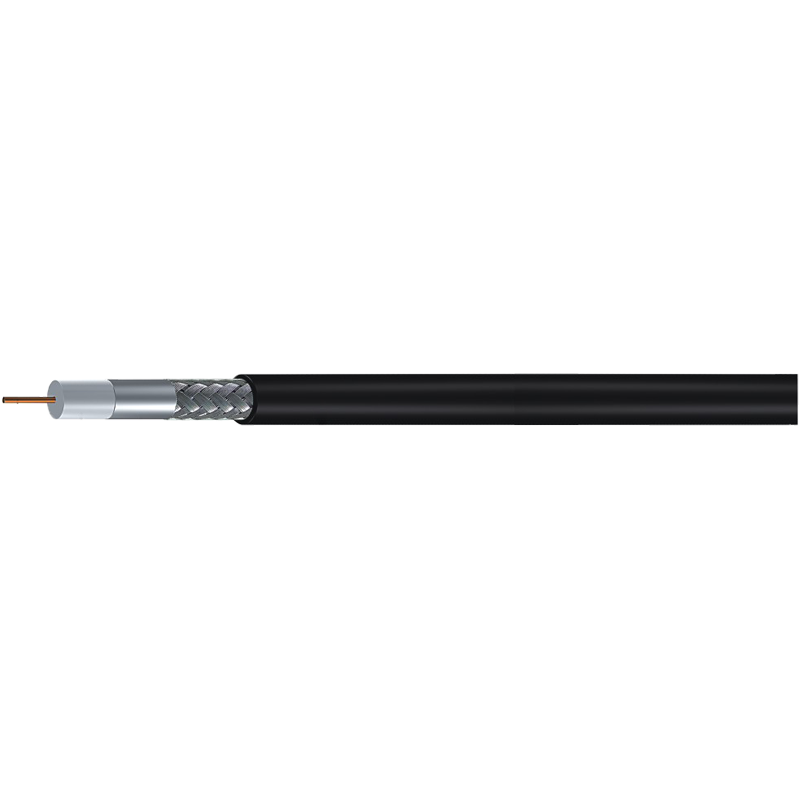
RG11 is a 75-ohm coaxial cable designed for a simple job: carrying a signal further with less loss. It achieves that with a larger center conductor, a thicker dielectric, and a heavier jacket than RG6. The measurable payoff is roughly one third less attenuation, which is exactly what a long drop or a high-frequency broadband service needs.
The short version
Choose RG11 for long runs and high-frequency plans. Choose RG6 for short drops where flexibility and connector size matter more than raw attenuation.
For a cable installer or integrator, the practical consequence is clear. At 750 MHz, a signal loses about 5.9 dB per 100 feet on RG6 but only about 3.9 dB on RG11. Over a 200-foot run, that difference is roughly 4 dB — the margin between a picture that holds and one that pixelates at the far end of the line.
| Parameter | RG6 | RG11 |
|---|---|---|
| Nominal impedance | 75 ohm | 75 ohm |
| Center conductor | 18 AWG, about 1.0 mm | 14 AWG, about 1.6 mm |
| Outer diameter | about 6.9 mm | about 10.3 mm |
| Attenuation at 100 MHz | about 2.5 dB / 100 ft | about 1.5 dB / 100 ft |
| Attenuation at 750 MHz | about 5.9 dB / 100 ft | about 3.9 dB / 100 ft |
| Attenuation at 1 GHz | about 6.9 dB / 100 ft | about 4.6 dB / 100 ft |
| Minimum bend radius | about 25 mm | about 50 mm |
The attenuation gap widens as frequency rises, which matters for DOCSIS 3.1 and satellite IF signals. If the service plan includes frequencies above 1 GHz, RG11 provides headroom that RG6 cannot.
When the Run Is Long Enough to Justify RG11
Reach for RG11 when the cable path goes beyond what RG6 can serve reliably. A useful planning rule is to consider RG11 for any run longer than roughly 150 feet, or any run that must carry frequencies above 1 GHz. For shorter paths, the extra stiffness buys nothing and makes installation harder.
Typical RG11 applications
- Riser feeds in multi-dwelling units, where one trunk cable serves many apartments
- Satellite or antenna runs from a roof location down to an equipment room
- Trunk segments in CATV, MATV, and SMATV distribution systems
- Long horizontal pulls across warehouse or campus infrastructure
Warning
RG11 is the wrong tool for short outlet drops. The cable diameter complicates termination, the connector often conflicts with standard wall plates, and the bend radius will not clear tight corners. RG6 covers those short paths with far less strain.
Shielding, Messenger, and Outdoor Variants
RG11 is available in several shield configurations, and the right choice depends more on the electromagnetic environment than on the price sheet.
Standard shield
One aluminum foil and one copper braid. A clean, economical structure for indoor trunk lines that stay away from motors, switchgear, and broadcast transmitters.
Trishield
Two aluminum foils and one copper braid. The extra foil layer improves coverage against signal ingress and makes the cable more forgiving during repeated handling.
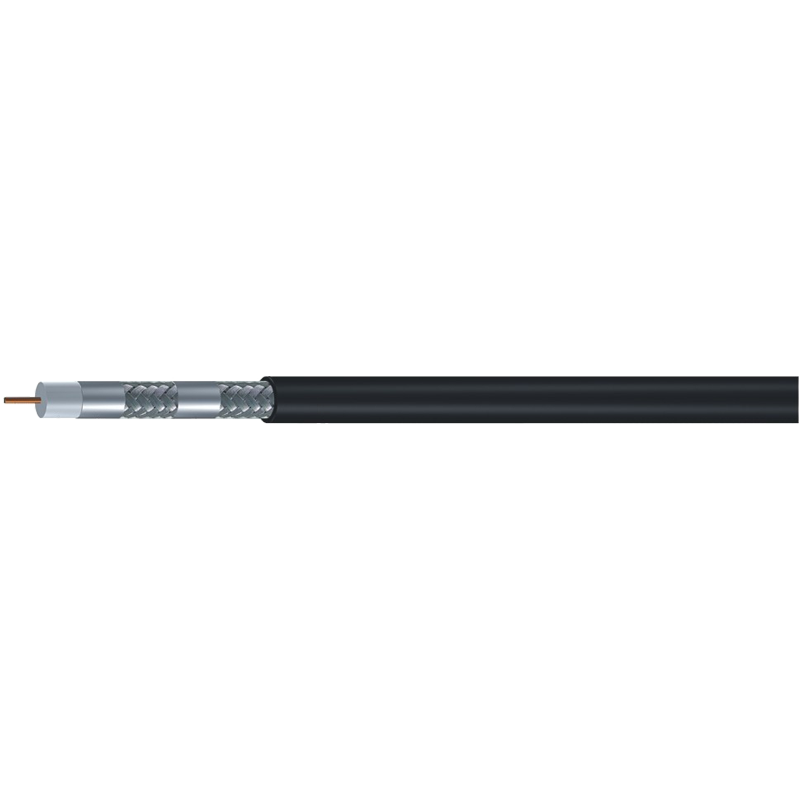
Quadshield
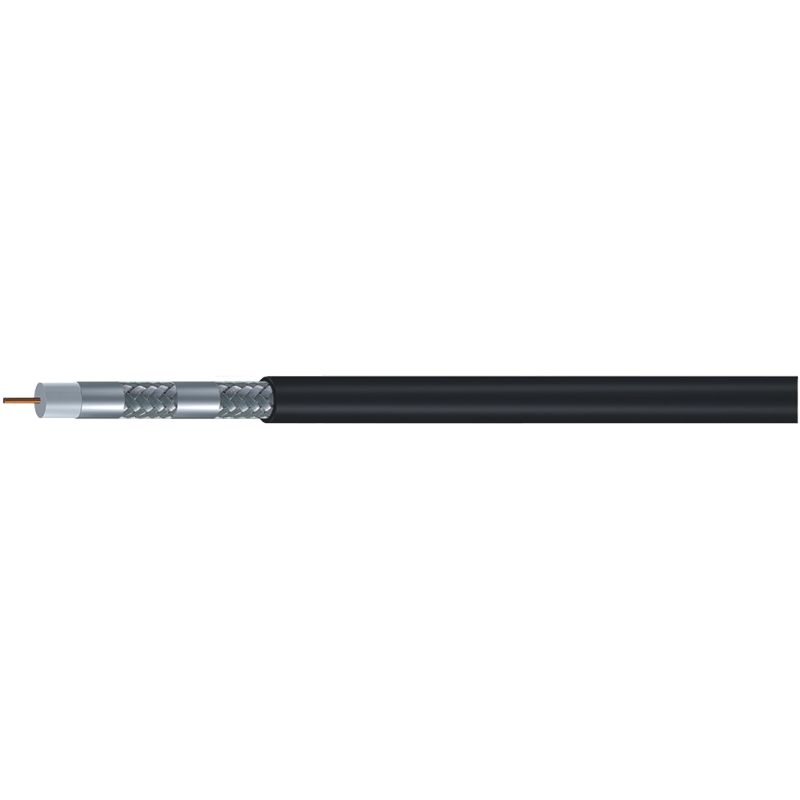
Two aluminum foils and two copper braids. The strongest variant, and the default for residential broadband and satellite systems where interference sources are common and the margin for error is thin.
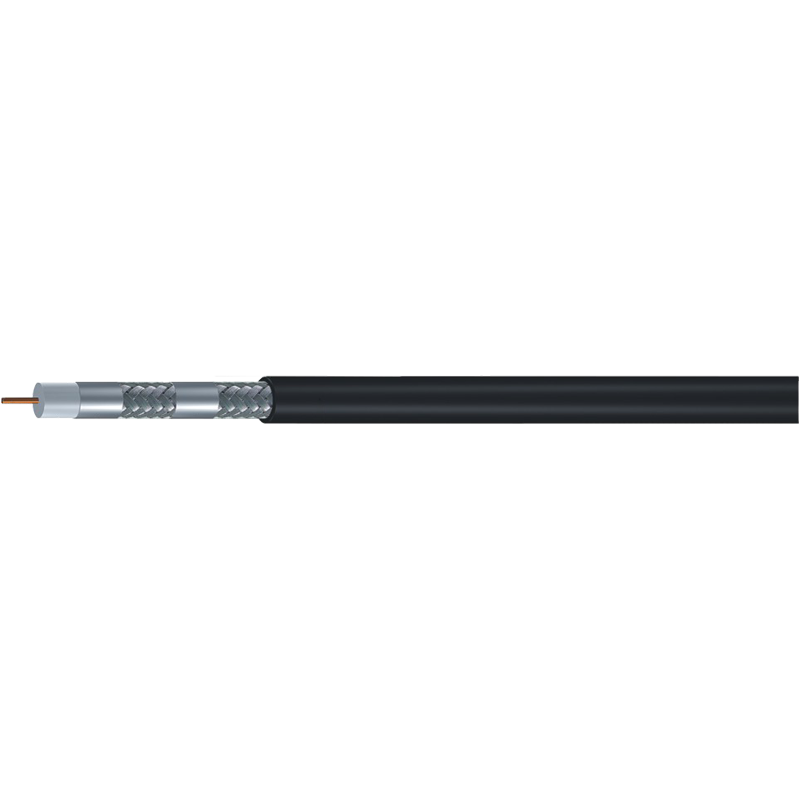 RG11 Quad-Shield Coaxial Cable for Reliable BroadbandWith dual foil and braid layers, this cable offers robust shielding for long, interference-prone runs, making it a solid choice for satellite and broadband installations.View Product →
A cable run is only as good as its weakest connection. RG11’s lower attenuation buys the distance; a mis-sized connector spends that budget in a single junction.
Messenger versions for aerial spans
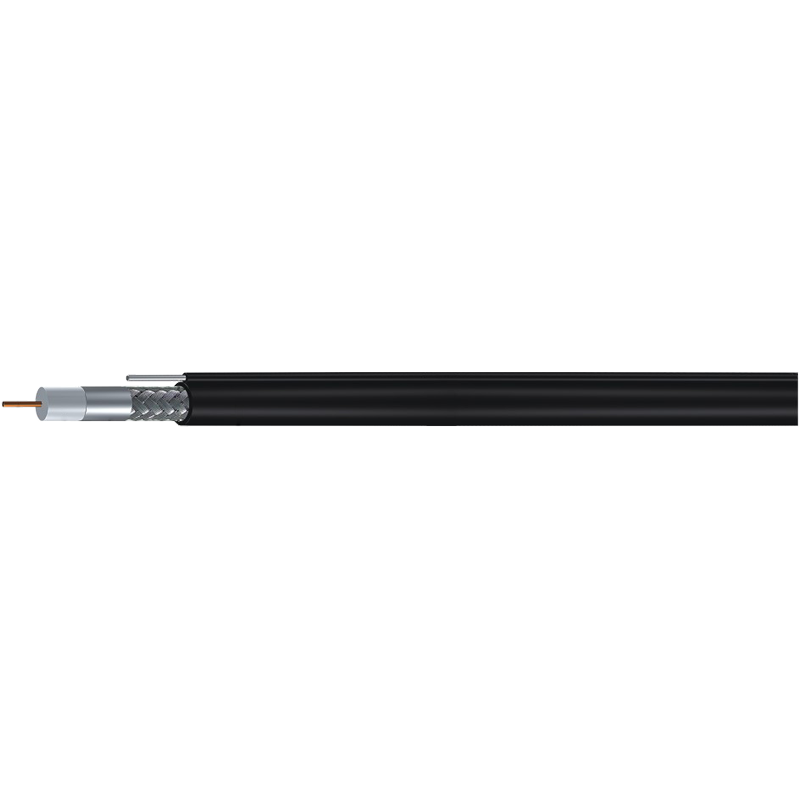
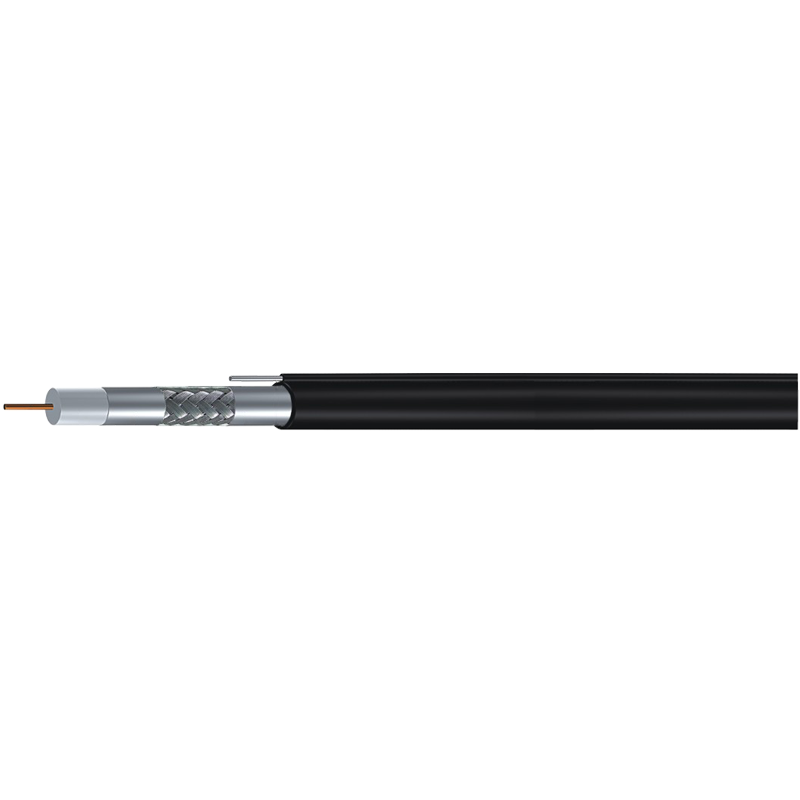
For overhead installations, RG11 is also available with a steel messenger integrated into the outer jacket. The messenger carries the mechanical load of the span, so the copper center conductor never has to support weight or absorb wind stress. This is the configuration to specify for pole drops and inter-building links.
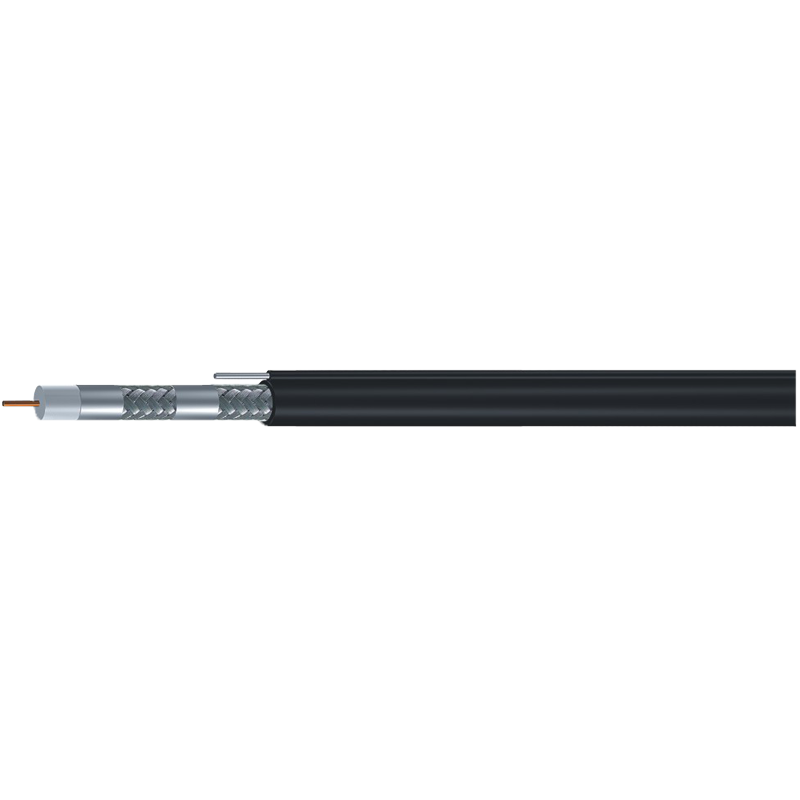
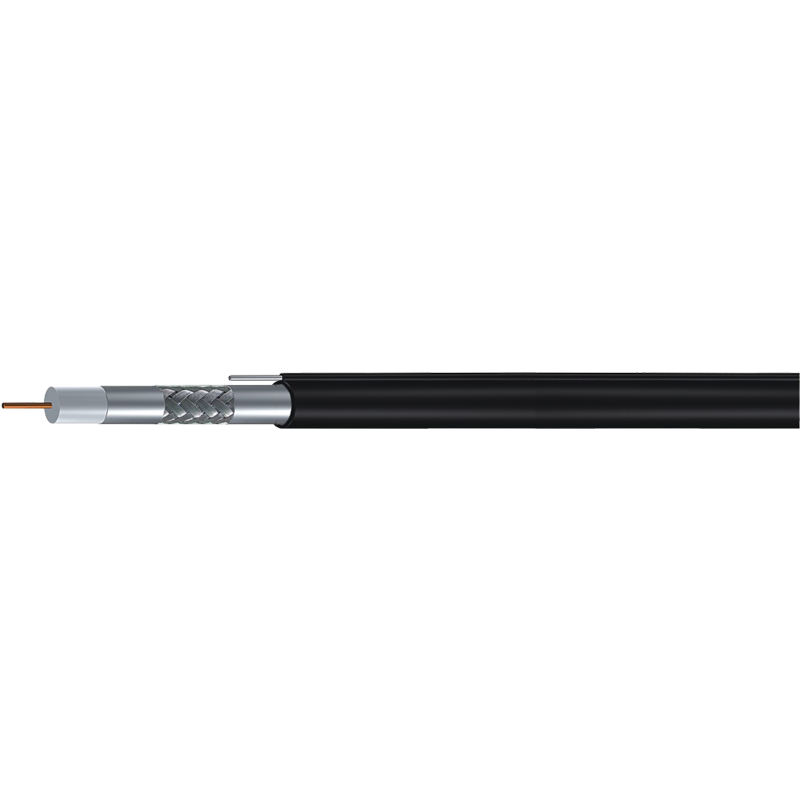 RG11 Tri-Shield Messenger Cable for Aerial SpansThis variant integrates a steel messenger to handle mechanical load, ideal for pole drops and inter-building links where overhead support is essential.View Product →
Success
Messenger-equipped RG11 is the lowest-risk answer for overhead routes. The steel wire keeps the cable’s electrical properties stable and prevents strain damage at the terminations through years of outdoor cycling.
Installation and Termination: Where RG11 Decisions Are Won or Lost
RG11 is less forgiving at the termination end than RG6. One undersized connector or one sharp bend can erase the cable’s attenuation advantage before the signal reaches the next device. The installation sequence matters more than with any smaller cable.
- Measure the complete path before cutting, including service loops, elevation changes, and the depth behind the equipment rack.
- Select compression connectors explicitly rated for RG11. The connector must match the cable’s outer diameter; universal crimp bodies usually under-compress.
- Strip the cable with a stripper set for RG11, leaving the center conductor protruding exactly the length the connector manufacturer specifies.
- Compress the connector with a tool approved for RG11. The click of the compression collar tells you the dielectric is seated.
- At the building entry point, fit a grounding block and bond it to the building ground so surges never reach the headend or the television.
Danger
Impedance mismatch is the silent failure in RG11 installations. A 50-ohm terminator, a crushed dielectric, or the wrong connector size creates reflections that turn a low-loss trunk into a frequency-selective fault.
Bend radius deserves its own planning line. Allow a minimum bend radius of about 50 mm in permanent installations — roughly twice RG6 — and increase that for repeated handling and pulling. The guide to the three ways to install coaxial cable walks through the practical routing options for walls, conduit, and aerial paths.
Solid Copper, Copper-Clad Steel, or Copper-Clad Aluminum
The center conductor is the most overlooked part of an RG11 specification. Much of the cable sold today uses copper-clad steel (CCS) or copper-clad aluminum (CCA) rather than solid copper, and that is not automatically a compromise. At television and broadband frequencies, the signal travels along the outer layer of the conductor, so a copper cladding over a strong core performs well while keeping the cable lighter and more affordable.
Solid copper is still available for projects that need the lowest DC resistance or maximum corrosion resistance, but it costs more and adds weight. In aerial runs without a messenger, solid-copper RG11 also sags more over time. Ask the supplier what the conductor actually is, then check the attenuation table for that exact construction before approving the quote.
Info
Compare datasheets before comparing prices. The guaranteed attenuation at 750 MHz and 1 GHz tells you far more about an RG11 cable than the conductor material or the word “copper” in the product description.
A Specification Checklist Before You Buy RG11
Project buyers who evaluate RG11 from different suppliers will find that a few points separate a serious quotation from the rest.
- Impedance: 75 ohm for CATV, MATV, satellite, and broadband; 50 ohm only for RF test and wireless feeder work
- Attenuation table: request the full published values at 100, 250, 500, 750, and 1,000 MHz
- Shield construction: standard, trishield, or quadshield, matched to the local electromagnetic environment
- Messenger: required for any aerial span longer than a single pole drop
- Jacket and flame rating: UV-stable PE jacket for outdoor paths; CMR or CMP rating for risers and plenums
- Certification: UL, ETL, or CE marks, plus CPR classification for European projects
- Packaging: continuous reel lengths, drum quality, and delivery condition for long pulls
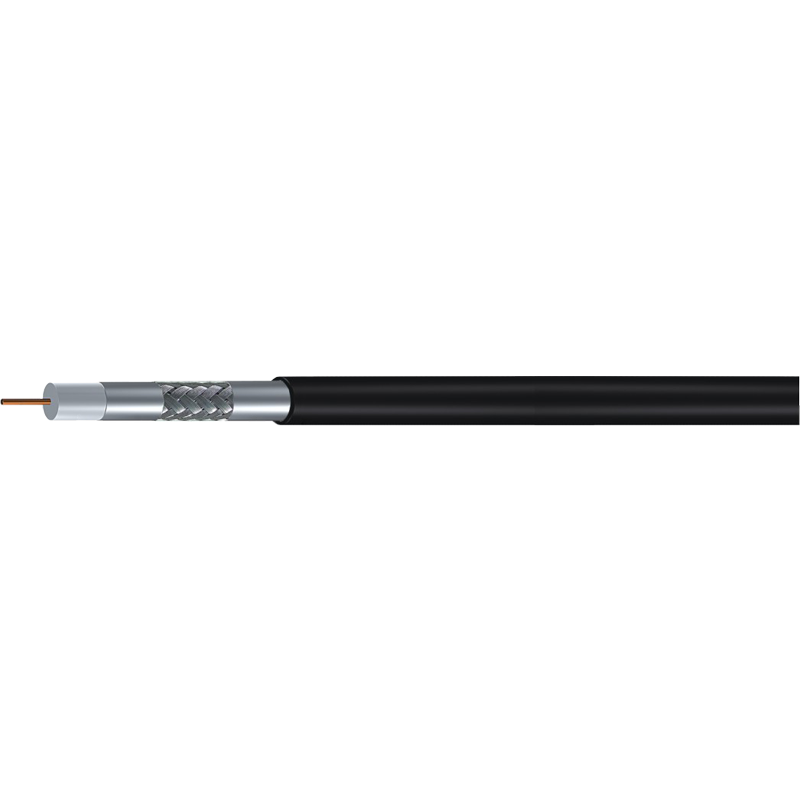
For indoor trunk and riser paths without unusual interference, standard shield RG11 keeps the bill of materials in check while maintaining solid headroom at common broadband frequencies.
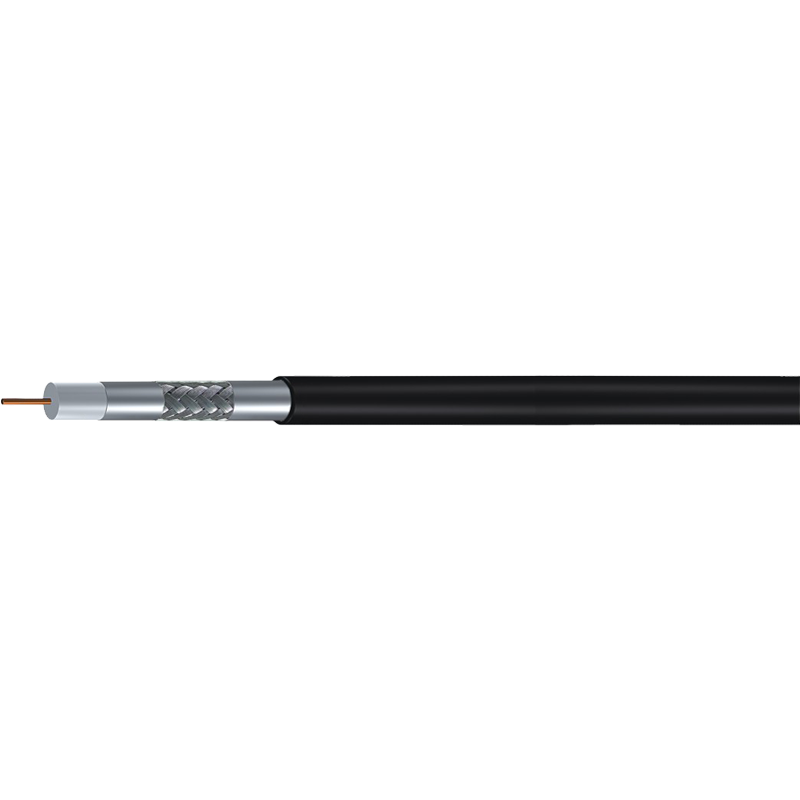
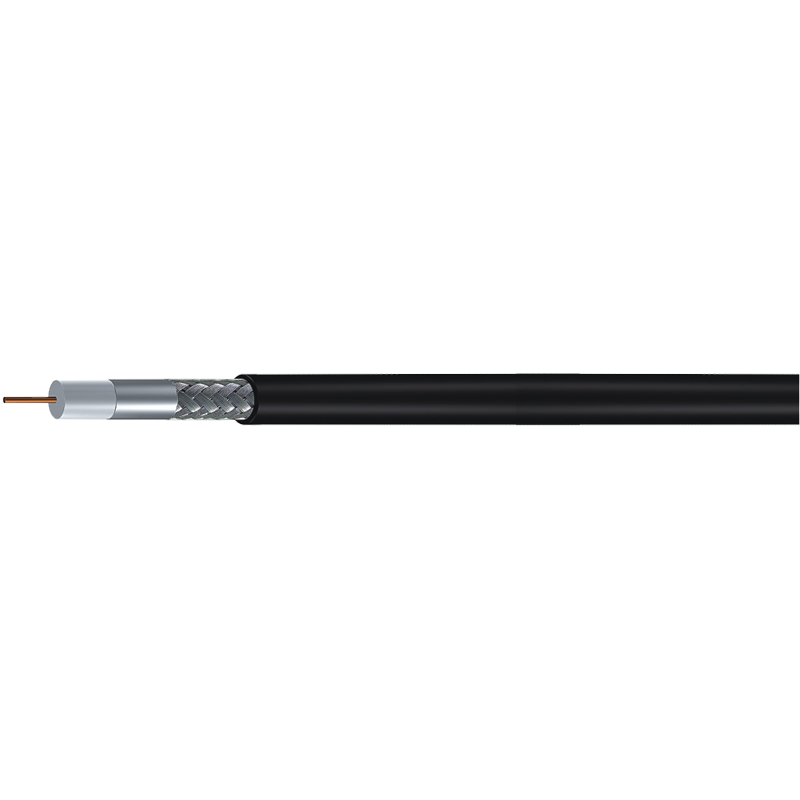 RG11 Standard Shield Cable for Indoor TrunksA cost-effective option for indoor risers without heavy interference, delivering dependable signal quality while keeping budget in check for common broadband frequencies.View Product →
RG11 is not the cable for every outlet, and it is not trying to be. It is the cable for runs where RG6 runs out of budget — physically and electrically. Specify it deliberately, plan the bends, verify the connectors, and the result is what the datasheet promised: a stable signal at the far end of a long line.