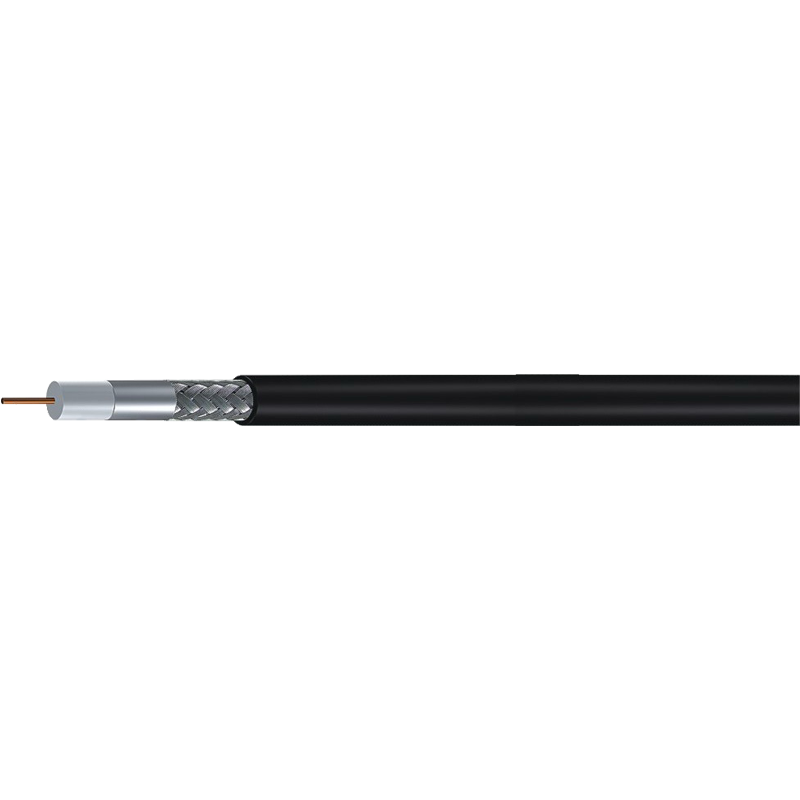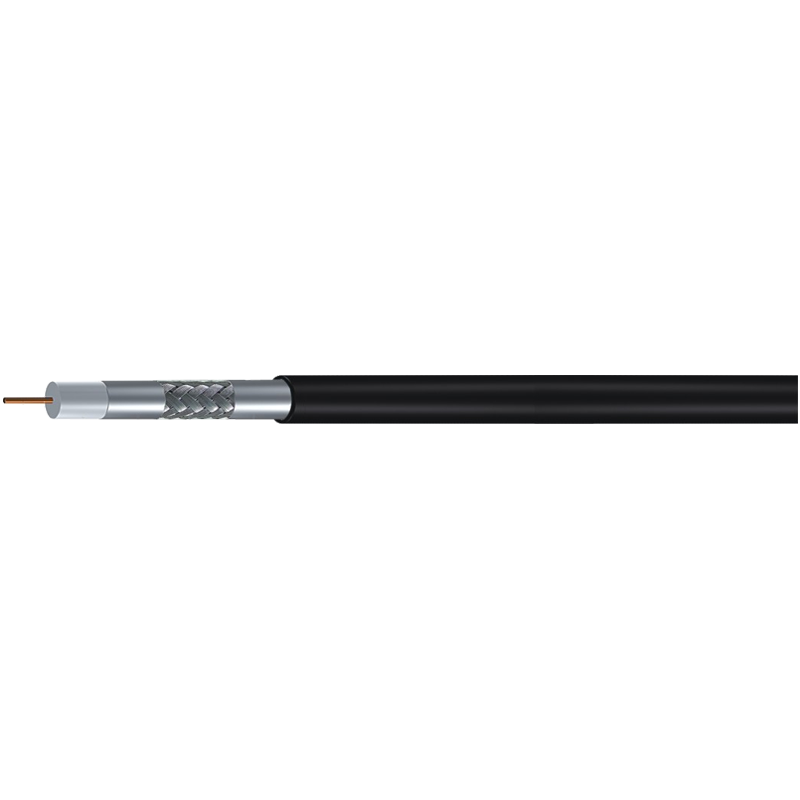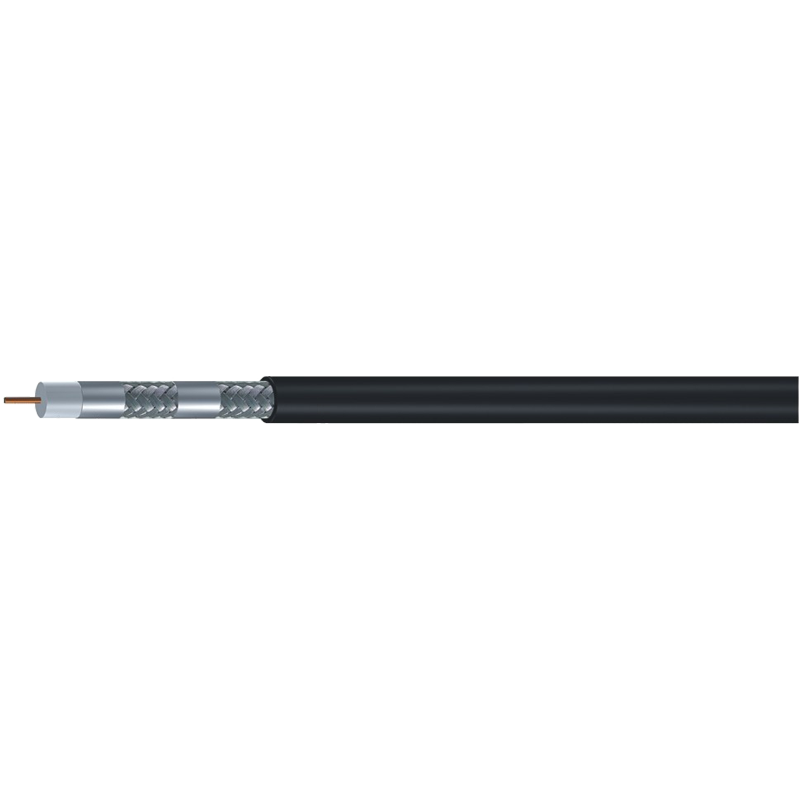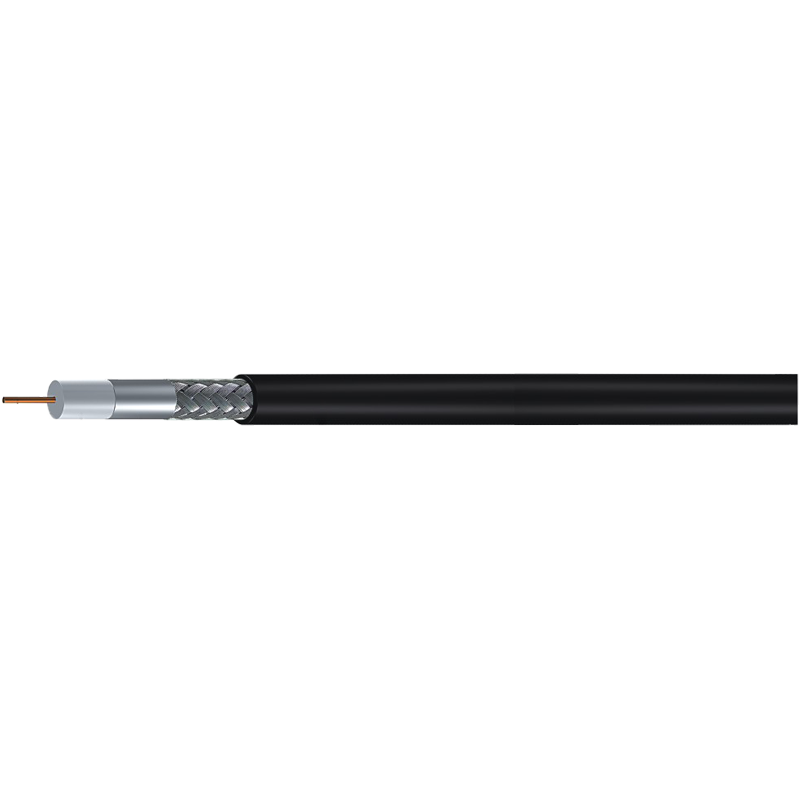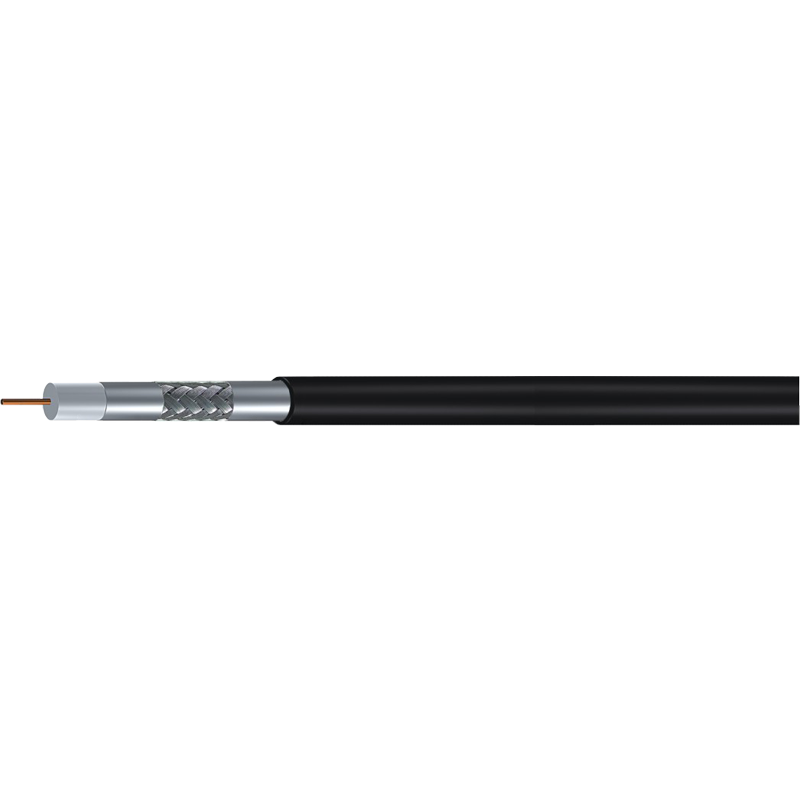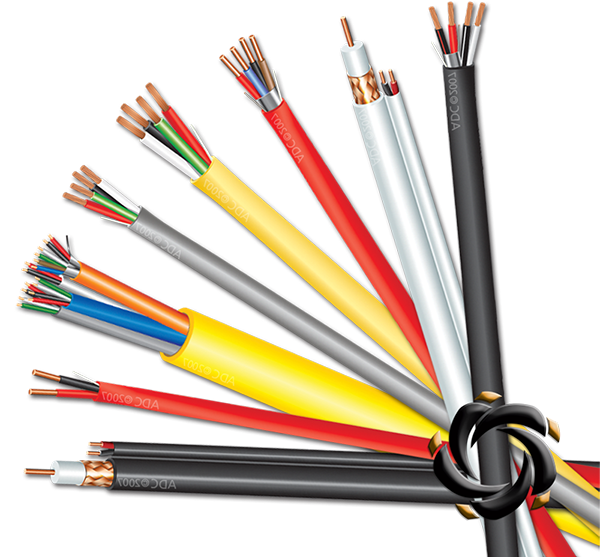
A fitter opens a box of 500 F-type connectors beside a distribution box, tries the first one on a cable end, and it slides on loosely. The cable jacket is printed RG6. The connectors were bought as RG6. Both are correct, and they still do not fit, because the name RG6 says nothing about how thick the cable actually is. A quad-shield version of the same type can sit 0.4 mm larger than a standard one, and 0.4 mm is a great deal when the fit tolerance is measured in tenths of a millimeter.
So here is the conclusion first: coaxial cable sizes are never one number. At minimum they are three separate measurements, outer diameter, center conductor diameter and characteristic impedance, plus a fourth item that most spec sheets never print, the shield construction sitting under the jacket. Wherever a listing offers only one dimension, the cost shows up later as returns, rework, and wasted connectors.
The Three Dimensions Behind Every Coaxial Cable Size
Split a coaxial cable by what it is bought for rather than by catalog order, and the measurements fall into three groups.
- Outer diameter (OD). This ranges from roughly 2.8 mm on RG174 to 10.3 mm on RG11. It decides whether a connector will crimp on properly, whether a clip will hold, and how many runs fit through a single conduit. It is the number installers measure with calipers, and the one spec sheets most often leave out.
- Center conductor diameter. Compare two common types and the gap is obvious: standard RG6 uses a solid conductor of about 1.0 mm, while RG11 uses about 1.6 mm. A thicker conductor lowers DC resistance and, at radio frequencies, lowers attenuation, which is exactly why RG11 can carry a signal across a hundred meters while RG59 starts to struggle around forty.
- Characteristic impedance. The 50 ohm and 75 ohm values are electrical dimensions produced by the ratio between conductor diameter and dielectric diameter. They are invisible, and they matter more to signal quality than any caliper reading.
That leaves the fourth variable, shield count, which changes the physical size of an otherwise identical cable type.
Common Coaxial Cable Sizes at a Glance
The table below lines up outer diameter, conductor and typical duty for the types that appear most often in quotations and purchase orders. Treat every figure as a nominal value inside a range rather than a fixed constant.
| Type | Nominal OD | Center conductor | Impedance | Typical duty |
|---|---|---|---|---|
| RG174 | approx. 2.8 mm | 0.48 mm stranded | 50 ohm | Patch leads, test cables, GPS |
| RG58 | approx. 5.0 mm | 0.9 mm stranded | 50 ohm | Radio, test benches, short RF runs |
| RG59 | approx. 6.1 mm | 0.6 to 0.8 mm | 75 ohm | Analogue CCTV, short video links |
| RG6 | approx. 6.9 mm | 1.0 mm (18 AWG) | 75 ohm | CATV, satellite, broadband distribution |
| RG11 | approx. 10.3 mm | 1.6 mm (14 AWG) | 75 ohm | Long drops, aerial trunks |
| RG213 | approx. 10.3 mm | 2.26 mm stranded | 50 ohm | RF, higher power, base stations |
| LMR200 | approx. 4.9 mm | 1.12 mm | 50 ohm | Short RF runs, low-loss jumpers |
| LMR400 | approx. 10.3 mm | 2.74 mm | 50 ohm | Antenna feeders, wireless networks |
Matching by outer diameter alone is an incomplete rule. A 50 ohm LMR400 and a 75 ohm RG11 both measure close to 10.3 mm across, and they are still not interchangeable on any system.
50 Ohm and 75 Ohm: Electrical Size, Not Physical Size
Impedance is the one coaxial cable size nobody can measure with a tool. It comes out of the relationship between conductor diameter and the dielectric around it, and the industry settled on two values because they optimize different things. The 75 ohm family minimizes dielectric loss, which is why it dominates television, satellite and broadband distribution. The 50 ohm family balances power handling against loss, which is why wireless, test and RF links are built on it.
The practical consequence is very concrete. Feed a 75 ohm cable into a 50 ohm port and you will usually see poor return loss, ripple across the band, and warmth at the joint, yet an F connector or a BNC will still thread on without complaint. That silent mismatch does not fail loudly on day one; it simply eats the margin the system was supposed to keep.
Where two adjacent sizes both appear workable, the decision order, application first, then impedance, then diameter and shield, is set out in a practical guide to choosing coaxial cable.
Low-Loss Numbering: When Cable Diameter Becomes an Engineering Trade-Off
The LMR naming system is a useful shorthand rather than a precise dimension. LMR200 measures roughly 4.9 mm across, and LMR400 measures roughly 10.3 mm, which places it close to RG11 and RG213. The number tracks rising diameter, and rising diameter buys lower attenuation. As a rough rule, on a 30 meter run at 900 MHz, an RG58-class cable can lose several more decibels than an LMR400-class cable, and that margin is often the difference between a link that works and a link that barely lights up.
The trade is real: thicker cable means heavier reels, larger bend radii, bigger holes to drill and stiffer connector work. Where signal margin is generous, the thinner size is the smarter engineering choice, and the only thing standing in the way is a quotation that never compares the two.
Same Type, Different Diameter: Standard, Tri-Shield and Quad-Shield
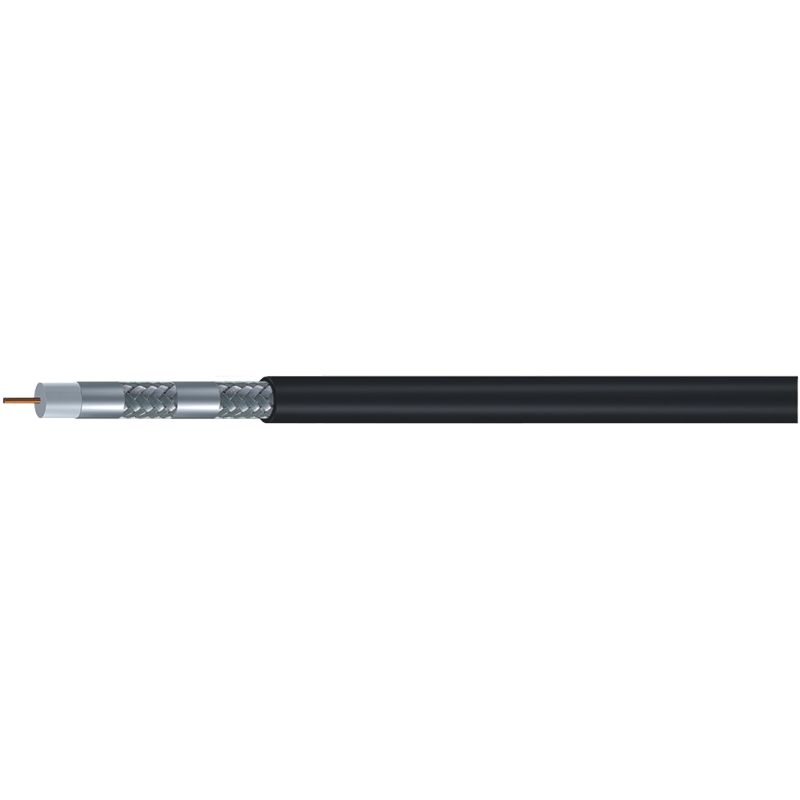
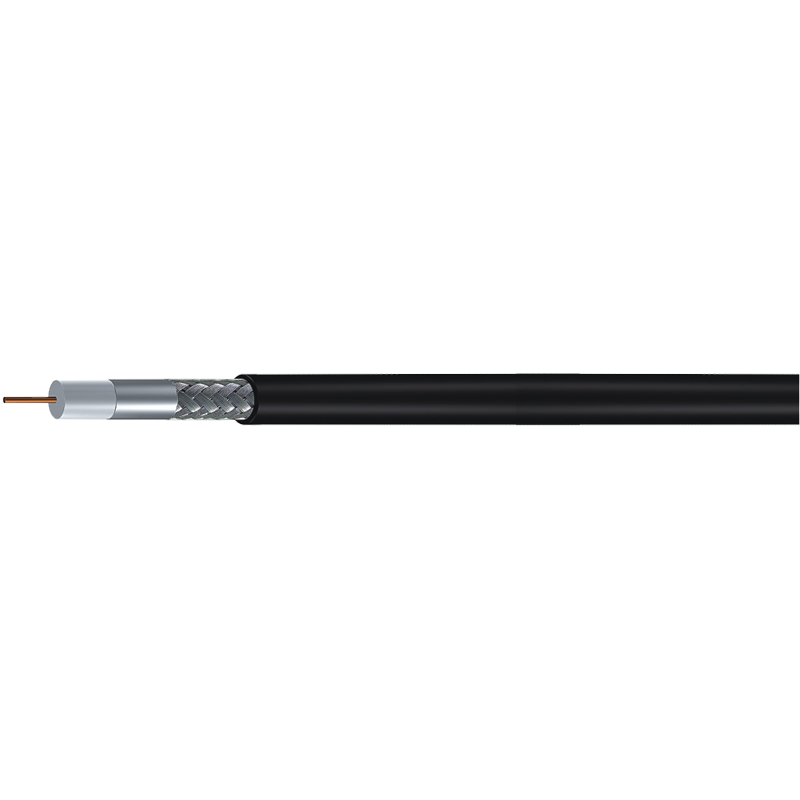
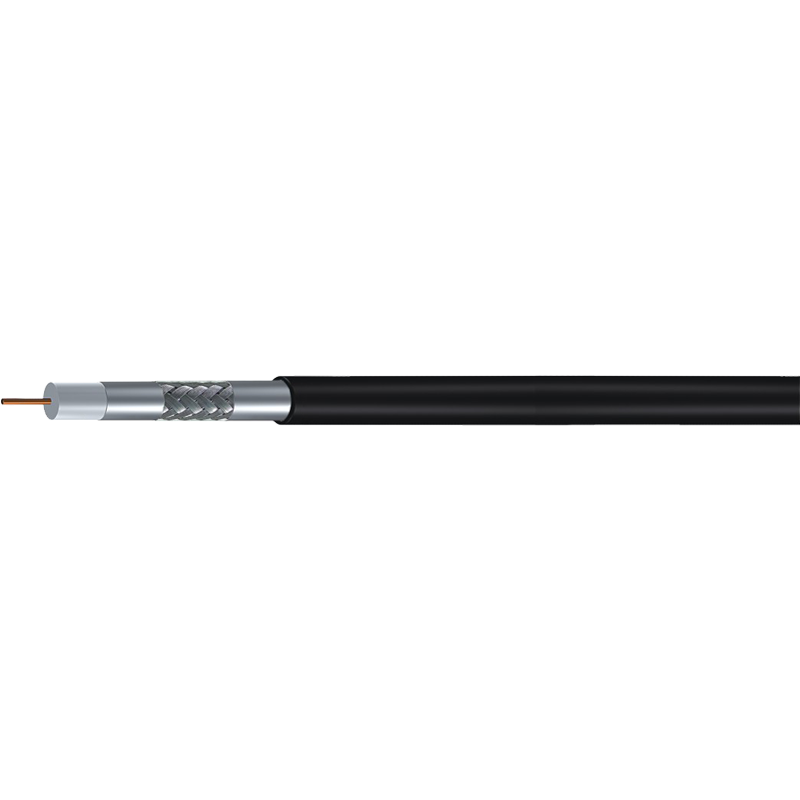
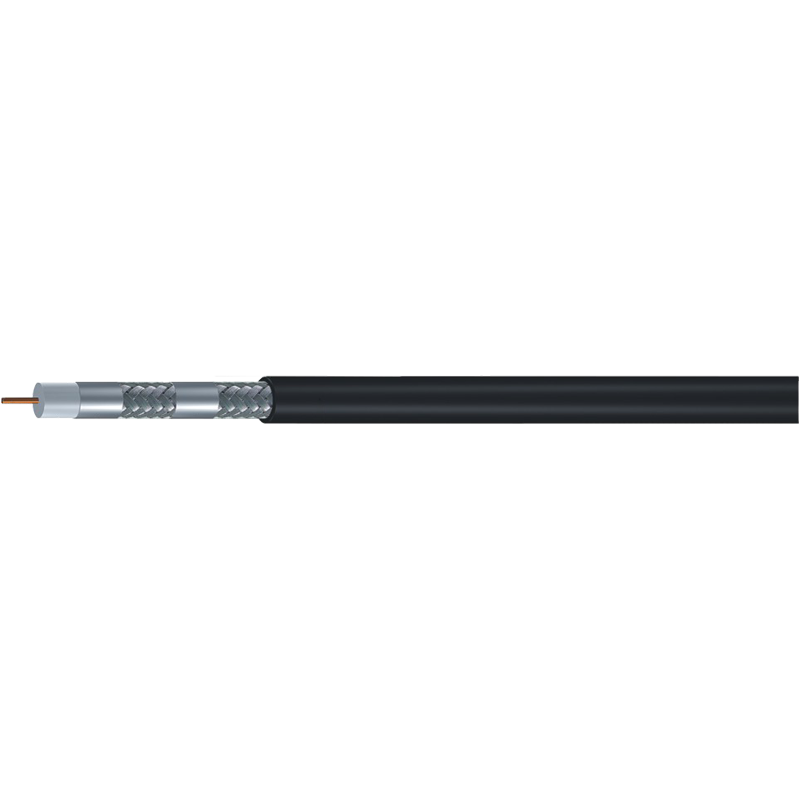
RG6 describes a 75 ohm family, not one fixed thickness. A standard shield build typically measures around 6.8 to 6.9 mm across. A tri-shield adds another layer over foil and braid and pushes the figure to about 7.0 mm. A quad-shield stacks two foils and two braids and usually lands at 7.3 mm or slightly more. Fractions of a millimeter look harmless on a data sheet and behave very differently in the field.
Screw-on connectors tolerate the spread because the grip comes from the nut. Crimp and compression connectors are machined to one specific outer diameter, so a bag bought for standard cable will not close over a quad-shield end, and the whole bag goes to waste.
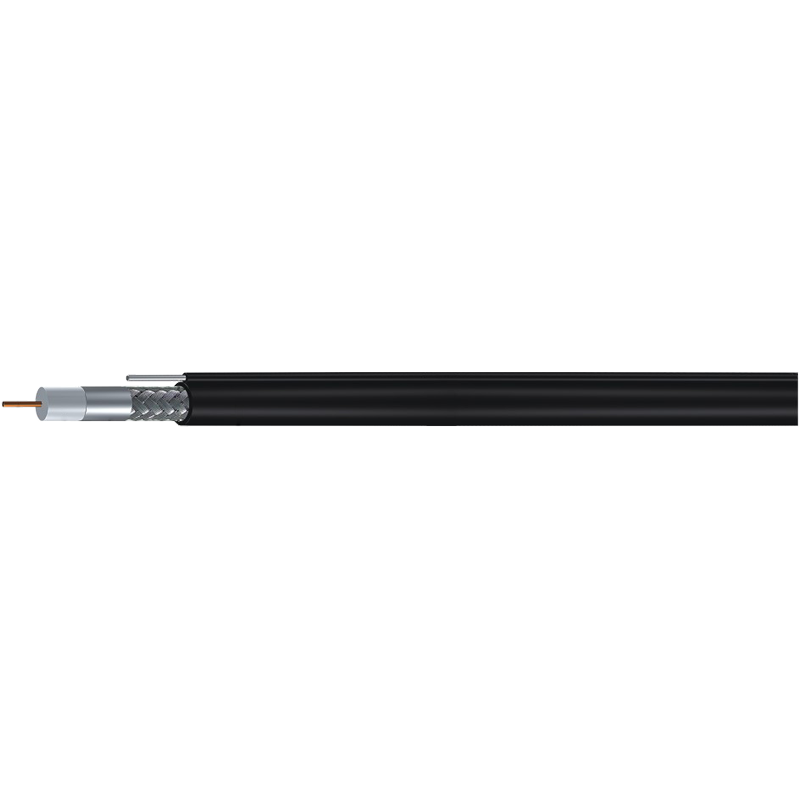
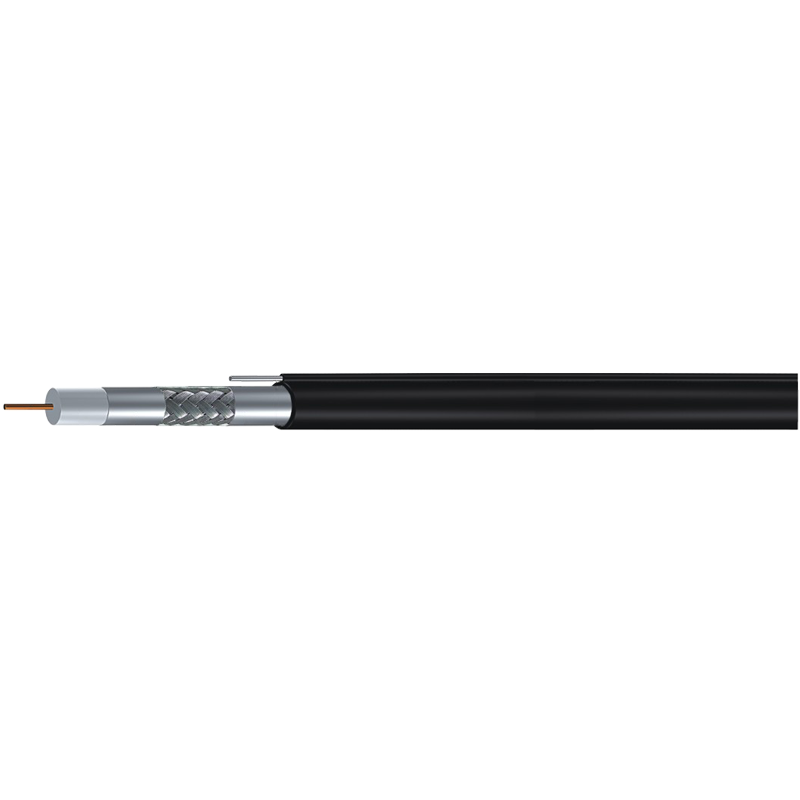
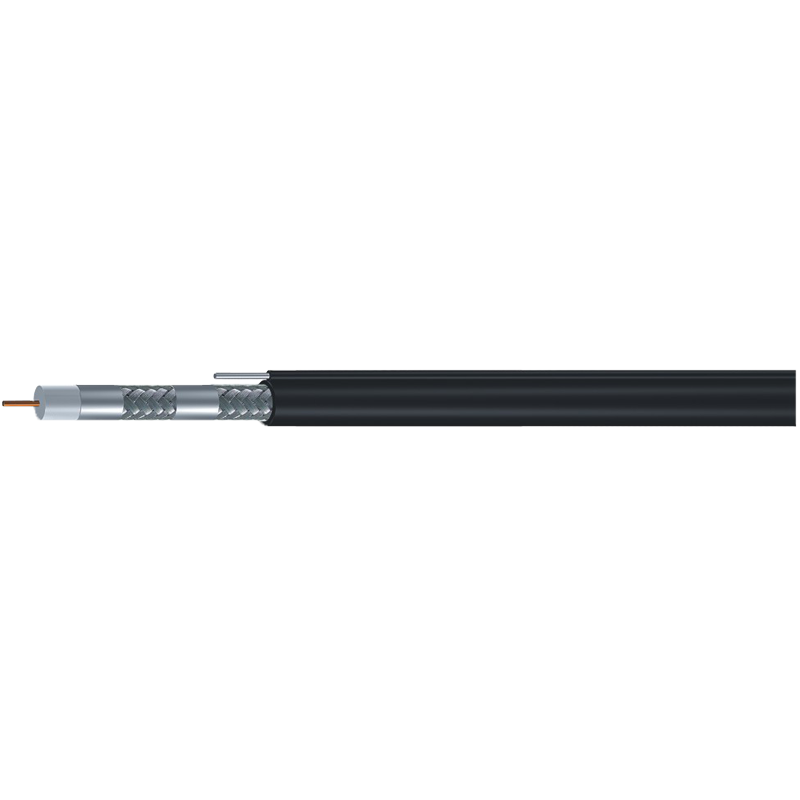
Aerial construction adds one more dimension. On a messenger version the steel strand is extruded outside the jacket, so the overall width grows by roughly 4 to 6 mm beyond the round cable. Clips, lashing wire and conduit space all have to be planned against that total width, not against the cable diameter.
Where a four-layer screen is required, the RG6 quad-shield build is the version normally produced for that duty.
CCTV Composite Cable: Two Cables Inside One Jacket
A power-plus-video construction packs one coaxial line and two power conductors under a single jacket so a camera can be fed from the head end. The cross section is oval rather than round, and that changes the sizing exercise. Clips, glands and drilled entries must be specified against the combined width, not against the 6.1 mm video element alone.
Power-plus-coax cable sold as RG59 with power is not dimensionally identical between suppliers. Power conductor size and jacket wall thickness vary, so a bag of glands that fits one maker's reel may be too tight on another's. Ask for the actual cross-section drawing before the order is confirmed.
What to Confirm Before the Purchase Order Goes Out
The cheapest step in procurement is asking a supplier to quote numbers instead of model names. Each item below should have a written answer before the order is placed.
- Outer diameter with tolerance, not simply the type name. A tolerance band of plus or minus 0.1 mm is normal and should appear on the quotation.
- Connector interface, named together with the cable OD it is designed to grip, so both sides of the joint are verified together.
- Center conductor gauge and material, and whether it is solid or stranded. Copper, copper-clad steel and copper-clad aluminium behave differently at the same nominal gauge.
- Impedance and frequency plan, stated as 50 ohm or 75 ohm in writing, together with the highest frequency the link will carry.
- Shield count and messenger option, since these determine the real diameter and the clearance needed for overhead work.
- Certification and test documentation for the destination market, which may mean UL, ETL, CE, CPR, RoHS or REACH.
On construction and utility projects, one missing CPR or UL file can stop a shipment at the port, while a tenth of a millimeter of extra jacket is a minor annoyance. Dimensional queries are easy to close; compliance queries are not.
When in doubt, buy against the measured outer diameter rather than the type name, order connectors together with the cable, and insist that every figure on the quotation carries a tolerance. That way procurement turns on values a caliper can confirm, instead of on a label everyone assumes means the same thing.
CommSpace Cable has manufactured 50 ohm and 75 ohm coaxial cable in Zhejiang since 2001, with builds covering RG6, RG11, RG59, trunk and CCTV composite constructions, and holds UL, ETL, JIS, CE, CPR, RoHS and REACH approvals for shipments to more than 90 countries.