Coaxial Cable for Satellite TV: What Decides Whether the Picture Holds
A 45 m roof drop, one under-specified shield and a customer who calls back three weeks later. Most satellite TV faults are decided long before the receiver is switched on.
The job looked simple on paper: a Ku-band dish on a coastal roof, 45 m of cable down to a cabinet, one receiver. Bench testing in dry weather was clean. Two weeks later, after rain and a new mobile mast went live nearby, half the transponders dropped below the receiver's lock threshold. Nothing in the chain was faulty. The cable had been bought on price per metre instead of on the three properties that decide this application: impedance, shielding and DC resistance.
The conclusion comes first. For almost every satellite TV installation, the right starting point is a 75-ohm RG6-class cable with a foil-plus-braid shield. Step up to RG11 when the run is long or the cable is supported on an aerial span. Treat centre-conductor material, shield coverage and connector quality as specification items rather than as details. Fifty-ohm cable, foil-only shielding and copper-clad steel conductors on long powered runs account for a large share of repeat call-outs.
Why 75 Ohms Is a Base Requirement, Not a Preference
A satellite system moves two things through one conductor. The LNB converts the Ku-band downlink into an intermediate frequency (IF) of roughly 950 MHz to 2150 MHz. In the other direction, the receiver sends DC voltage and control tones up the same cable to select polarity, band and switch position. Every component in that chain, from LNB to wall plate, is standardised at 75 ohms.
A 50-ohm cable, which is the correct choice for radio and antenna feeder work, creates a mismatch at each junction. Energy reflects instead of transferring, return loss degrades and ripple appears across the band. At the customer end the symptoms are specific and easy to misread as a receiver fault.
- Signal strength reads high while quality or MER stays low.
- Some transponders lock reliably while others fail on the same satellite.
- Channel changes stall or repeat, because the 22 kHz control tone arrives distorted.
Impedance problems rarely produce a dead system. They produce an installation that performs in good weather and fails at the margins, which is far more expensive to service.
Shielding: The Part That Decides Whether the Picture Survives
In the satellite IF band the cable behaves as a carrier and as an antenna at the same time. Every gap in the shield is a door: mobile traffic, Wi-Fi and broadcast signals get in, and the IF band leaks out. Shield coverage, more than overall diameter, controls how much passes through.
Three shield tiers and what they are for
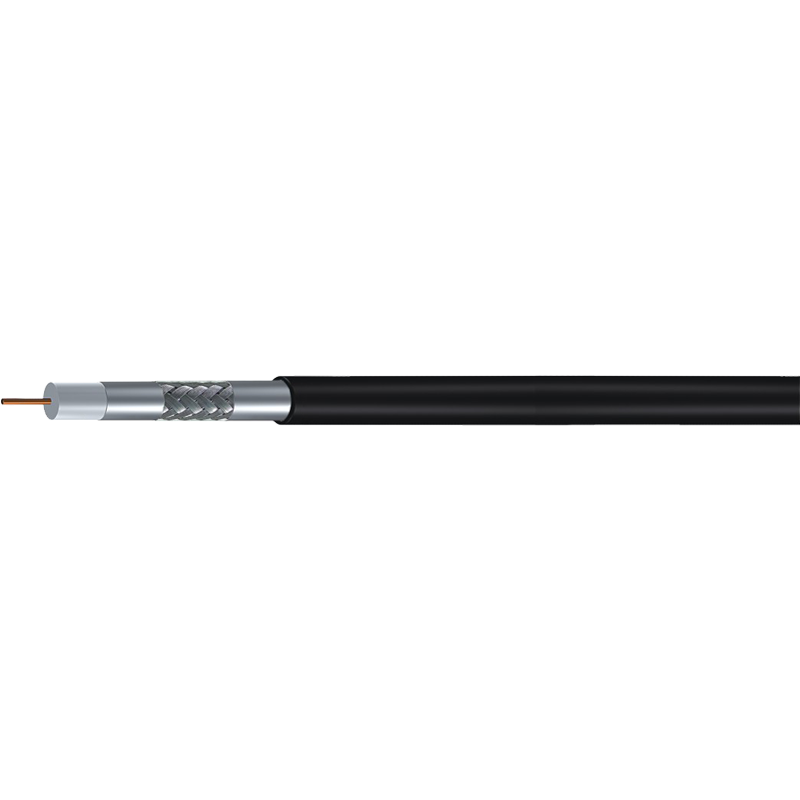
- Standard shield: one foil plus a braid at roughly 40 to 60 percent coverage. Adequate for short indoor runs in a quiet RF environment.
- Trishield: foil and braid layers with higher coverage, typically 60 to 77 percent. The usual choice for dish-to-receiver drops.
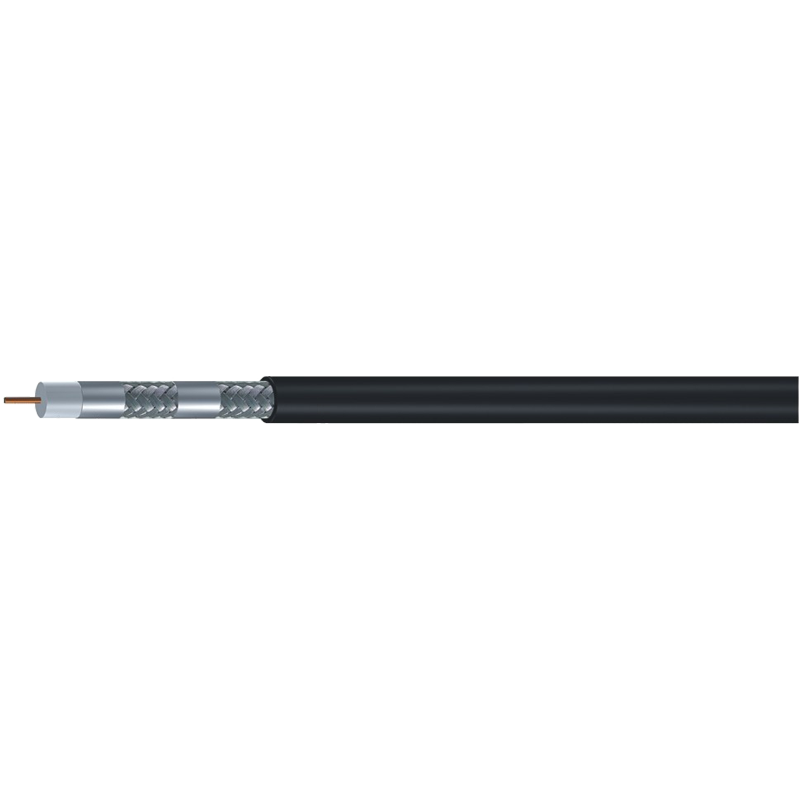
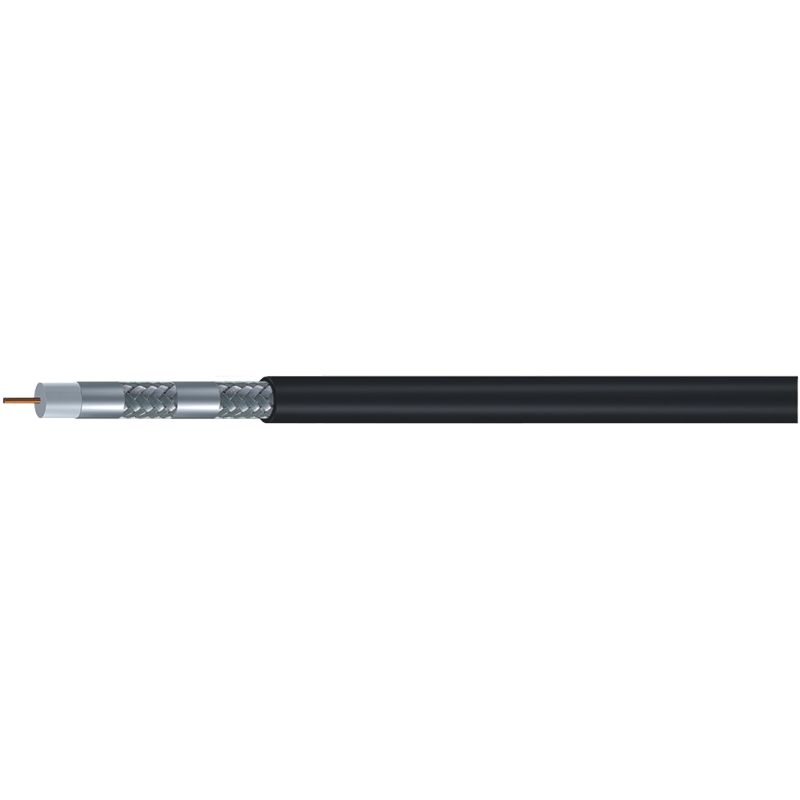
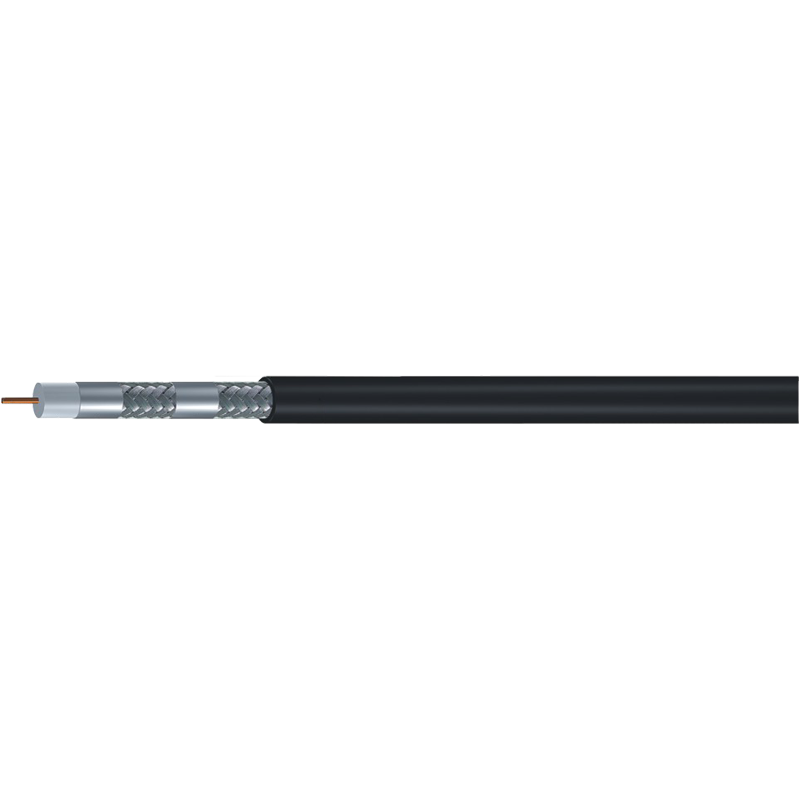
- Quadshield: two foils and two braids at around 90 percent coverage. Chosen where base stations, dense housing or long parallel cable runs make ingress likely.
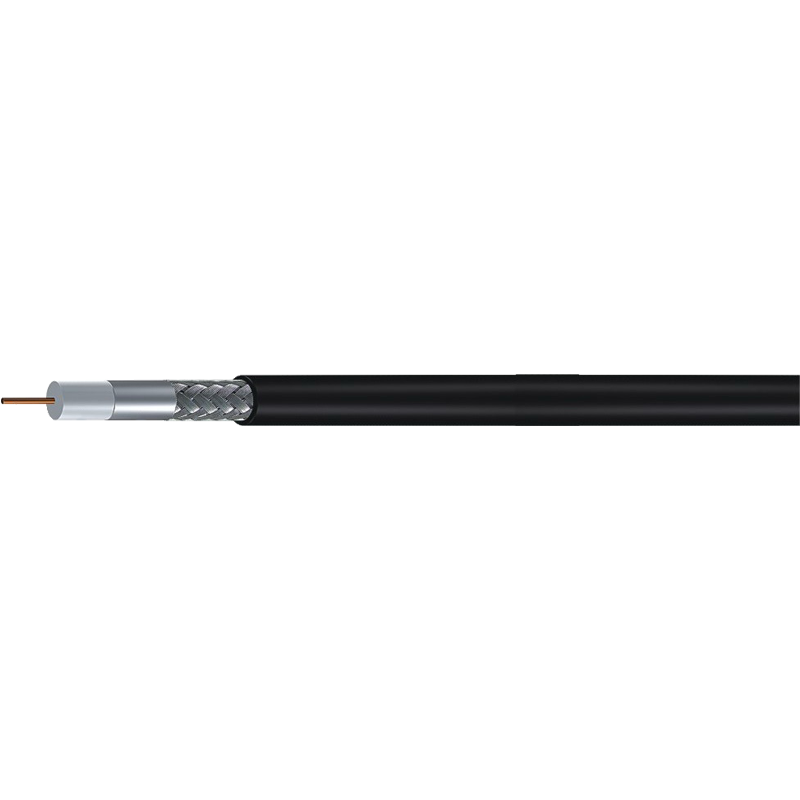
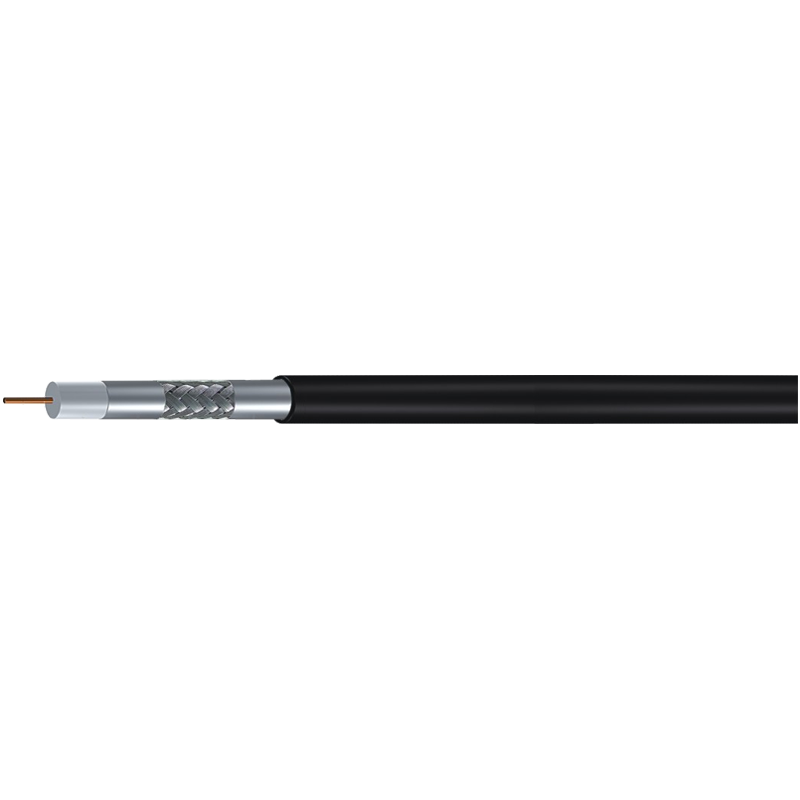
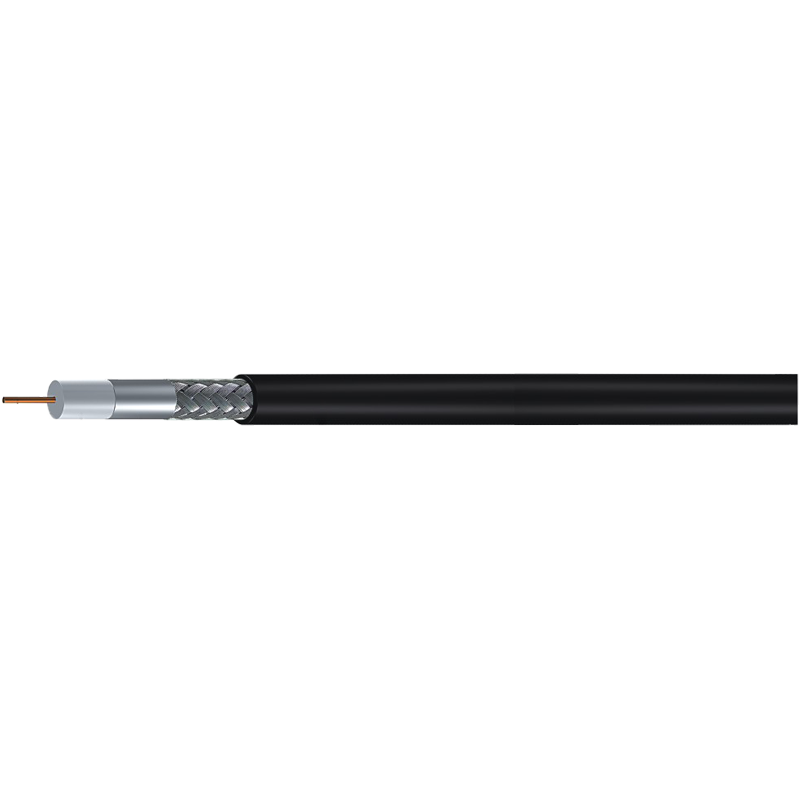
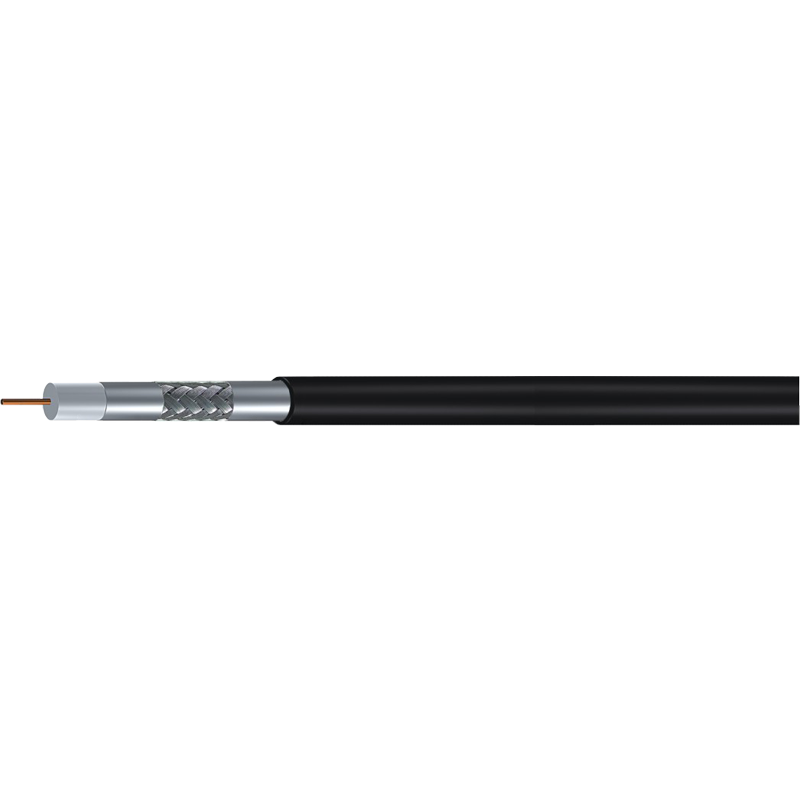
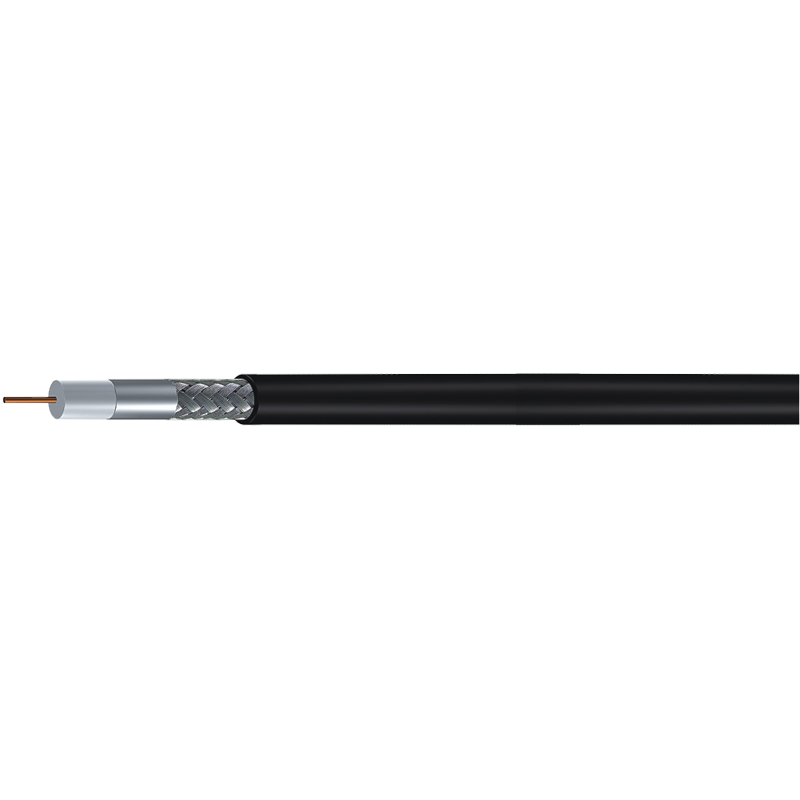
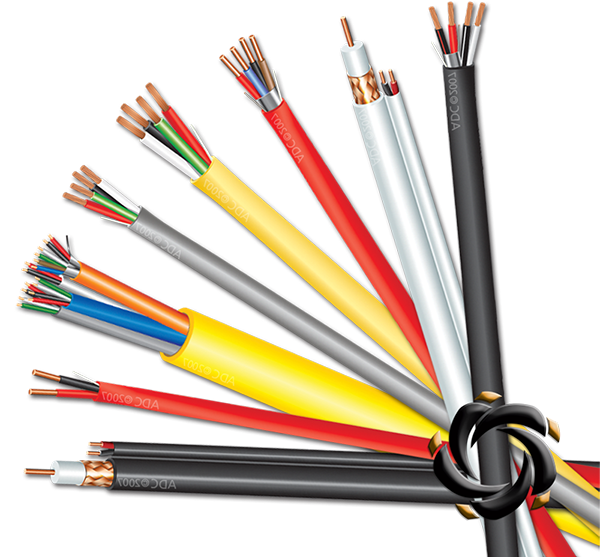
Bonding matters as much as layer count. If the foil is not bonded to the jacket, a bend can open it along its length and turn a good datasheet into a bad installation. The RG6 trishield cable below is a sensible default for most satellite TV drops.
Matching the Cable to Each Leg of the System
A satellite installation normally has three legs: the drop from the dish, the distribution network inside the building, and any aerial span between them. Their mechanical and electrical demands differ, and one cable type rarely serves all three well.
| Cable | Centre conductor | Best fit in a satellite TV system | Watch-outs |
|---|---|---|---|
| RG59 | 20 to 22 AWG, often copper-clad steel | Short patch leads and legacy indoor runs | Highest loss per metre; not the right choice for new satellite drops |
| RG6 | 18 AWG, around 1.02 mm, copper or copper-clad steel | The standard dish-to-receiver drop and in-building distribution | Check conductor material when the same cable carries LNB power over distance |
| RG11 | 14 AWG, around 1.63 mm | Long drops, headend trunks and aerial spans | Stiffer, larger bend radius, needs matching connectors |
| Trunk, 500 and 540 series | Larger again | Backbone distribution in CATV, SMATV and MATV networks | A network-design item, not a consumer drop cable |
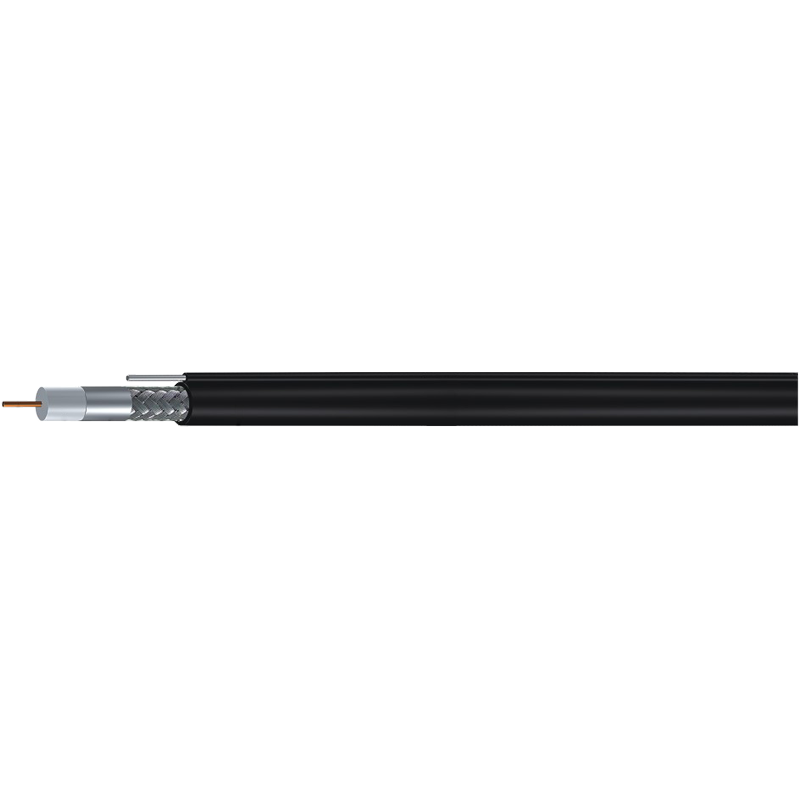
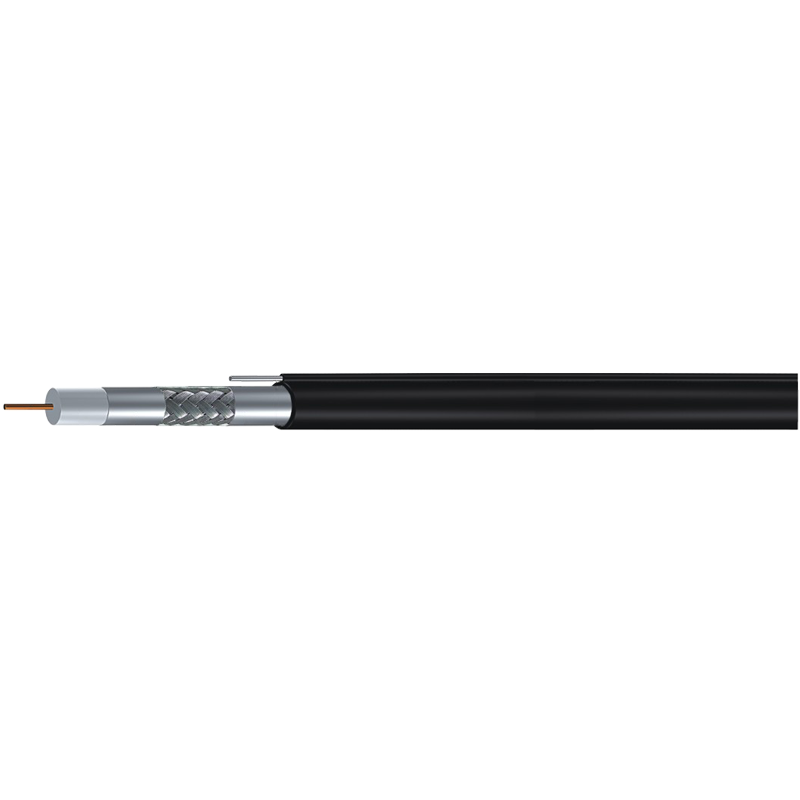
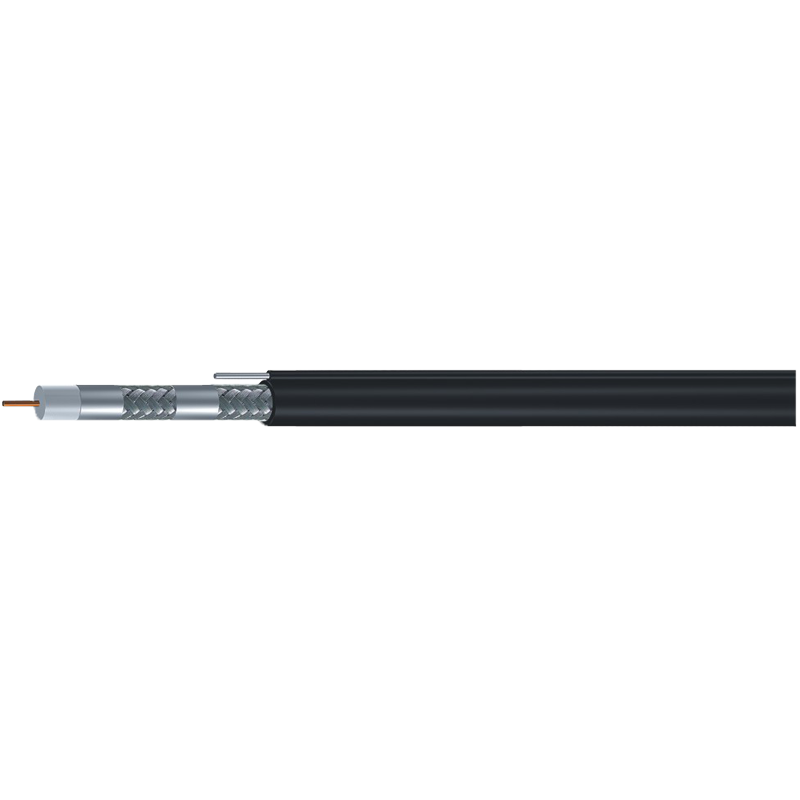
Where a dish sits far from the building, a trishield RG11 with an integrated messenger wire solves the electrical and the mechanical problem at once: lower loss per metre, plus a support wire that carries the span instead of loading the coaxial core.
Long Runs, Voltage Drop and the LNB Power Budget
The receiver powers the LNB through the same cable that carries the signal. A single-output LNB typically draws 150 to 250 mA, and the receiver switches between 13 V and 18 V to select polarity, with a practical minimum of about 11.5 V at the LNB. Every metre of centre conductor and every connector adds resistance, and resistance multiplied by current is voltage the LNB never receives.
This is where copper-clad steel deserves attention. A CCS centre conductor has roughly three times the DC resistance of solid copper of the same gauge. On a 20 m indoor run the difference is invisible. On a 60 m powered drop the return path can add more than a volt of loss compared with solid copper, which is often enough to push a marginal receiver below its switching threshold in cold weather.
Practical check: if the drop exceeds about 40 m, or a receiver reports LNB faults in cold weather, calculate loop resistance instead of assuming. Loop resistance per metre appears on the datasheet, and it is the number that decides whether the job needs RG11 or a solid copper centre conductor.
Noise, Interference and the Habits That Decide Long-Term Performance
Two installations can use identical cable and behave differently for years, purely because of how the cable was fitted. These points come up in fault finding far more often than any single specification line.
Where good cable turns into a bad installation
- Twist-on or oversized F connectors, which leave the shield floating and the impedance uncontrolled.
- No drip loop before the wall entry, so water follows the jacket into the connector.
- Tight bends and crushed jacket, which change local impedance and raise attenuation.
- Splitter losses treated as negligible; each passive split costs roughly 3.5 to 4 dB.
- Poorly shielded wall plates, which undo the shielding effort made at the cable.
- An ungrounded dish, which is a safety issue as well as a signal-integrity one.
Where base stations, rooftop antennas or long parallel runs create a hostile RF environment, quadshield RG6 is often the cheaper decision across the life of the installation, even though it costs more per metre.
Warning: weather-dependent faults are a shielding or moisture symptom, not a receiver fault. If channels break up only during rain, or only after a new mobile site appears nearby, inspect shield construction and every outdoor connector before replacing equipment.
What to Verify Before You Place the Order
Most satellite TV cable problems that reach a purchasing team are communication problems rather than manufacturing problems. Ask for the following in writing with the quotation.
- A sweep test to at least 2150 MHz, with attenuation figures attached for the frequencies actually used.
- Return loss or structural return loss per frequency, not a single typical value.
- Shield construction described by layer and braid coverage percentage, not just the word quad.
- Centre conductor material and DC resistance per 1000 m, so voltage drop can be calculated.
- Jacket material, UV rating and messenger configuration for anything installed outdoors.
- Certifications required by the destination market, such as UL, ETL, CE, CPR, RoHS and REACH, with reports available on request.
- Reel length tolerance and marking, because a nominal 500 m reel that arrives three percent short changes the cost per installed metre.
A supplier who answers all seven in writing usually has the process control to repeat the cable batch after batch. For a wider view of the selection criteria behind these requests, see this guide on how to choose coaxial cable.
In short: cable bought against a written specification is rarely the cable that causes a return visit. The paperwork costs a fraction of a second truck roll.
Manufacturing Capacity and Delivery, in Plain Terms
At project volumes the question changes from whether the cable meets the specification to whether the supplier can repeat it and ship it on schedule. Zhejiang CommSpace Cable, for example, states that it has manufactured cable since 2001 from a 66,600 square metre plant in Zhuji, Zhejiang, and reports ISO 9001 and ISO 14001 management certification alongside UL, ETL, JIS, CE, CPR, RoHS and REACH product approvals, with exports to more than 90 countries.
Capacity figures are a reasonable proxy for lead time. The company lists 12 physical foaming lines, 330 high-speed braiding machines and 12 thermoplastic sheathing lines, with annual output above 350,000 km. Braiding capacity in particular sets how quickly high-coverage shield constructions can be produced, which matters when a specification calls for quadshield across a large order. Batches are tracked through an ERP and barcode system, so a complaint can be traced to a production run rather than discussed in general terms.
Logistics belongs in the same conversation. The plant sits within reach of Ningbo and Shanghai ports and Hangzhou airport, which shortens the inland leg of an export order. The 75-ohm coaxial cable range built on those lines covers standard, trishield and quadshield constructions, with and without messenger wires.
A Practical Buying Sequence
Boil the decision down and it becomes five steps: confirm 75 ohms and a sweep test above 2150 MHz; choose the shield tier from the RF environment rather than from habit; size the cable by run length and LNB current; specify connectors, splitters and grounding as part of the cable package; and commit attenuation, return loss, conductor material and reel tolerance to writing before the order is placed.
The cable is the least visible part of a satellite TV system and the one that decides whether the installation survives its first winter. Ten minutes spent on impedance, shield layers and DC resistance before the purchase order is signed is cheaper than the second visit.