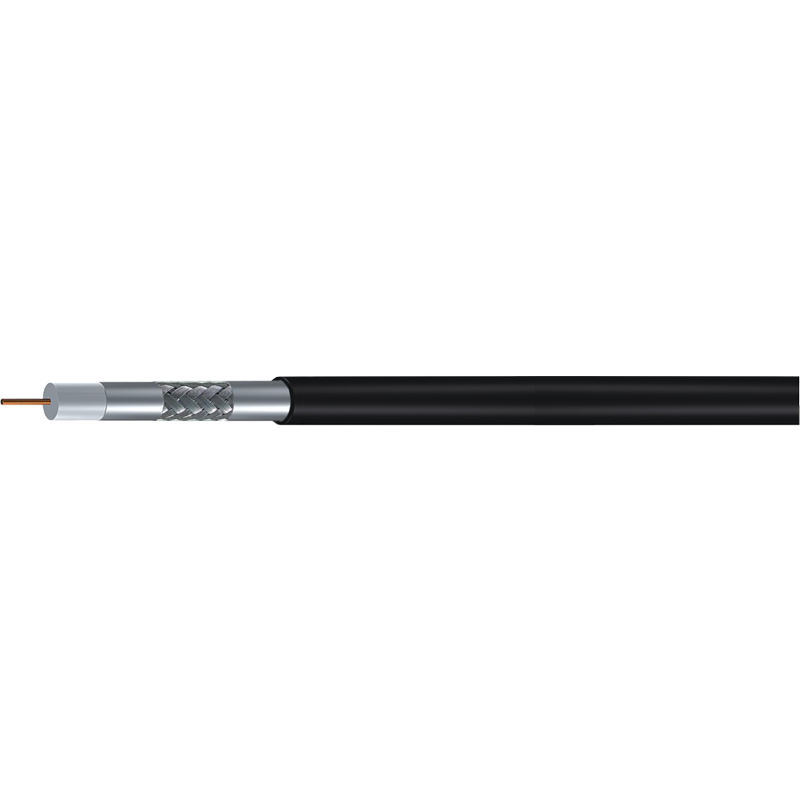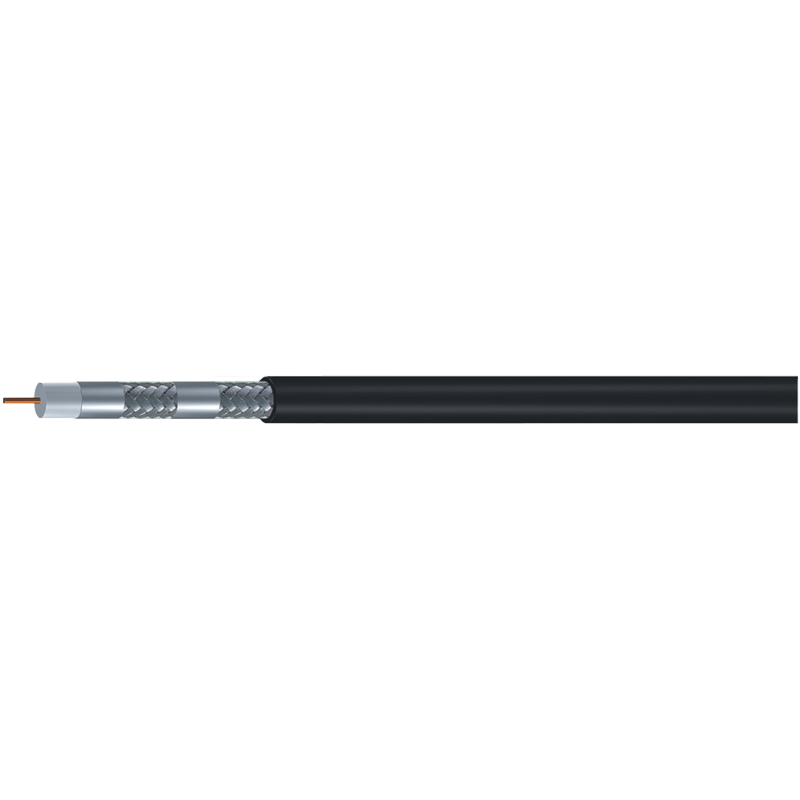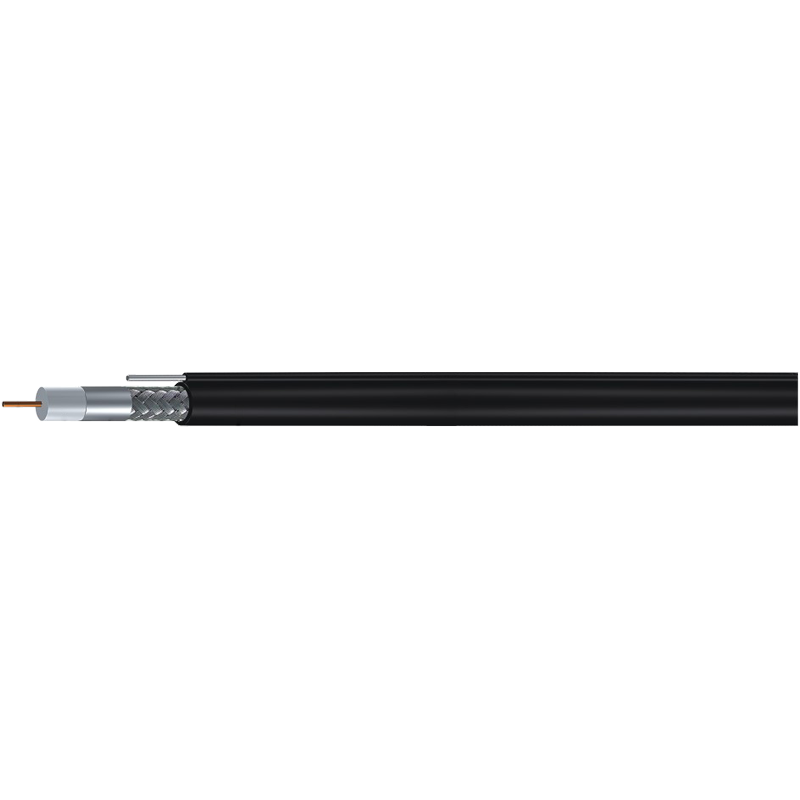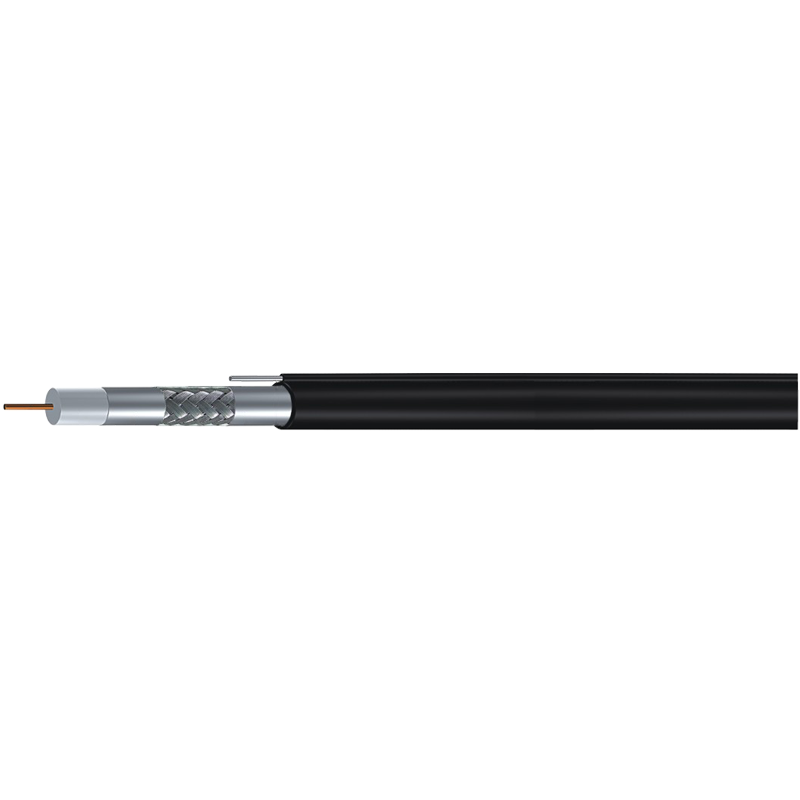
The core difference is this: semi-rigid 50 Ohm coaxial cable uses a solid metal outer conductor that cannot be re-bent after installation, while flexible 50 Ohm coaxial cable uses a braided or spiral shield that allows repeated bending and routing. Semi-rigid offers superior shielding and phase stability; flexible cable prioritizes ease of installation and mechanical adaptability. Your choice depends on whether your application demands maximum RF performance or practical flexibility in the field.
Structural Differences: What's Inside Each Cable
Understanding the physical construction of each cable type explains most of their performance differences.
Semi-Rigid 50 Ohm Coaxial Cable
Semi-rigid 50 Ohm coaxial cable is built with a solid copper or cupronickel outer conductor that is seamlessly formed around a solid PTFE (polytetrafluoroethylene) dielectric. The center conductor is typically a solid silver-plated copper or bare copper wire. This construction creates an airtight, dimensionally stable structure. Common diameters range from 0.047 inches (UT-47) to 0.250 inches (UT-250), with the outer tube giving the cable its defining rigidity.
Flexible 50 Ohm Coaxial Cable
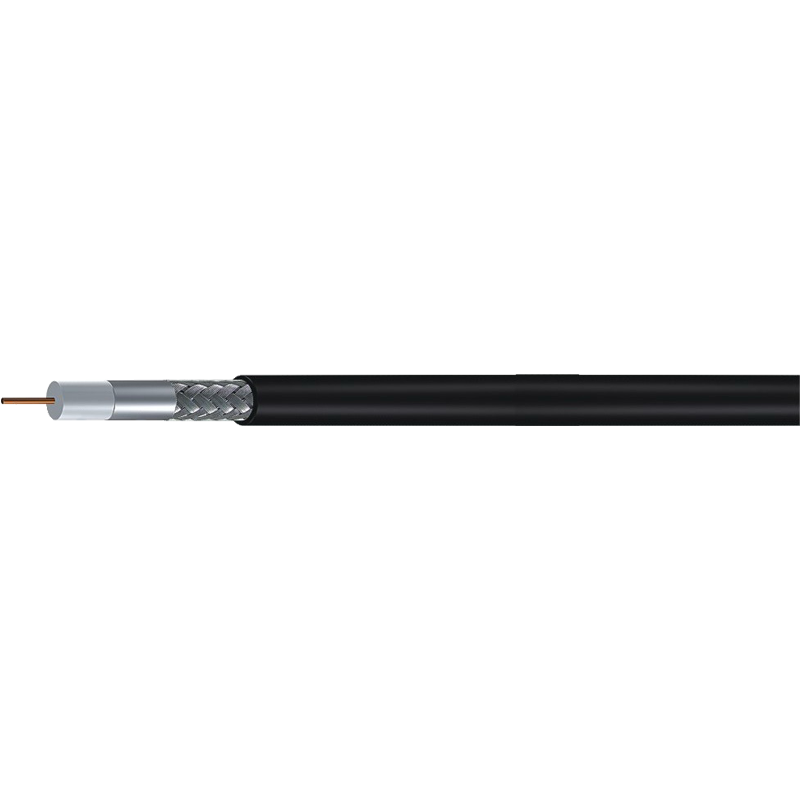
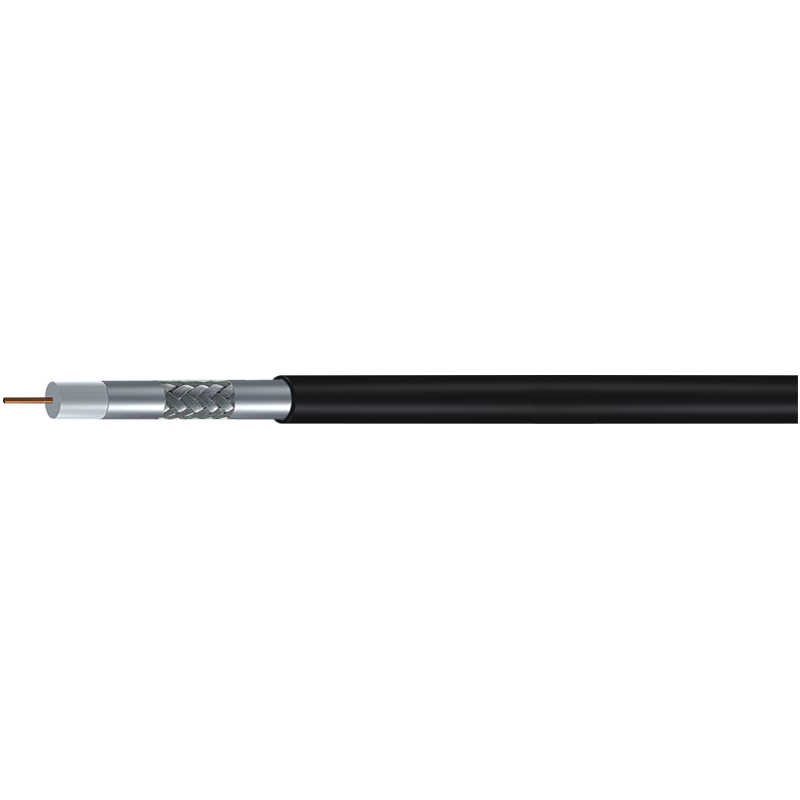
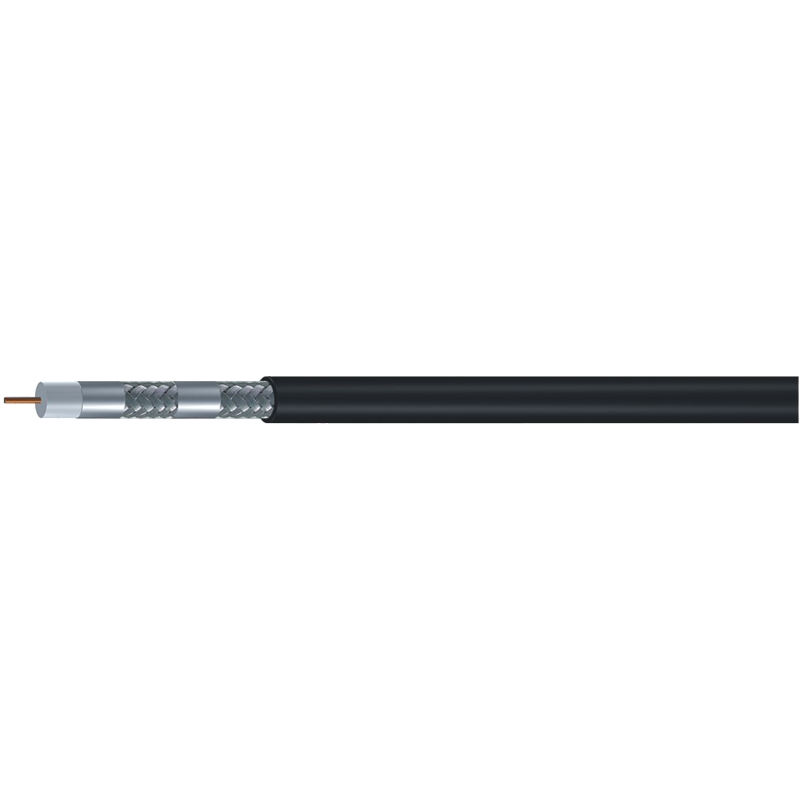
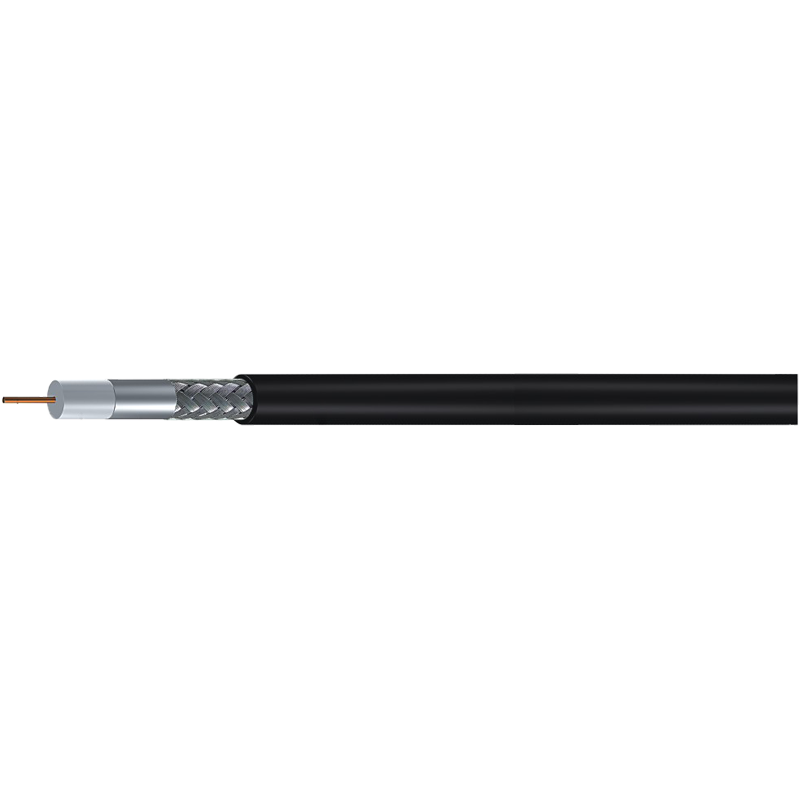
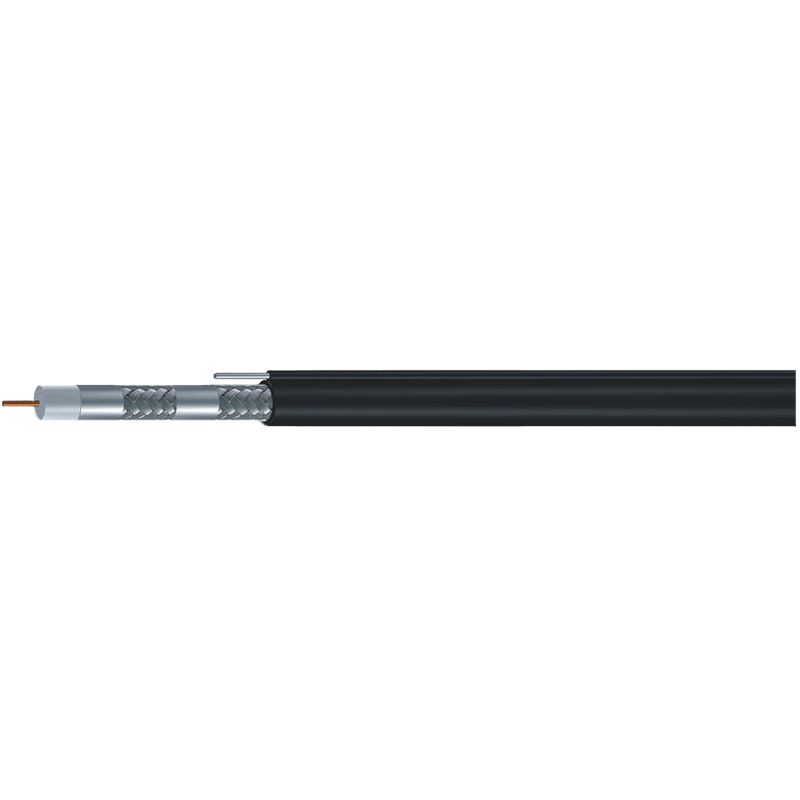
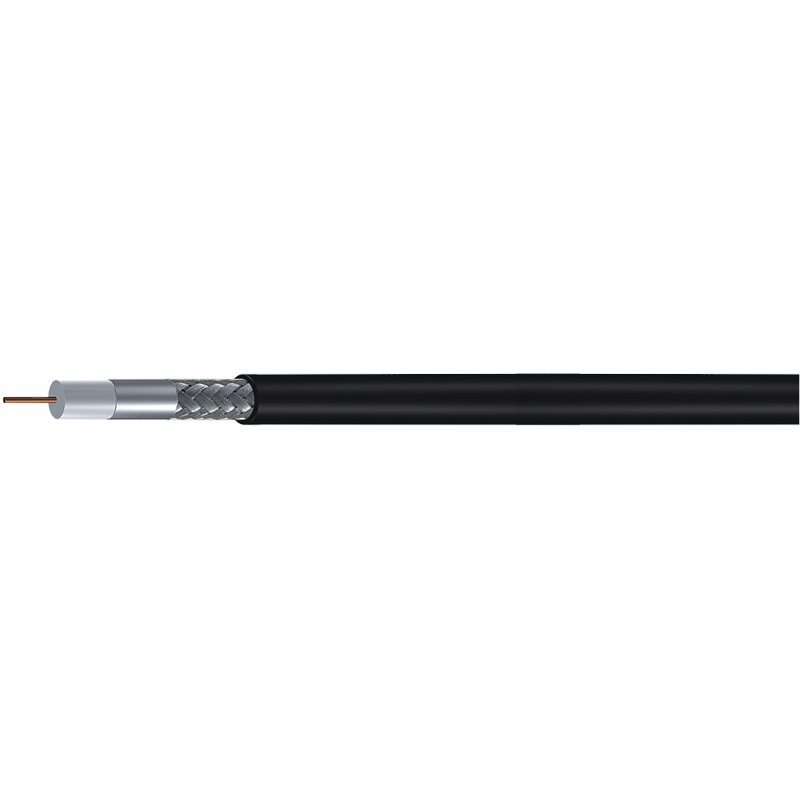
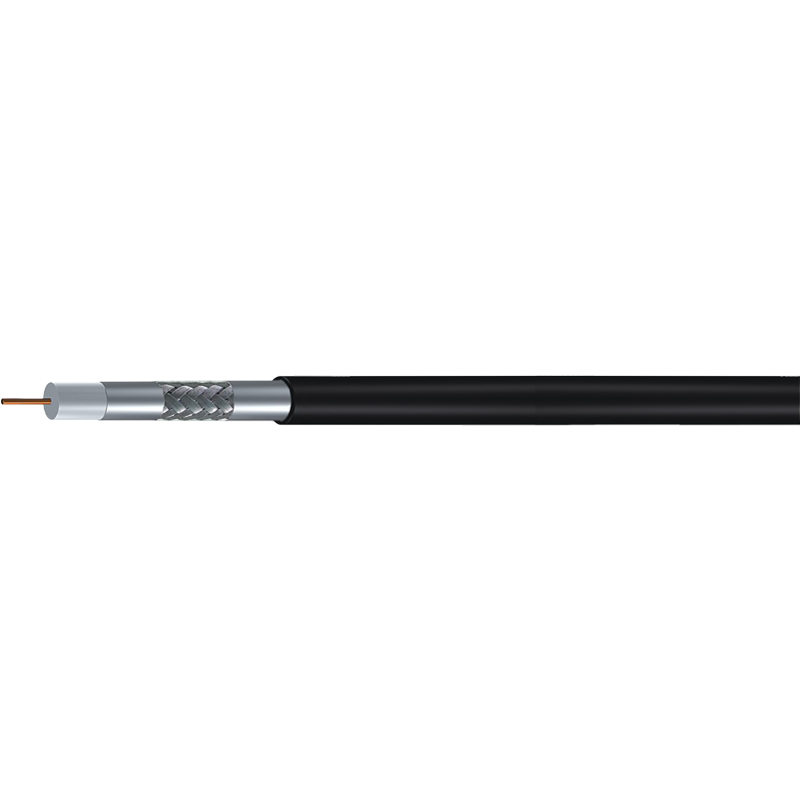
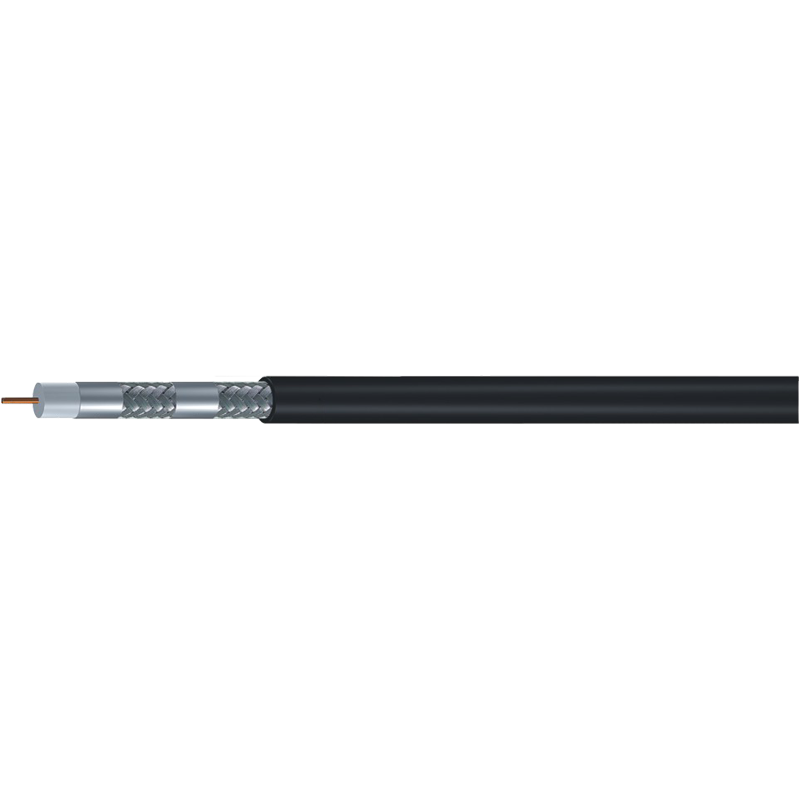
Flexible 50 Ohm coaxial cable replaces the solid outer conductor with a braided copper shield (typically 85%–98% coverage) or a spiral-wrapped shield, sometimes combined with an aluminum foil layer for dual shielding. The dielectric is commonly foam polyethylene (PE) or solid PE, and the center conductor may be stranded for added flexibility. A PVC, LSZH, or FEP outer jacket completes the assembly. Well-known examples include RG-58 (3.5 mm OD) and LMR-400 (10.3 mm OD).
Performance Comparison: RF Signal Integrity
RF performance is where semi-rigid 50 Ohm coaxial cable clearly leads. The seamless solid outer conductor acts as a near-perfect Faraday shield, achieving shielding effectiveness greater than 100 dB — significantly better than the typical 60–90 dB offered by braided flexible cable. This matters in sensitive measurement environments or military-grade RF systems where signal leakage of even −90 dBm is unacceptable.
Phase stability is another critical advantage of semi-rigid design. Because the geometry is fixed after forming, the electrical length does not change with temperature or mechanical stress. Flexible 50 Ohm coaxial cable can exhibit phase variation of ±5° to ±15° under flexing or thermal cycling, which makes it unsuitable for phase-sensitive applications like phased-array antennas or vector network analyzer (VNA) test ports.
Attenuation (insertion loss) also favors semi-rigid cable due to the solid PTFE dielectric and tight dimensional tolerances. A UT-085 semi-rigid cable shows approximately 1.1 dB/ft at 10 GHz, while a comparable flexible RG-405 cable can reach 1.4–1.6 dB/ft at the same frequency.
Head-to-Head Specification Table
| Parameter | Semi-Rigid 50 Ohm Coaxial Cable | Flexible 50 Ohm Coaxial Cable |
|---|---|---|
| Outer Conductor | Solid copper tube | Braided / spiral copper shield |
| Dielectric Material | Solid PTFE | Solid PE / Foam PE |
| Shielding Effectiveness | >100 dB | 60–90 dB |
| Phase Stability | Excellent (fixed geometry) | Moderate (±5°–±15° variation) |
| Attenuation at 10 GHz | ~1.1 dB/ft (UT-085) | ~1.4–1.6 dB/ft (RG-405) |
| Re-Bendability | One-time forming only | Repeated bending supported |
| Typical Max Frequency | Up to 65 GHz (UT-047) | Up to 18–26 GHz (type-dependent) |
| Installation Ease | Requires precision forming tools | Hand-routable, no tools needed |
| Typical Applications | Lab instruments, military, aerospace | Field wiring, antennas, test leads |
Bend Radius and Mechanical Handling
Semi-rigid 50 Ohm coaxial cable can be bent, but only once — or a very limited number of times — before the solid outer conductor cracks or deforms, causing impedance discontinuities. The minimum bend radius for a UT-085 cable is typically 3–5 mm, and bending must be done with a dedicated cable-forming tool to maintain consistent geometry and avoid kinking.
Flexible 50 Ohm coaxial cable, by contrast, is designed for dynamic or repeated bending. The minimum bend radius for an LMR-400 is 25 mm (1 inch), and for smaller cables like RG-58, it is around 12 mm. High-flex versions using a spiral outer conductor can sustain millions of flex cycles, making them suitable for robotic arms, moving test fixtures, and handheld RF equipment.
Connector Compatibility
Connector selection differs significantly between the two cable types. Semi-rigid 50 Ohm coaxial cable typically uses connectors that are soldered directly to the solid outer conductor — common types include:
- SMA (up to 18 GHz)
- 2.92 mm / K-connector (up to 40 GHz)
- 2.4 mm connector (up to 50 GHz)
- 1.85 mm / V-connector (up to 65 GHz)
Flexible 50 Ohm coaxial cable supports a broader and more field-serviceable range of connectors, including N-type, BNC, TNC, SMA, and PL-259 (UHF). These connectors use crimping, clamping, or compression termination methods that do not require precision soldering of a tube — making them accessible to field technicians without specialized equipment.
Application Scenarios: Which Cable Fits Your Need
Choose Semi-Rigid 50 Ohm Coaxial Cable When:
- Operating above 18 GHz in microwave or millimeter-wave systems
- Phase matching between multiple cable assemblies is required (e.g., phased arrays, radar systems)
- Maximum shielding isolation is needed to prevent signal leakage or interference
- The cable will be installed once in a fixed chassis or PCB assembly and never moved
- Low passive intermodulation (PIM) is a system requirement
Choose Flexible 50 Ohm Coaxial Cable When:
- The cable must be routed around obstacles, through conduits, or in tight enclosures
- Field installation and connector termination will be done by non-specialist technicians
- The cable will be connected and disconnected frequently (test leads, portable equipment)
- Operating frequency is below 6 GHz, where braid shielding is sufficient
- Cost and cable availability are primary constraints
Cost and Availability Considerations
Semi-rigid 50 Ohm coaxial cable assemblies are significantly more expensive than flexible alternatives. A precision-formed UT-085 assembly with SMA connectors may cost $30–$150 per piece depending on length and frequency rating. Flexible cable assemblies of equivalent length — such as an LMR-195 with SMA connectors — typically cost $5–$25.
Semi-rigid cable is also less commonly stocked and often requires custom fabrication to exact length, while flexible 50 Ohm coaxial cable is widely available in pre-made assemblies from standard lengths of 0.5 m to 10 m. For prototyping or low-volume production, flexible cable dramatically reduces lead times and assembly complexity.
If your system operates above 18 GHz, requires phase-matched assemblies, or demands shielding beyond 90 dB, semi-rigid 50 Ohm coaxial cable is the correct engineering choice — performance benefits justify the higher cost and handling constraints. For the majority of RF installations below 6 GHz, field deployments, and any application requiring repeated connection cycles, flexible 50 Ohm coaxial cable delivers sufficient performance at a fraction of the cost and complexity. When in doubt, match the cable type to the frequency, the environment, and how often the cable will move — not simply to what is easiest to source.