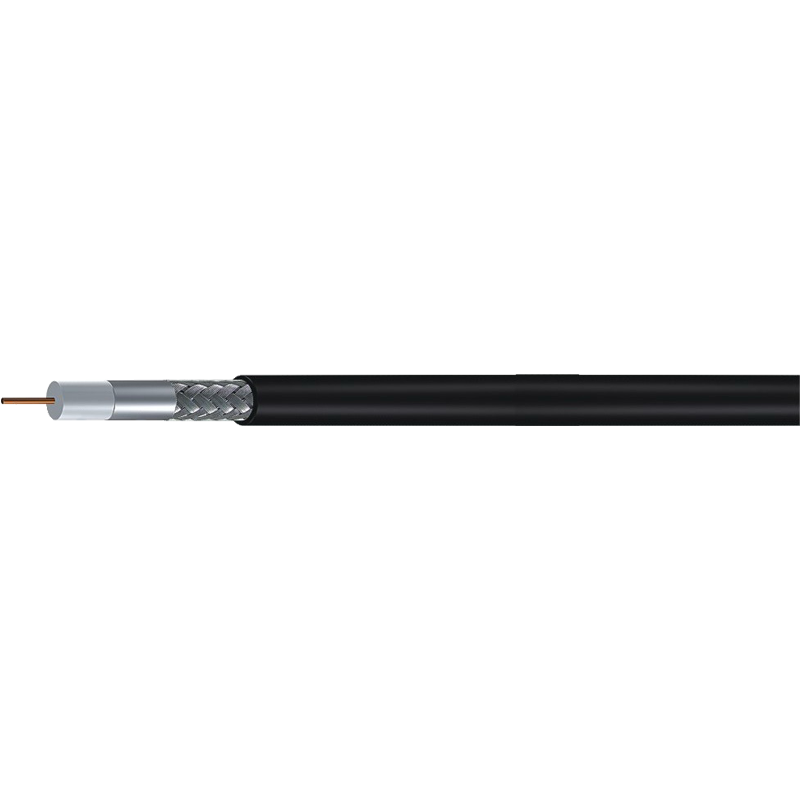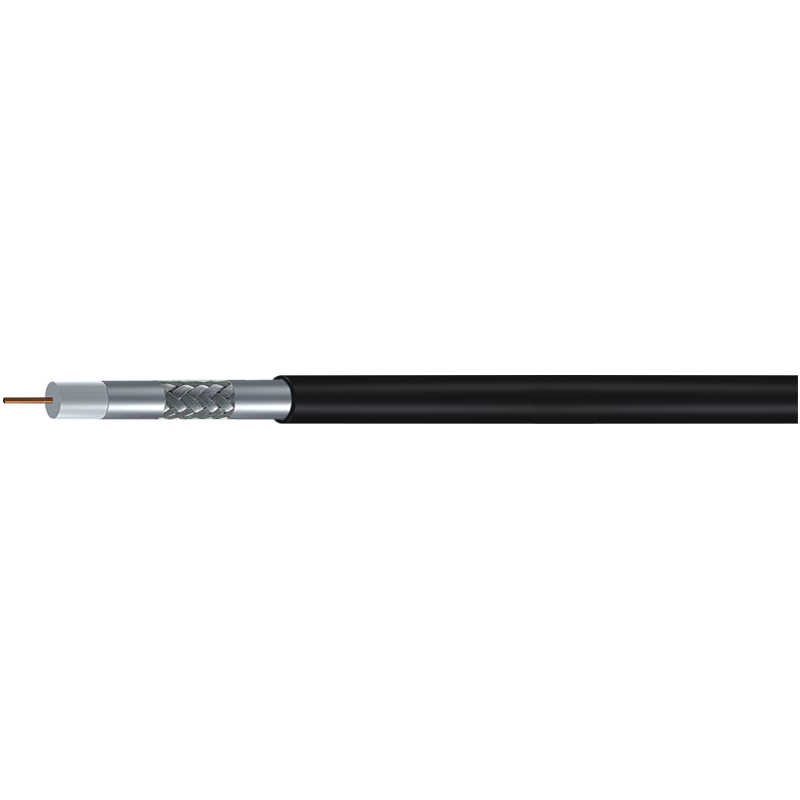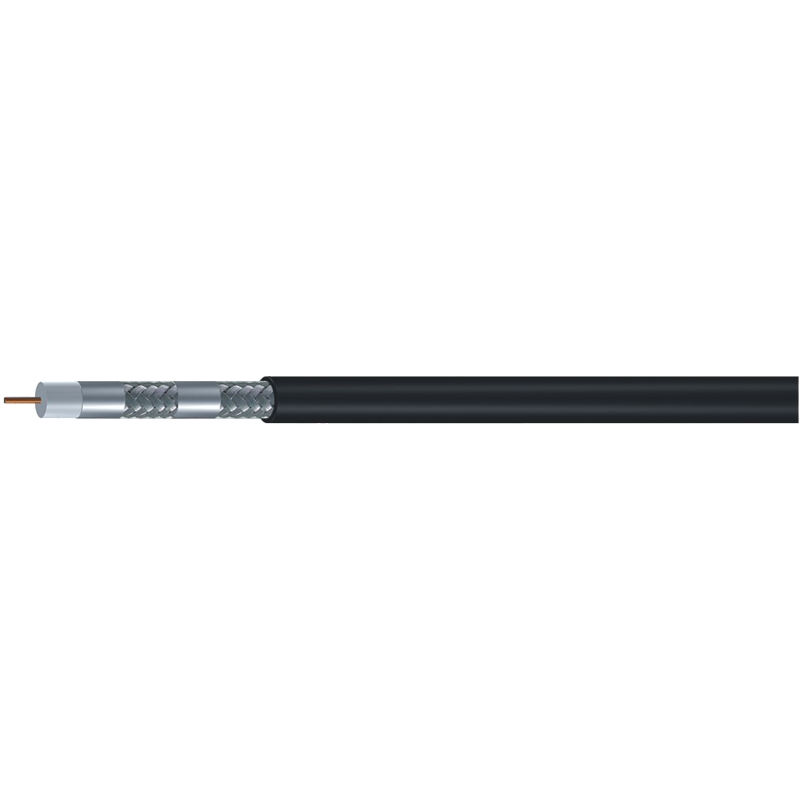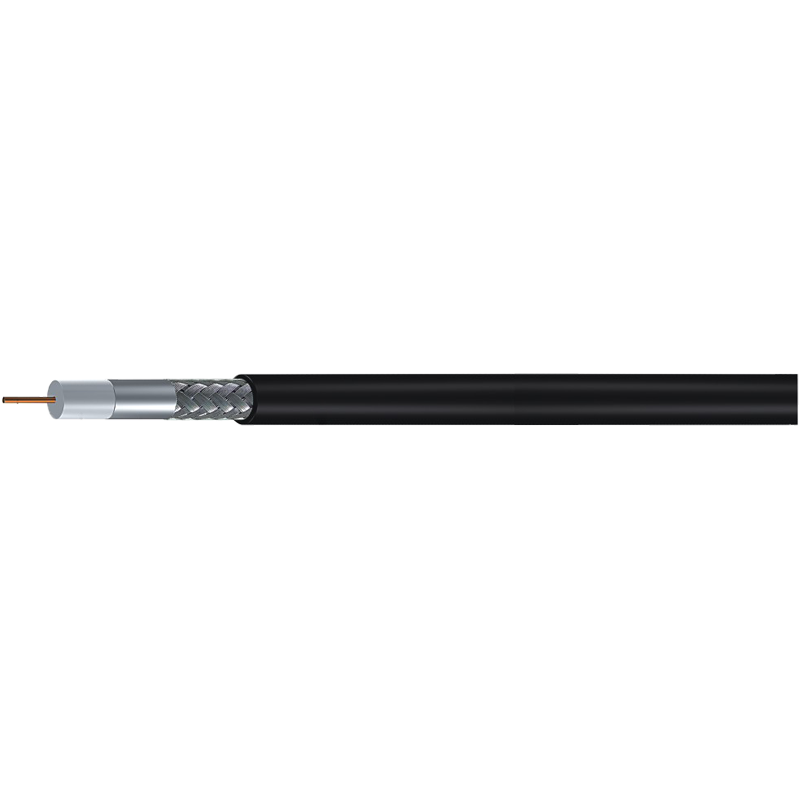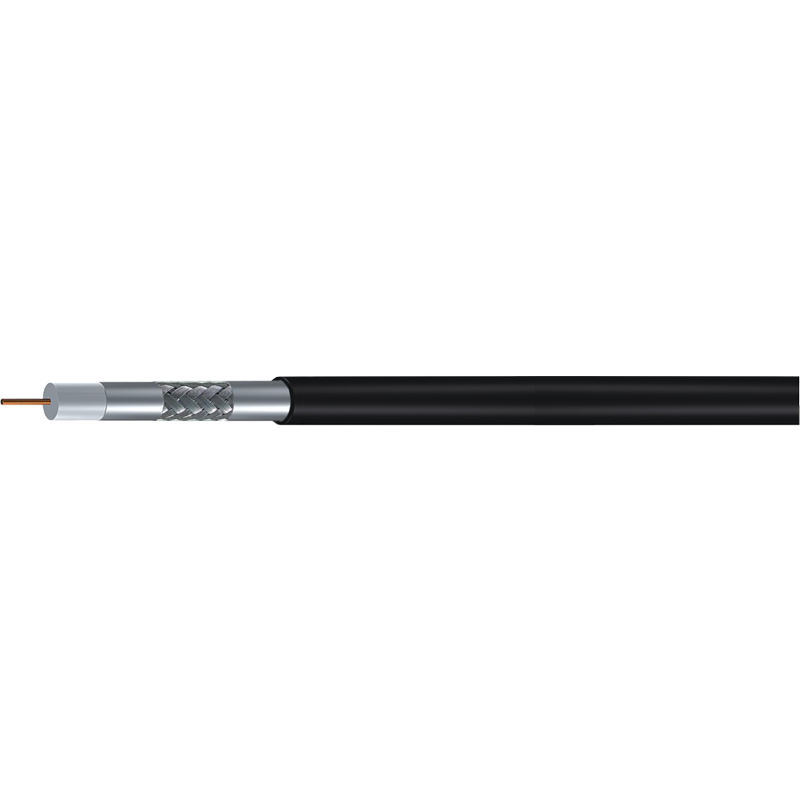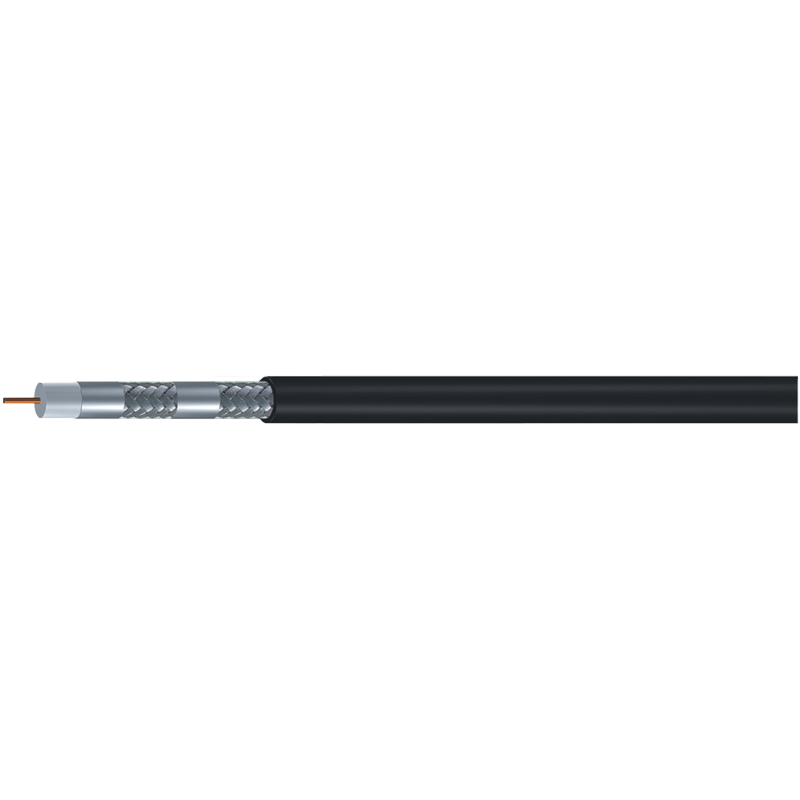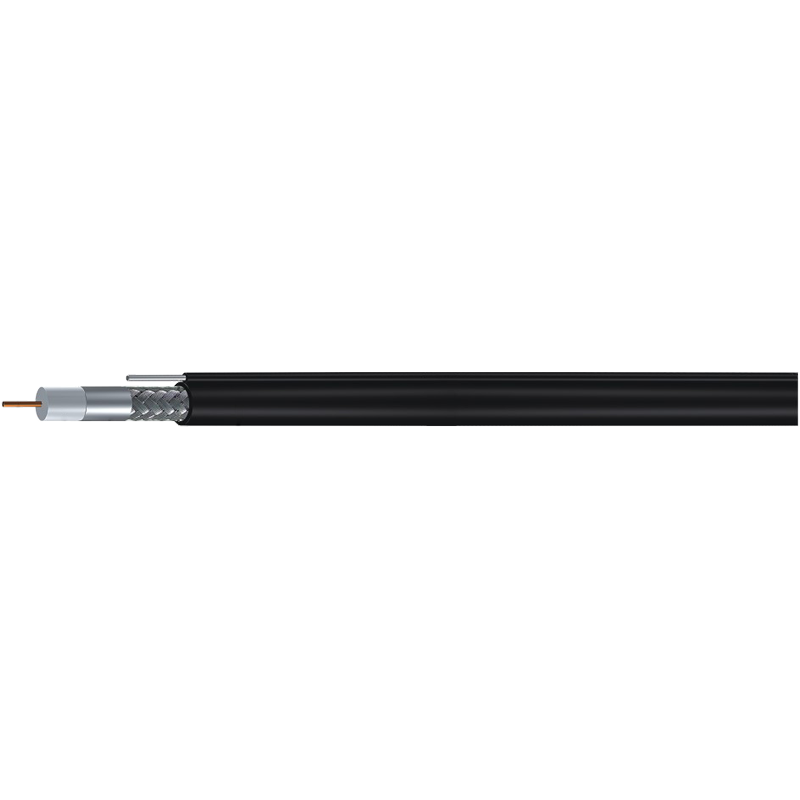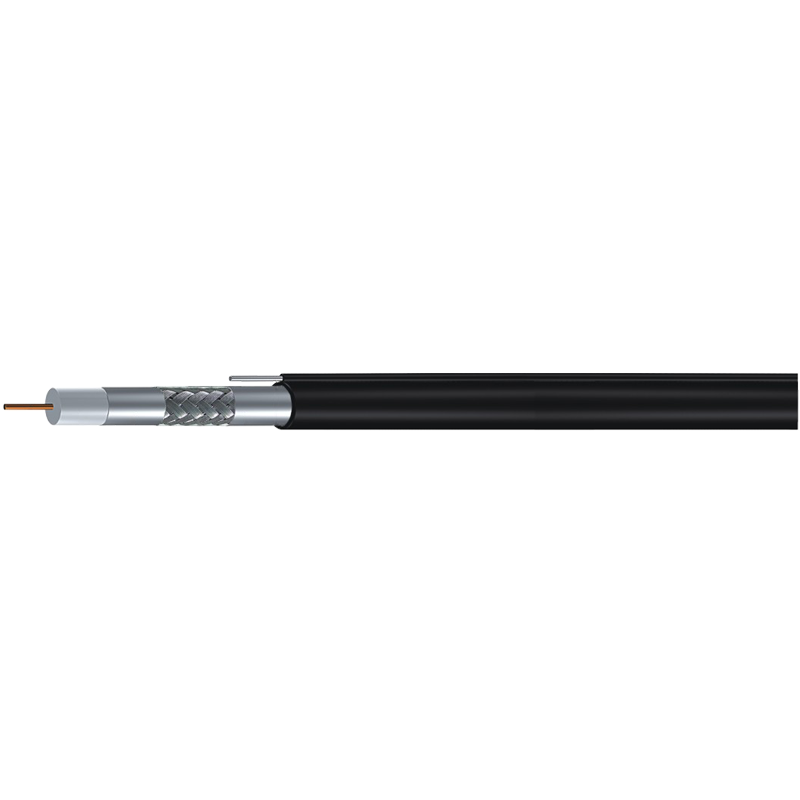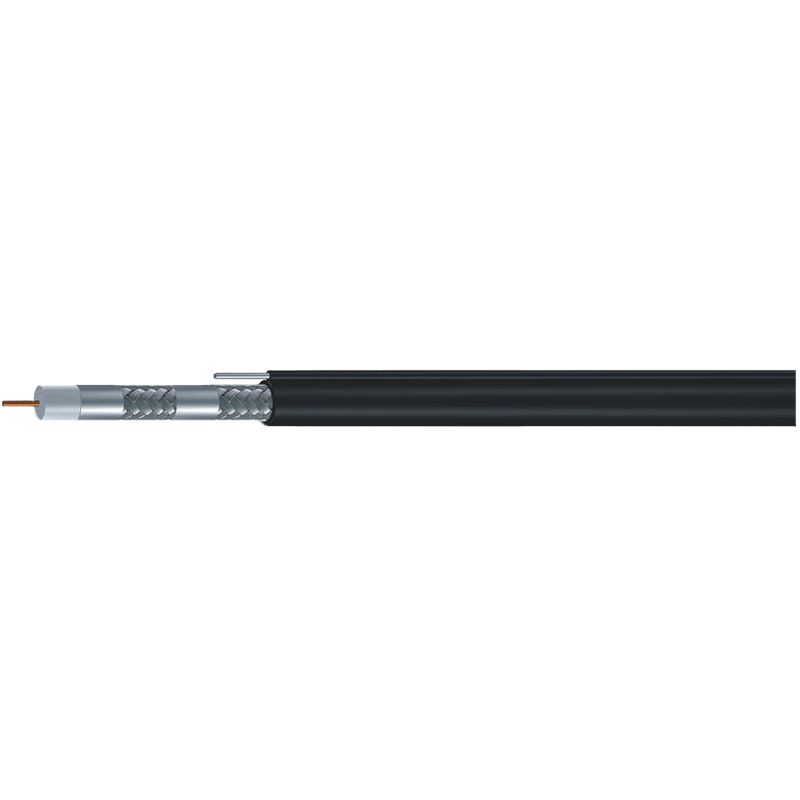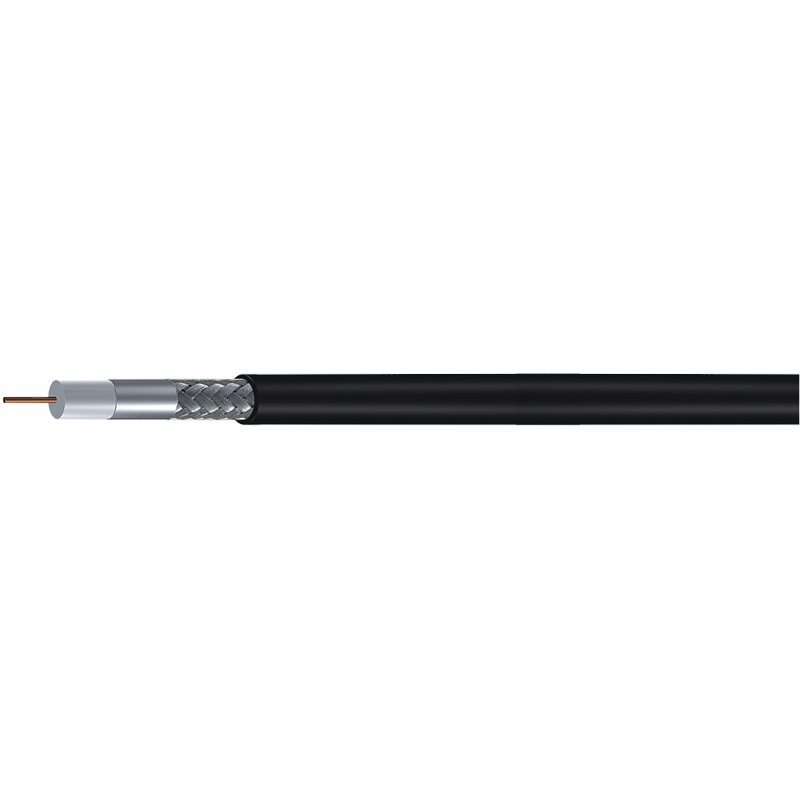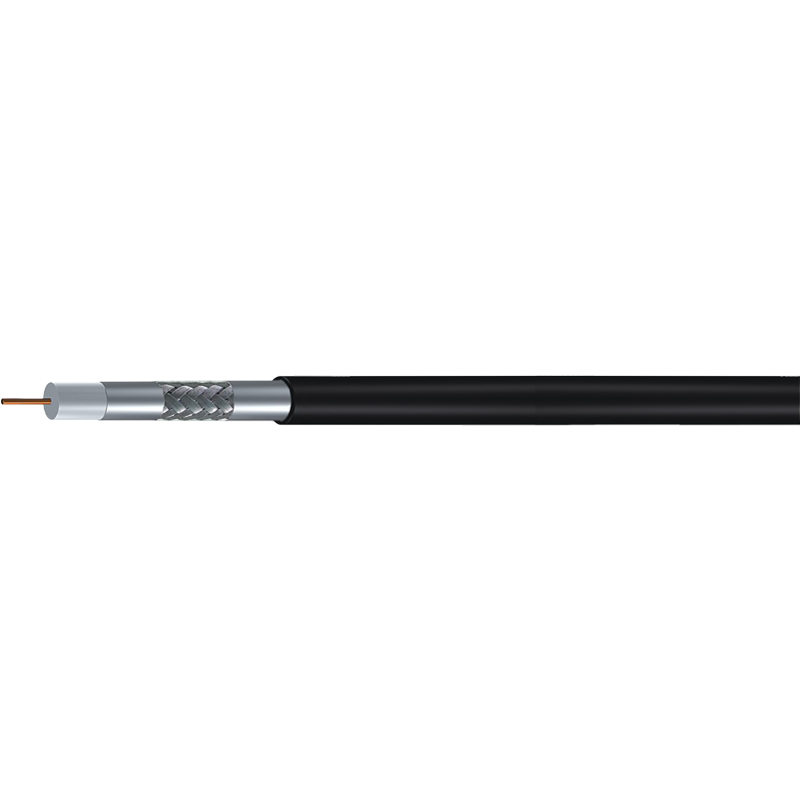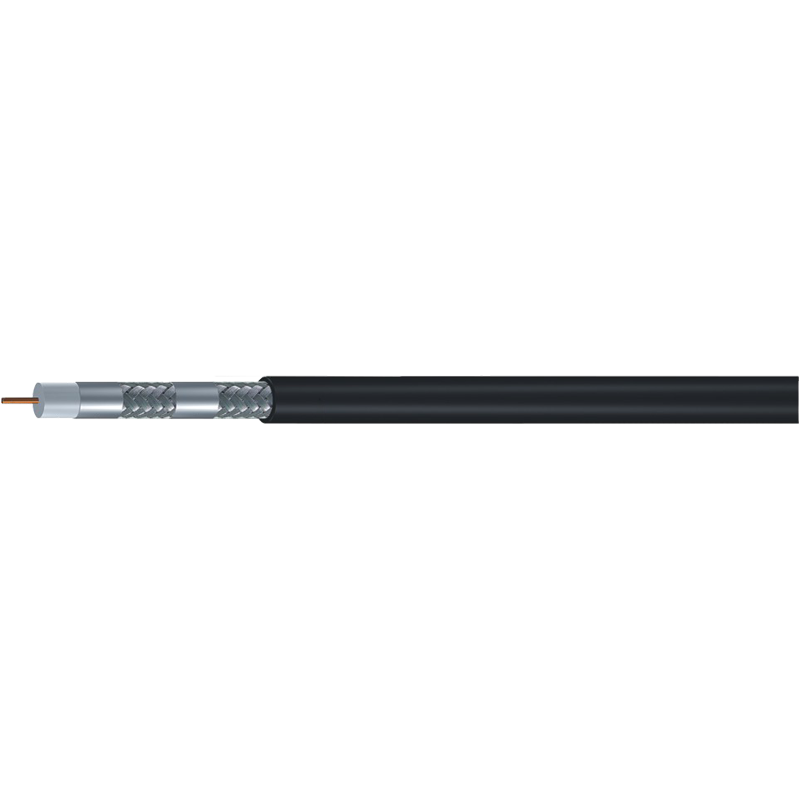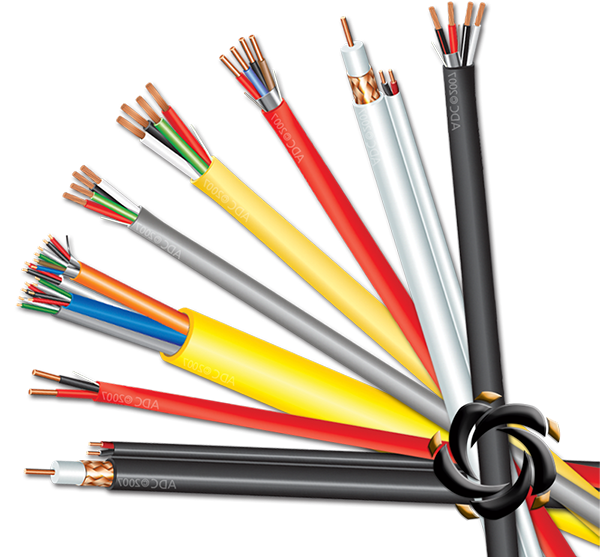
The direct answer is this: a larger outer diameter in a 50 Ohm coaxial cable means lower attenuation and higher power handling. This relationship is not coincidental — it is governed by the physics of conductor surface area, dielectric volume, and heat dissipation. A larger cable has a bigger center conductor, more shielding material, and a greater cross-sectional area to carry RF current, all of which reduce resistive losses and increase the cable's ability to handle high-power signals without overheating or breaking down.
Why Outer Diameter Controls Attenuation
Attenuation in a 50 Ohm coaxial cable comes from two primary sources: conductor (ohmic) loss and dielectric loss. Both are directly influenced by the cable's outer diameter.
Conductor Loss and the Skin Effect
At RF frequencies, current does not flow through the entire cross-section of a conductor — it concentrates near the surface, a phenomenon known as the skin effect. The skin depth at 1 GHz in copper is approximately 2.1 micrometers. This means that only a thin annular region of the conductor carries the signal. A larger outer diameter means a physically bigger center conductor and a larger inner surface area on the outer shield — both of which reduce the effective resistance per unit length. Lower resistance directly translates to lower conductor loss and lower attenuation.
Dielectric Loss and Cable Volume
The dielectric material between the center conductor and outer shield also absorbs a portion of the RF energy. A larger-diameter 50 Ohm coaxial cable with foam polyethylene dielectric has a lower loss tangent per unit length than a small-diameter cable with solid PE dielectric, partly because the field intensity is distributed over a larger volume. Cables using foam dielectric (like LMR-400) achieve velocity of propagation around 85%, reducing dielectric loss compared to solid PE cables at around 66%.
Attenuation vs. Outer Diameter: Real Cable Data
The following table compares commonly used 50 Ohm coaxial cables by outer diameter and their measured attenuation at key frequencies. All figures are approximate and based on typical manufacturer specifications.
| Cable Type | Outer Diameter (mm) | Attenuation at 1 GHz (dB/100ft) | Attenuation at 2.4 GHz (dB/100ft) | Attenuation at 5.8 GHz (dB/100ft) |
|---|---|---|---|---|
| RG-58 | 4.95 | ~16.9 | ~28.5 | ~50.0 |
| LMR-195 | 4.95 | ~10.8 | ~17.2 | ~27.5 |
| LMR-400 | 10.29 | ~3.9 | ~6.3 | ~10.4 |
| LMR-600 | 15.24 | ~2.5 | ~4.0 | ~6.6 |
| LMR-1200 | 32.00 | ~1.2 | ~2.0 | ~3.3 |
The trend is unmistakable. Moving from RG-58 (4.95 mm OD) to LMR-1200 (32 mm OD) cuts attenuation at 1 GHz from ~16.9 dB/100ft to ~1.2 dB/100ft — a reduction of over 90%. For a 100-foot cable run at 2.4 GHz (Wi-Fi or WLAN), using LMR-400 instead of RG-58 recovers more than 22 dB of signal, which is the difference between a working link and a completely failed one.
How Outer Diameter Determines Power Handling
Power handling in a 50 Ohm coaxial cable is limited by two separate failure mechanisms: thermal breakdown (continuous power) and voltage breakdown (peak power). Outer diameter affects both.
Thermal (Average) Power Limit
When RF power travels through a 50 Ohm coaxial cable, a fraction of it is dissipated as heat due to conductor and dielectric losses. The cable's temperature rises until the heat dissipation to the surrounding environment equals the power loss. A larger cable has more surface area to radiate heat and lower loss per unit length, so it can carry more power before reaching a critical temperature. Most cable manufacturers specify a maximum temperature of 85°C to 105°C for the center conductor or dielectric.
For example, at 1 GHz in a 25°C ambient environment, continuous power ratings are approximately:
- RG-58 (4.95 mm OD): ~100 W
- LMR-400 (10.29 mm OD): ~1,100 W
- LMR-600 (15.24 mm OD): ~2,700 W
- LMR-1200 (32 mm OD): ~9,500 W
This demonstrates that doubling the outer diameter can increase average power handling by a factor of 3 to 5, depending on the specific cable construction and dielectric material.
Voltage (Peak) Power Limit
Peak power is limited by the electric field strength between the center conductor and the outer shield. If the field exceeds the dielectric strength of the insulating material, arcing occurs and the cable is permanently damaged. A larger-diameter 50 Ohm coaxial cable has a greater physical separation between conductors, which reduces the electric field intensity for a given voltage. PTFE dielectric, used in semi-rigid and high-performance cables, has a dielectric strength of approximately 60 kV/mm, versus around 20 kV/mm for standard PE. This is why large-diameter cables with PTFE or air dielectric are used in radar and broadcast transmitter systems requiring peak powers exceeding 100 kW.
Power Handling Drops with Frequency — Diameter Helps Compensate
It is critical to understand that power handling ratings are always frequency-dependent. As frequency increases, attenuation increases, meaning more power is converted to heat per unit length, and the thermal limit is reached at a lower input power. The table below illustrates how average power handling of LMR-400 decreases as frequency rises:
| Frequency | LMR-400 Avg. Power (W) | LMR-600 Avg. Power (W) | LMR-1200 Avg. Power (W) |
|---|---|---|---|
| 150 MHz | ~4,500 | ~10,800 | ~38,000 |
| 450 MHz | ~2,500 | ~6,200 | ~22,000 |
| 1 GHz | ~1,100 | ~2,700 | ~9,500 |
| 2.4 GHz | ~700 | ~1,700 | ~6,000 |
| 5.8 GHz | ~450 | ~1,050 | ~3,700 |
At 5.8 GHz, LMR-400 handles only ~450 W — less than 10% of its 150 MHz rating. Upgrading to LMR-1200 restores the power headroom to ~3,700 W at the same frequency, demonstrating that selecting a larger outer diameter is the primary engineering lever for maintaining power handling at higher frequencies.
Practical Trade-Offs of Choosing Larger Diameter Cable
Larger-diameter 50 Ohm coaxial cable is not without drawbacks. Engineers must weigh the following trade-offs:
- Weight and stiffness: LMR-1200 weighs approximately 1.34 kg/m and has a minimum bend radius of 254 mm (10 inches), making it difficult to route in congested cable trays or up antenna masts without dedicated support hardware.
- Connector cost and size: Larger cables require larger, more expensive connectors (7/16 DIN or Type-N for LMR-600/1200), which add to system cost and may not fit compact equipment panels.
- Cost per meter: LMR-1200 costs roughly 5–8× more per meter than LMR-400 and may require special cutting and termination tools.
- Frequency ceiling: Very large coaxial cables support only lower-order modes up to a cutoff frequency. LMR-1200 is not recommended above approximately 2 GHz for precision applications due to higher-order mode propagation risk.
Use the following guidelines to match cable outer diameter to your system requirements:
- Short runs under 5 meters, low power (<50 W), up to 6 GHz: RG-58 or LMR-195 (≈5 mm OD) is adequate and offers maximum flexibility.
- Runs of 10–30 meters, moderate power (50–500 W), up to 6 GHz: LMR-400 (10.3 mm OD) is the industry-standard choice for cellular base stations, Wi-Fi, and two-way radio systems.
- Runs over 30 meters, high power (500–3,000 W), up to 3 GHz: LMR-600 or equivalent (15 mm OD) minimizes feedline loss at broadcast and commercial RF installations.
- High-power transmitters, AM/FM broadcast, radar below 2 GHz (>3,000 W): LMR-1200 or rigid hardline coaxial cable (32 mm+ OD) is required for acceptable efficiency and thermal safety.
As a rule of thumb, calculate your maximum allowable attenuation first, then select the smallest outer diameter that meets both the loss budget and power rating — this avoids over-engineering while ensuring reliable, long-term operation.