Cable Selection Notes
Comparing Different Grades of 75 Ohm Coaxial Cable
Seventy-five ohms fixes the impedance. It says nothing about how far the signal will travel, how well it survives a mobile mast next door, or whether the jacket will still be straight after two summers on a pole. That part is decided by grade.
We have been building coaxial cable in Zhejiang since 2001, and most technical questions that reach our engineers open the same way. The customer knows the impedance they need, but not the grade. The ohm number is the easy half of the decision. The grade is where a project either settles down or starts producing callbacks six months after handover.
What follows is a working comparison of 75 ohm grades, written roughly the way we discuss them internally: size first, then shielding, then the mechanical build, and only at the end the application.
What a Grade Actually Describes
Impedance is a ratio, not a quality mark. A cable is 75 ohm because the relationship between its inner conductor and its dielectric is held within a tolerance that produces that characteristic impedance along the whole length. Two cables can both be perfectly 75 ohm and still be entirely different products, priced differently for good reasons.
Four variables do the real work:
- Conductor and dielectric size. This is the RG59, RG6, RG11 dimension, and it is what drives attenuation.
- Dielectric construction. Solid polyethylene versus gas-injected foam. Foam lowers loss and raises velocity of propagation, but it only helps if the foaming is consistent enough to keep impedance stable.
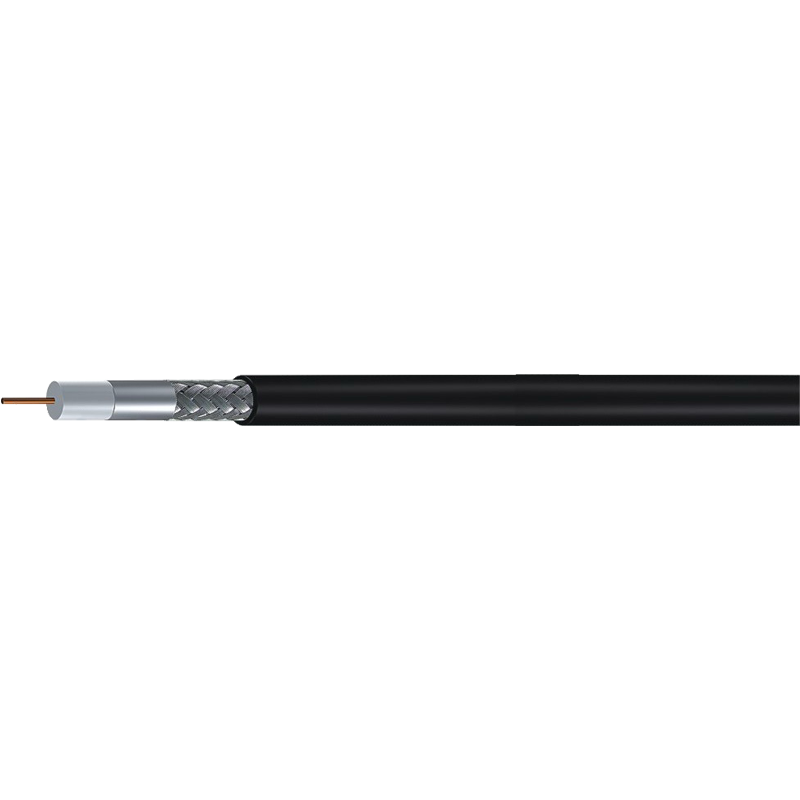
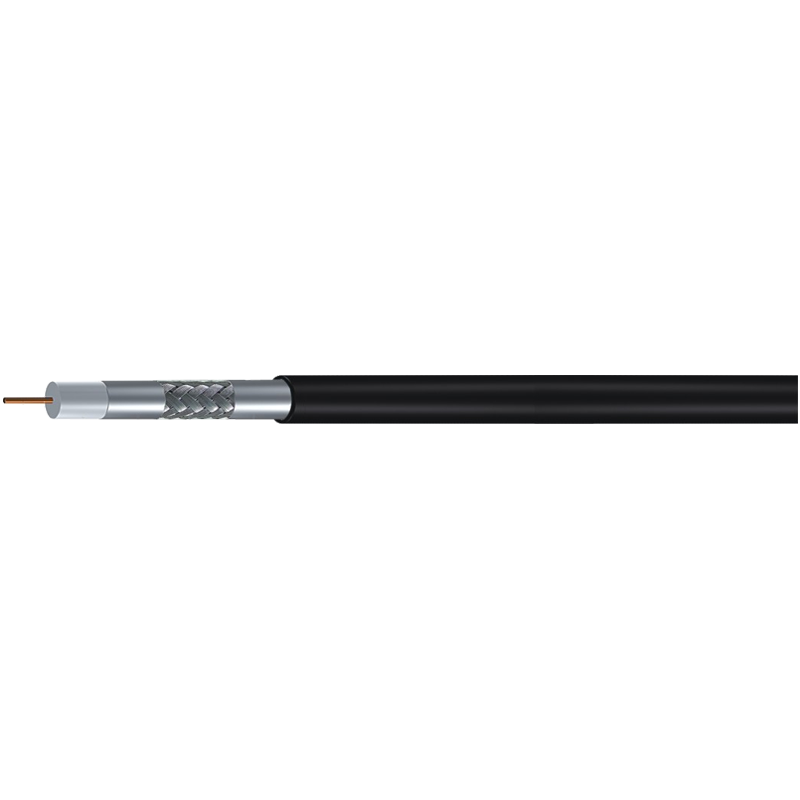
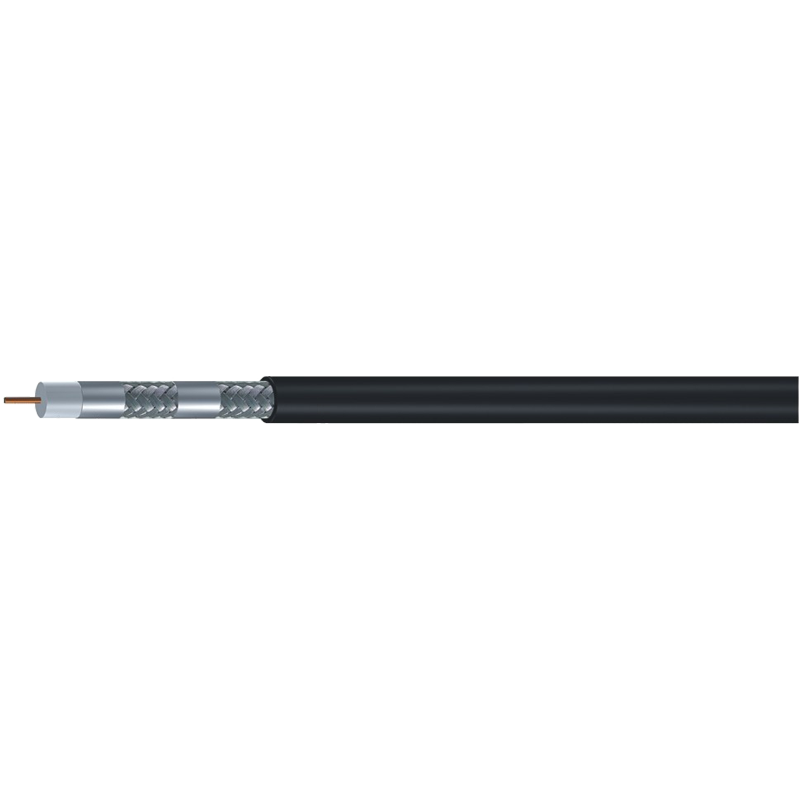
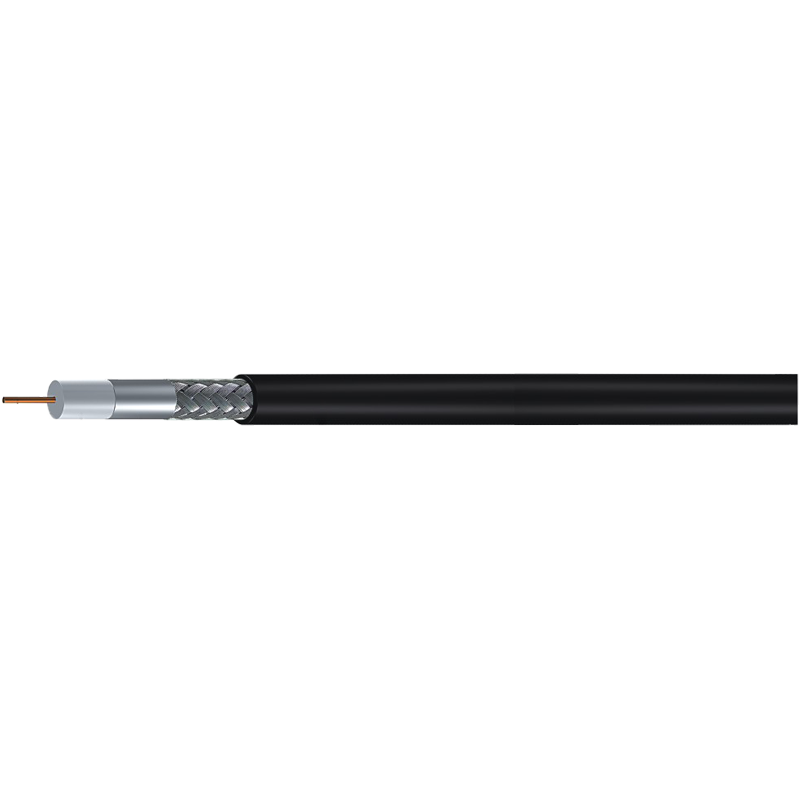
- Shielding architecture. Standard, tri-shield and quad-shield describe how many foil and braid layers sit over the dielectric.
- Jacket and mechanical build. Messenger wire, flooded compound, UV-rated jackets, or a composite construction with an integrated power leg.
When buyers compare quotations, they usually compare the first and third of those. The other two explain most of the price gaps that look suspicious at first glance. The full 75 ohm coaxial cable range we publish is organised along exactly these lines, so a model number already hints at where a cable sits.
Size Grades: RG59, RG6 and RG11
Size comes first because it sets the loss budget. Attenuation climbs with frequency, and larger conductors lose less of it per metre. Between them, the three RG sizes cover almost every 75 ohm job in the field.
| Grade | Center conductor | Nominal outside diameter | Typical loss at 1 GHz | Where it usually goes |
|---|---|---|---|---|
| RG59 | 20–22 AWG | about 6.1 mm | 11–13 dB | Short jumpers, racks, legacy CCTV, patch runs |
| RG6 | 18 AWG | about 6.9 mm | 7.5–8.5 dB | Satellite and CATV drops, set-top feeds, new CCTV work |
| RG11 | 14 AWG | about 10.3 mm | 5–6 dB | Long aerial and buried runs, taps, backbone segments |
RG59 still has a place, and it is a narrower place than it once occupied. Inside a rack, or on a patch run of ten or fifteen metres, the extra loss is irrelevant and the smaller bend radius is genuinely useful in a crowded cabinet. Push the same cable out to a rooftop dish and the arithmetic stops being kind.
RG6 is the default for good reason. An 18 AWG conductor with a foamed dielectric gives a workable loss figure at satellite intermediate frequencies while remaining flexible enough for a technician to dress neatly behind a wall plate. Most residential and light commercial work ends here.
RG11 is where the numbers change character. A 14 AWG solid conductor roughly halves the loss of RG59 over the same run, which matters when a tap has to reach the far end of a property. The trade-off is stiffness, a bend radius that punishes careless handling, and the need for a larger clip or hanger across every metre of the run.
Shield Grades: Standard, Tri-Shield and Quad-Shield
Shielding has two jobs: keep the wanted signal inside the cable, and keep everything else out. In a quiet rural location a single foil and braid is enough. On a rooftop with a base station three hundred metres away, it very often is not.
| Grade | Layer build | Typical braid coverage | Best fit |
|---|---|---|---|
| Standard shield | One foil plus one braid | 60–67% | Indoor drops, short runs, low RF pressure |
| Tri-shield | Foil, braid, foil | 60–80% | General CATV and satellite, dense residential |
| Quad-shield | Foil, braid, foil, braid | Around 60% plus 40% | Urban and industrial sites, long drops, LTE-adjacent installs |
We wrote a closer look at standard-shield 75 ohm coaxial cable for readers who want to see exactly where the simplest grade stops being the right answer. The short version is that standard shield is a sound engineering choice as long as the installer knows the RF environment is quiet.
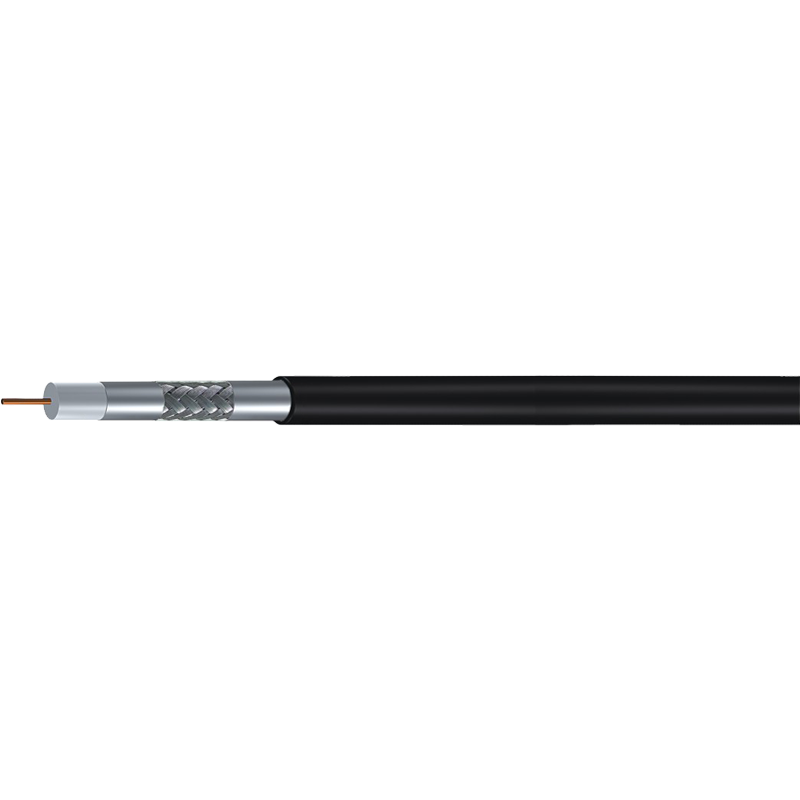
Tri-shield is the compromise most projects land on. The second foil layer closes the small gaps a single braid leaves open, and the cable stays close enough in diameter to work with standard connectors.
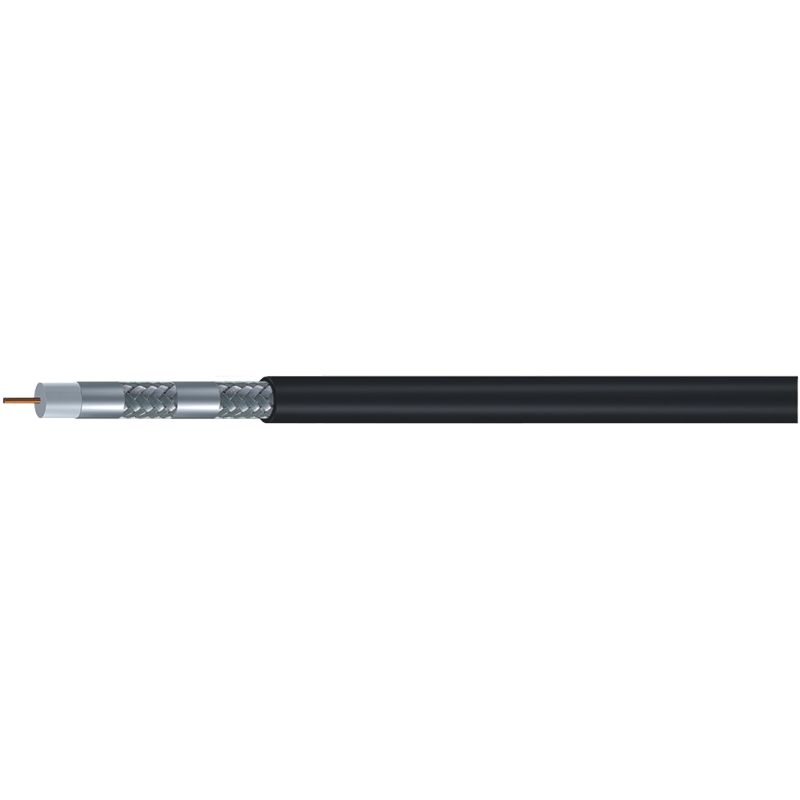
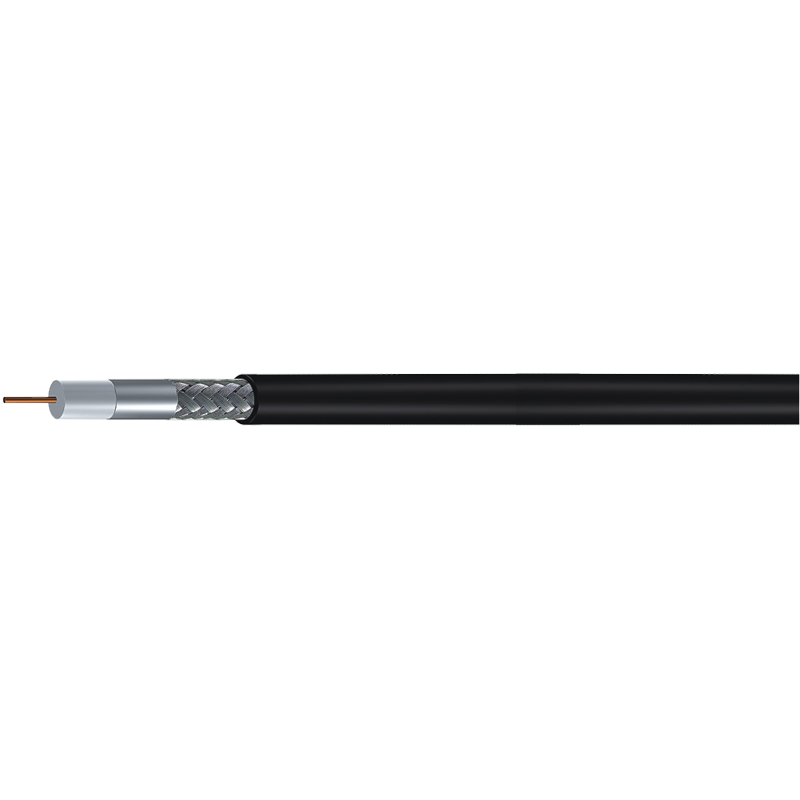
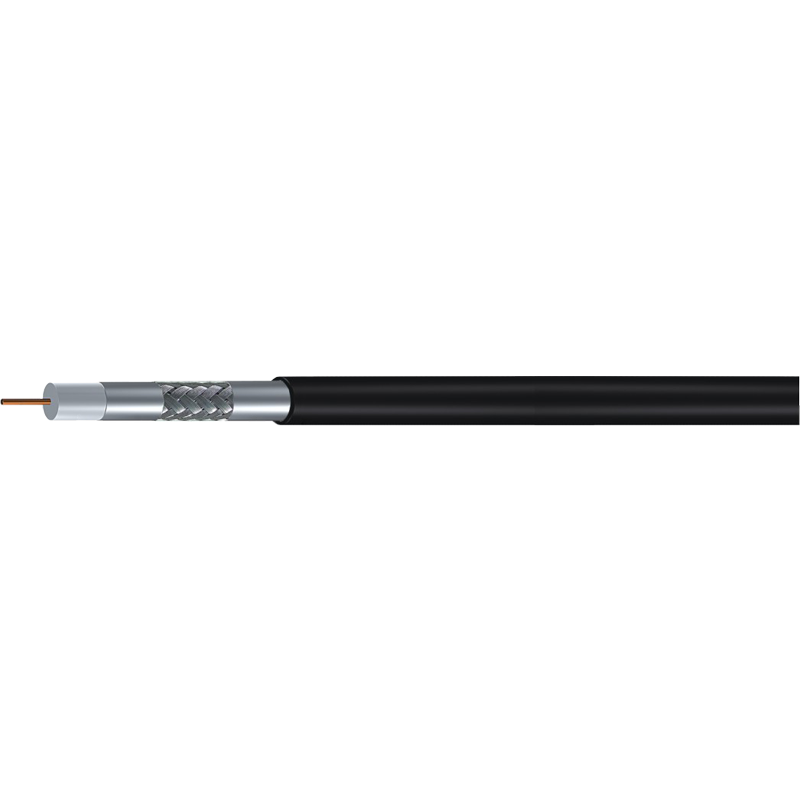 RG6 Tri-Shield 75 Ohm Coaxial CableRG6 tri-shield coaxial cable combines two foil layers and a braid for 75-ohm distribution, with standard-size construction that suits connector-compatible satellite, CATV and CCTV runs.View Product →
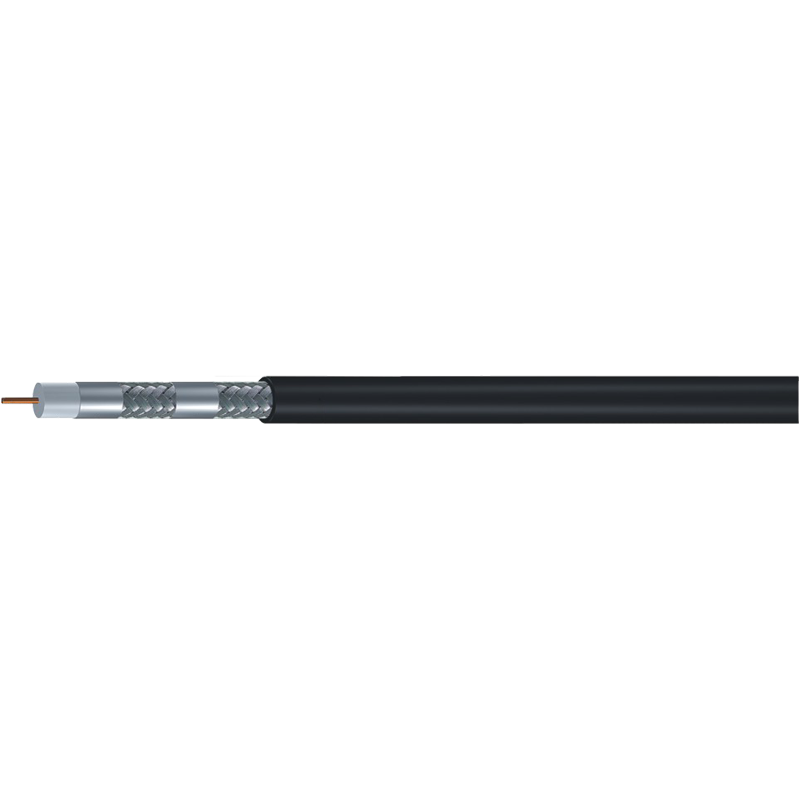
Quad-shield goes further, and it earns that cost in specific places: apartment blocks where dozens of drops share a riser, industrial sites with inverters and drives nearby, and anywhere the drop cable runs parallel to a mobile band for a long distance. It is also stiffer and slightly larger, so connector selection needs a second look before the first connector is crimped.
Most of the "bad cable" we are asked to investigate turns out to be a grade mismatch that only announced itself once the mobile network in the area was upgraded.
Construction Grades: Messenger, Powered and Environmental
Two cables can share an identical electrical grade and still not be interchangeable, because the mechanical build is a grade of its own.
Messenger versions
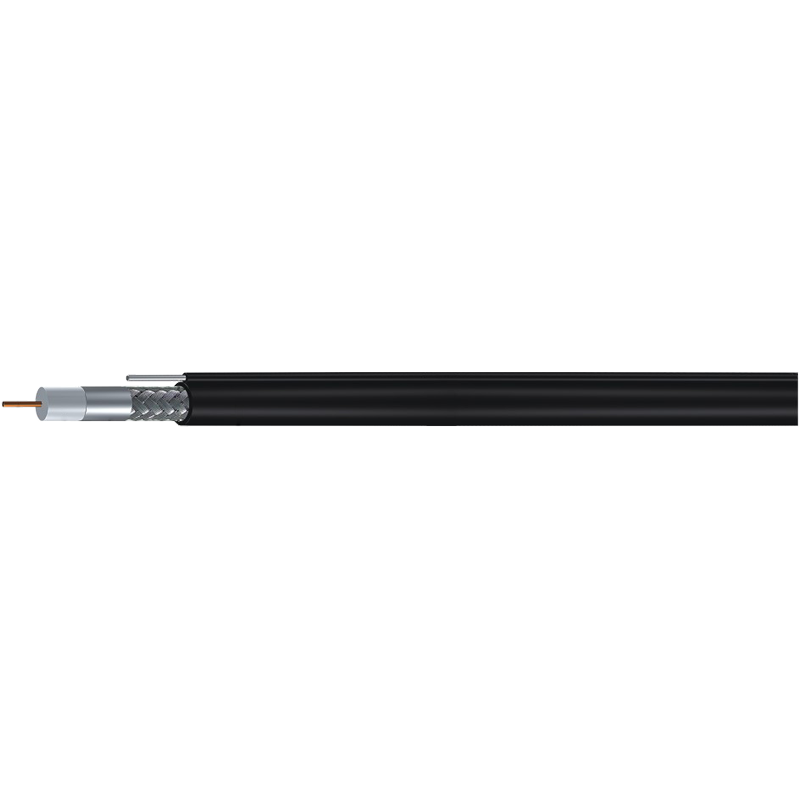
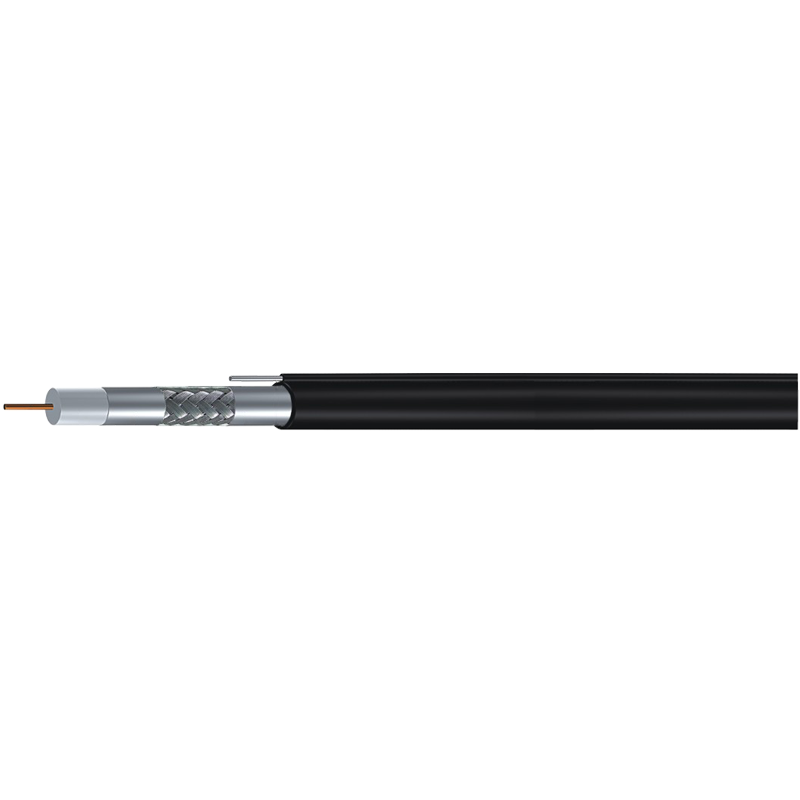
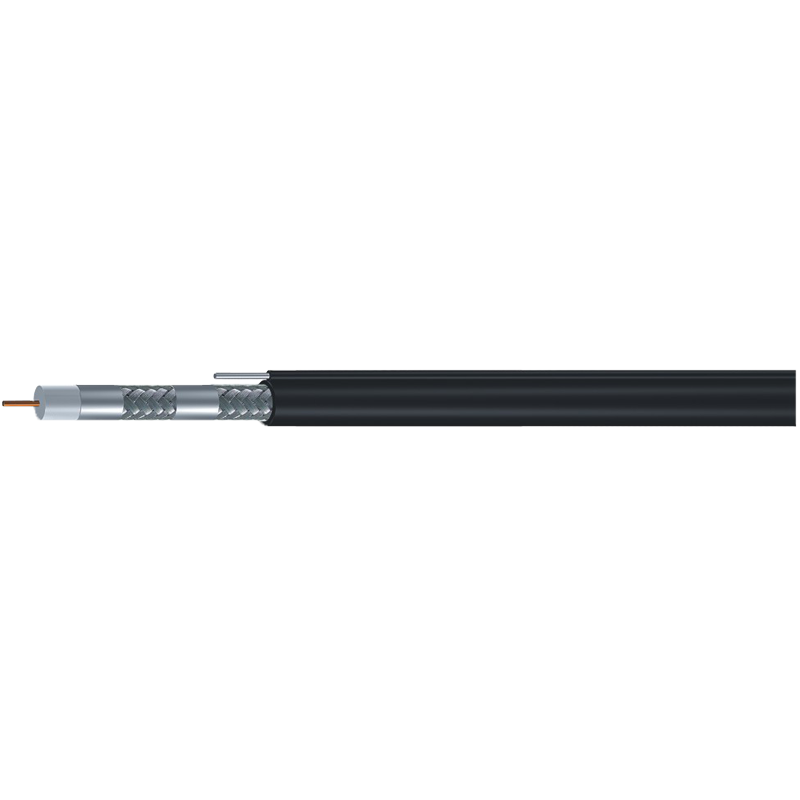
An integrated messenger wire carries the span tension so the coaxial element never does. That matters more than it sounds: a coax under its own tension slowly changes geometry, and a changed geometry is a changed impedance. Messenger versions also keep the drop away from tree contact and roof edges, which is where most physical damage begins. Our RG6 and RG11 lines both offer messenger variants across standard, tri-shield and quad-shield builds.
 RG11 Quad-Shield Coaxial Cable With MessengerRG11 quad-shield coaxial cable with integrated messenger wire supports aerial spans while preserving 75-ohm geometry for satellite, CATV and broadband distribution.View Product →
Composite and powered coax
CCTV projects often need video and a low-voltage supply at the same camera. A composite construction puts both in one jacket, which means one pull, one clip spacing, and one schedule line instead of two. The electrical performance of the coaxial element is unchanged; the benefit is entirely in the installation.
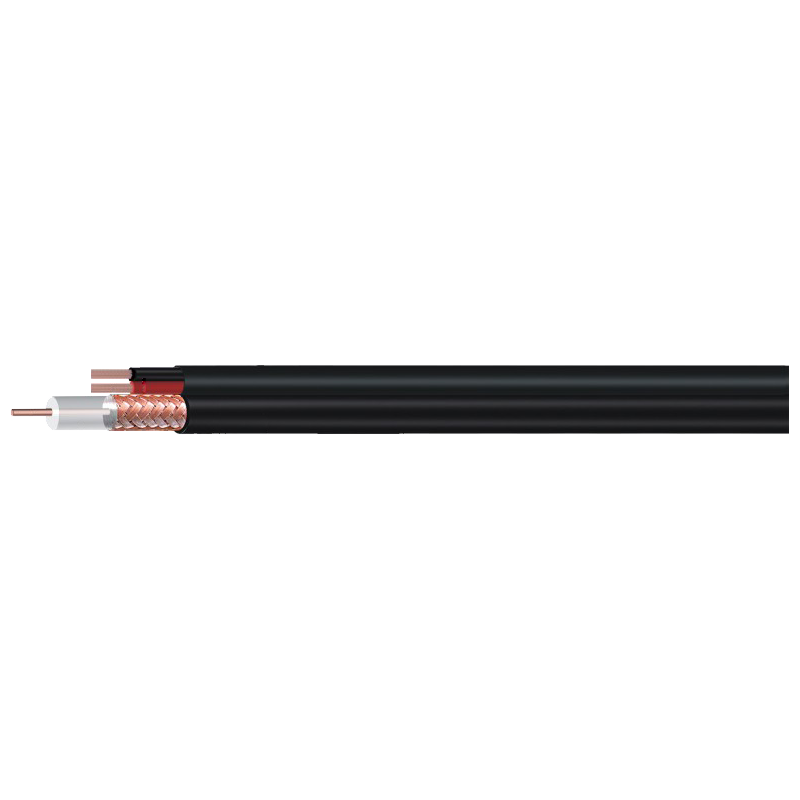 RG59 CCTV Coaxial Cable With Integrated PowerRG59 coaxial cable with integrated power conductors combines CCTV video and low-voltage supply in one jacket, simplifying camera pulls and clip spacing.View Product →
Jacket grade
UV resistance for exposed runs, flooded compound for direct burial, and the fire-performance class the destination market demands. Jacket grade is easy to overlook during a price comparison and expensive to correct after the drum has been delivered.
Beyond RG: Distribution and Trunk Grades
Above the RG family sit the distribution and trunk classes. Models such as S4CFB, S5CFB and S7CFB, along with the 17 series, are built for distribution work rather than in-home drops, and they are normally specified by the project drawings rather than chosen at the counter. Our 500 and 540 trunk series follow the same logic, with and without messenger, for mainline and headend plant where the loss budget is measured in decibels over hundreds of metres.
If a design calls for one of these, the drawings will carry the loss, screening and impedance targets, and the manufacturer builds to that specification. Guessing at this level is not a sensible shortcut.
Matching a Grade to the Job
In practice we walk through the same six questions with every project, in this order:
- Confirm that 75 ohm is correct for the whole chain, connectors and splitters included.
- Measure the longest run and set a loss budget at the highest frequency the system will actually carry.
- Select the size class, RG59, RG6 or RG11, against that budget.
- Select the shield grade against the RF environment at the installation site, not the average of the region.
- Select the mechanical build: messenger, flooded, composite power, or plain.
- Confirm the certification the destination market requires before the order is placed.
Note
Impedance is a property of the whole chain. A 75 ohm cable joined to a 50 ohm connector, or split by a mismatched splitter, will show reflections that no amount of extra shielding can repair. Check the small parts before blaming the drum.
Mistakes We See Most Often
Watch out
Grade selection is usually lost in the last ten percent of a specification, and that is exactly where the warranty claims come from.
- Buying on shield count alone. Quad-shield on a short indoor drop adds cost and stiffness without adding picture quality.
- Ignoring bend radius. RG11 kinked behind a wall plate performs worse than RG6 installed properly.
- Mismatched connectors. Crimping a standard connector onto a quad-shield cable produces a joint that tests fine at handover and fails a year later.
- Skipping the loss budget. A "working" installation at 400 MHz may be unusable once the service moves to higher frequencies.
- Leaving certification to the last minute. Compliance documents are much easier to obtain before production than after shipment.
Choosing With Confidence
Comparing 75 ohm grades comes down to separating four decisions that are often bundled into one catalogue page: how big the conductor is, how the dielectric was made, how many layers of foil and braid protect the signal, and how the cable will be carried and protected outdoors. Once those are on the table, the model number usually picks itself.
Our own position is straightforward. We manufacture across all of these grades, so we have no reason to steer a project toward the heaviest build available. The right grade is the one that meets the loss budget and the environment, and no more than that.
Good practice
Ask for the construction drawing and the attenuation table for the exact model, not the family. Two drums labelled RG6 can differ in braid coverage, dielectric type and jacket compound, and those differences are what the site will actually experience.
If it helps, browse the range by grade and compare the drawings side by side before the specification is locked. That single step prevents most of the conversations we would rather not have after commissioning.