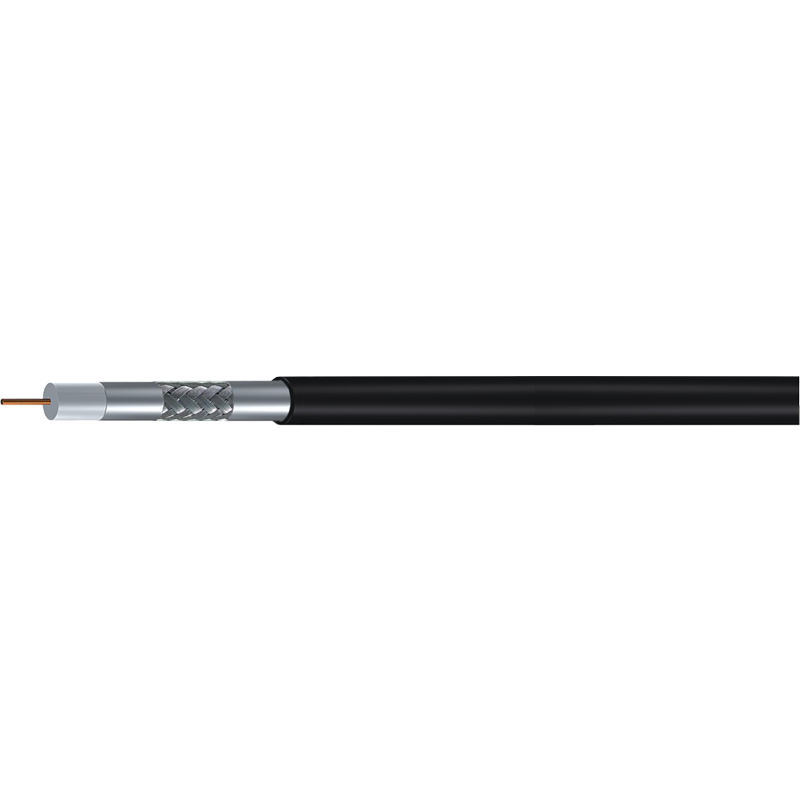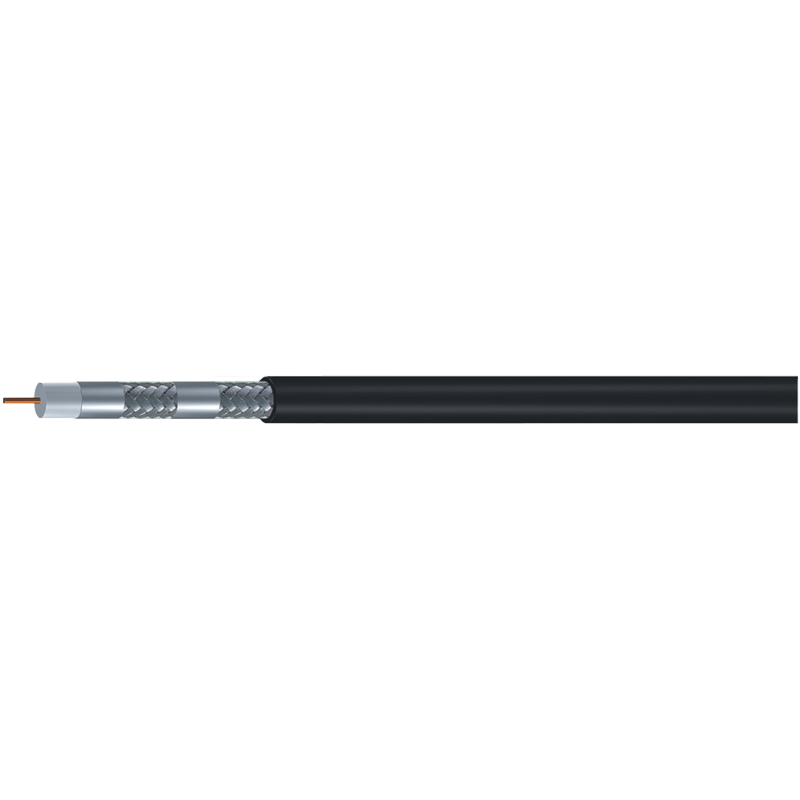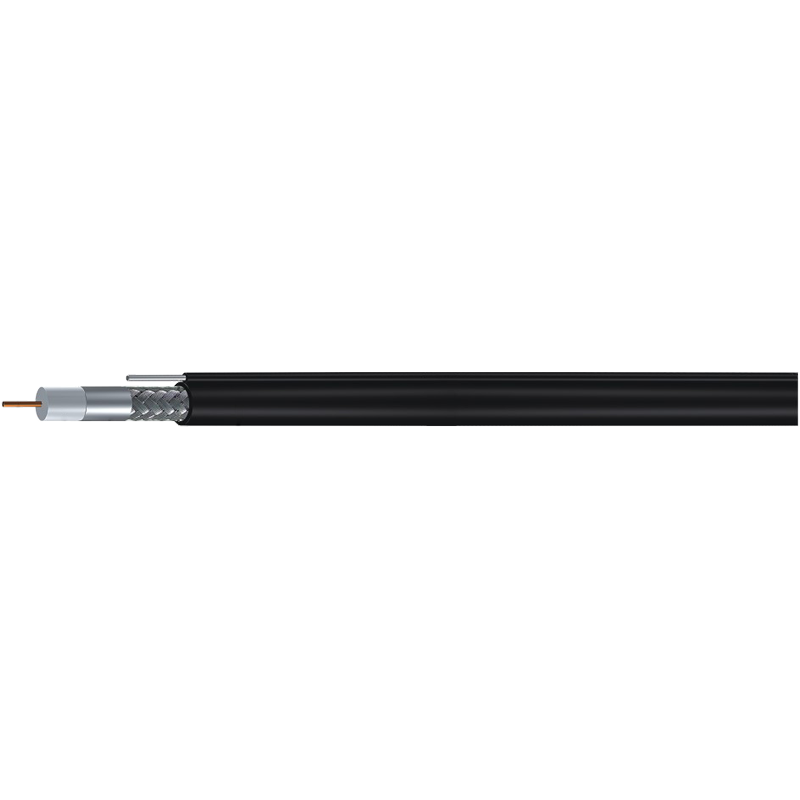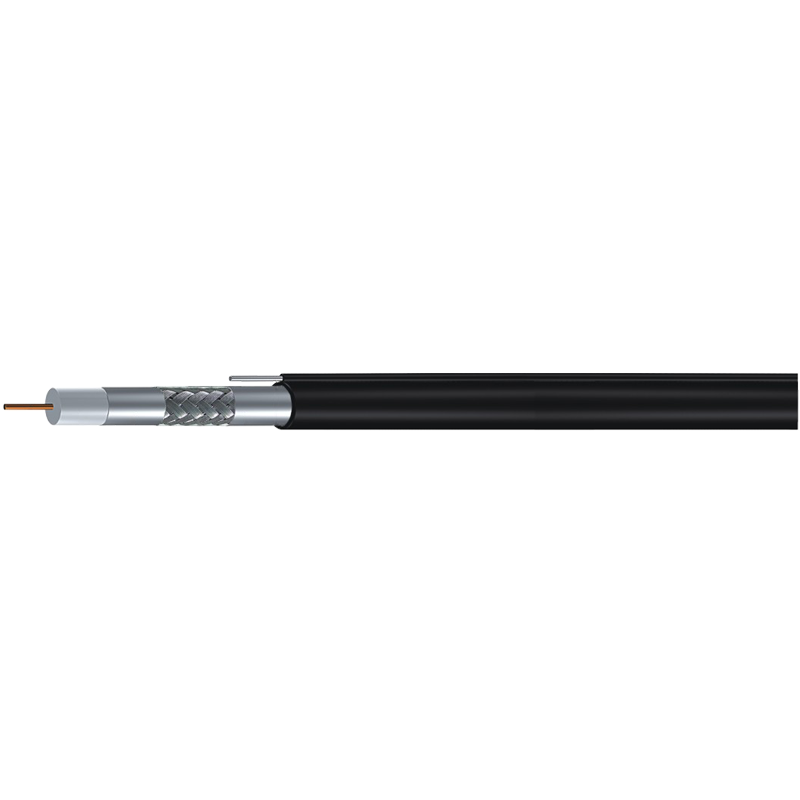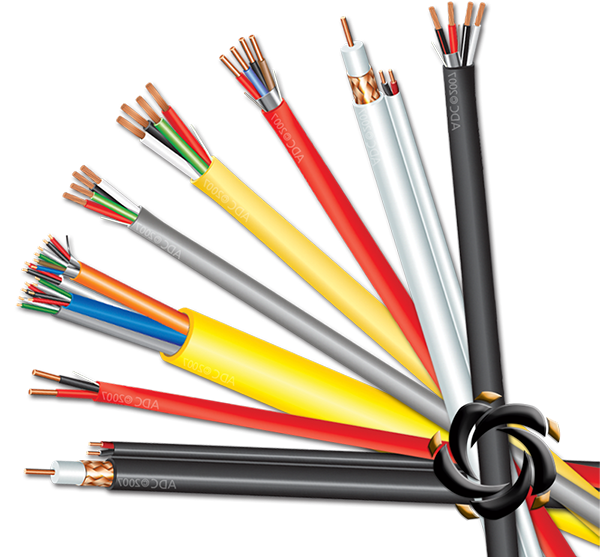
Choosing a 50 ohm coaxial cable is rarely a one-size-fits-all decision. A technician running a 40-meter feed line from a radio to a rooftop antenna faces different constraints than an engineer wiring a short jumper inside a compact LTE module. Both systems rely on 50 ohm impedance, yet the ideal cable for one job is almost certainly wrong for the other. This guide covers the most common 50 ohm coaxial cable types, what the impedance rating really means, and how to match a cable to your specific run length, frequency, and power requirements.
What 50 Ohm Impedance Means and Why It Matters
The 50 ohm figure printed on a cable jacket refers to characteristic impedance, not DC resistance. A multimeter will not measure it correctly, and continuity alone will not tell you whether the cable suits your system. Characteristic impedance is determined by the ratio of the inner conductor diameter, the dielectric material, and the shield geometry. When the cable impedance matches the source and load, power transfers cleanly and reflections stay low. A mismatch creates return loss, which degrades signal quality and can stress a transmitter.
Fifty ohms became the RF standard for a practical reason: it offers a compromise between lower loss and higher power handling. Cables with lower impedance such as 25 ohm versions can handle more power for a given diameter, while higher impedance like 75 ohm versions have lower attenuation. The 50 ohm point balances these factors well enough for radios, Wi-Fi, GPS, cellular and test equipment, so nearly all RF gear is designed around it. For a deeper explanation, see this guide on how 50 ohm coaxial cable works.
Common 50 Ohm Coaxial Cable Types
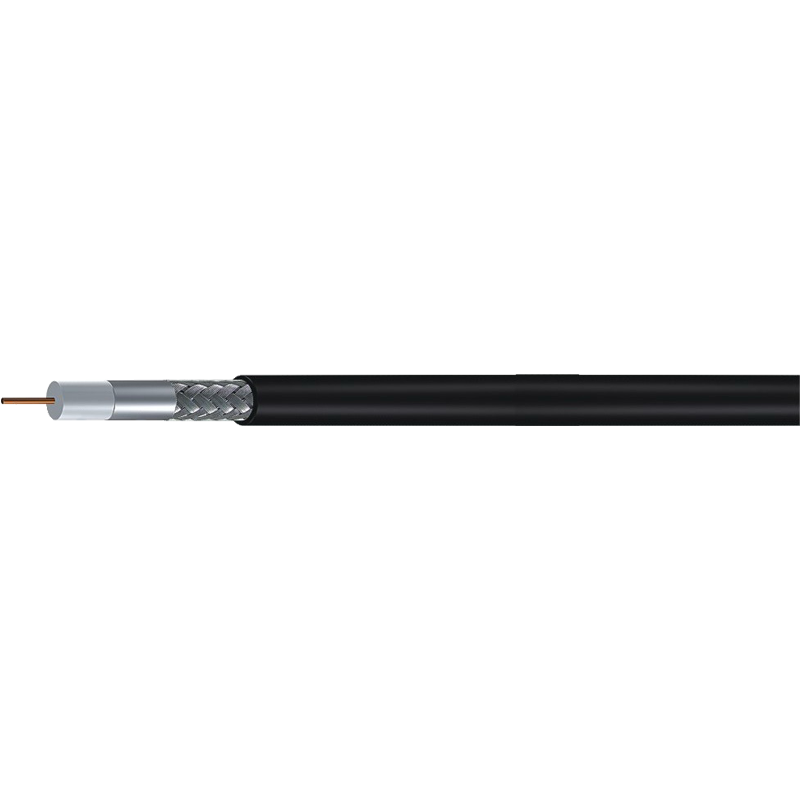
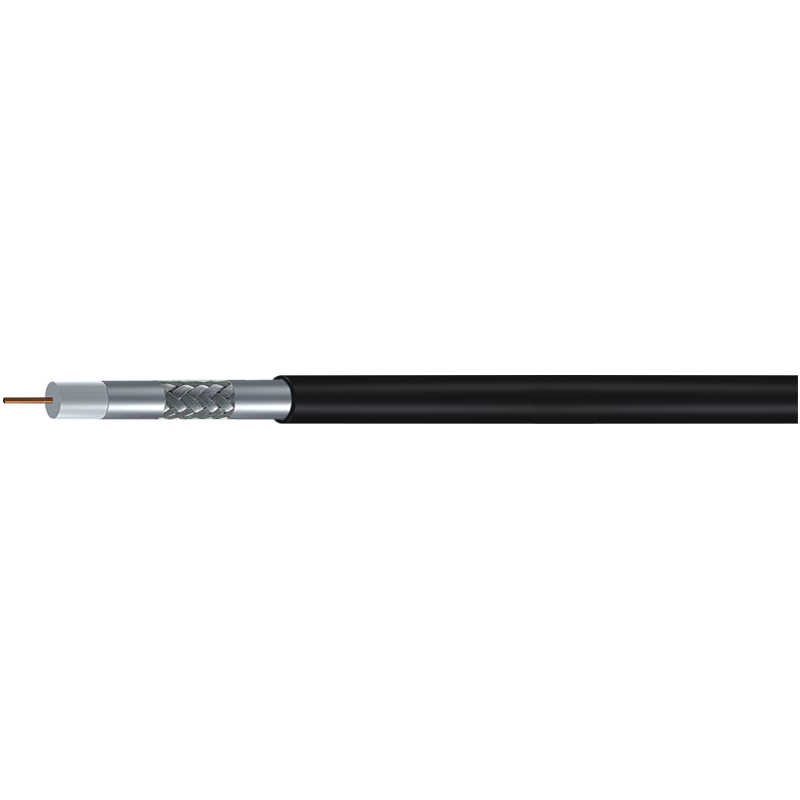
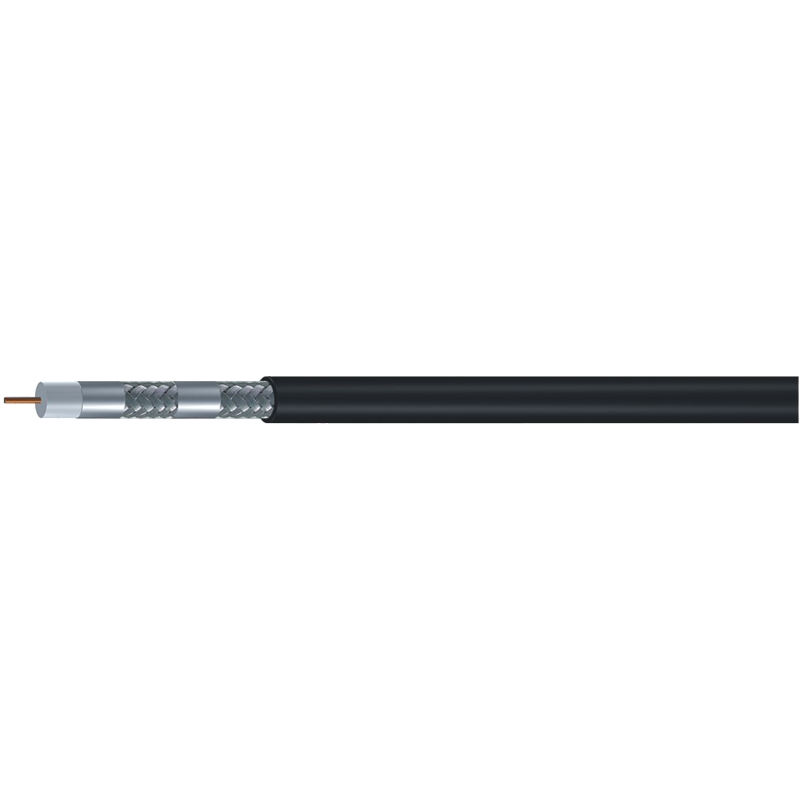
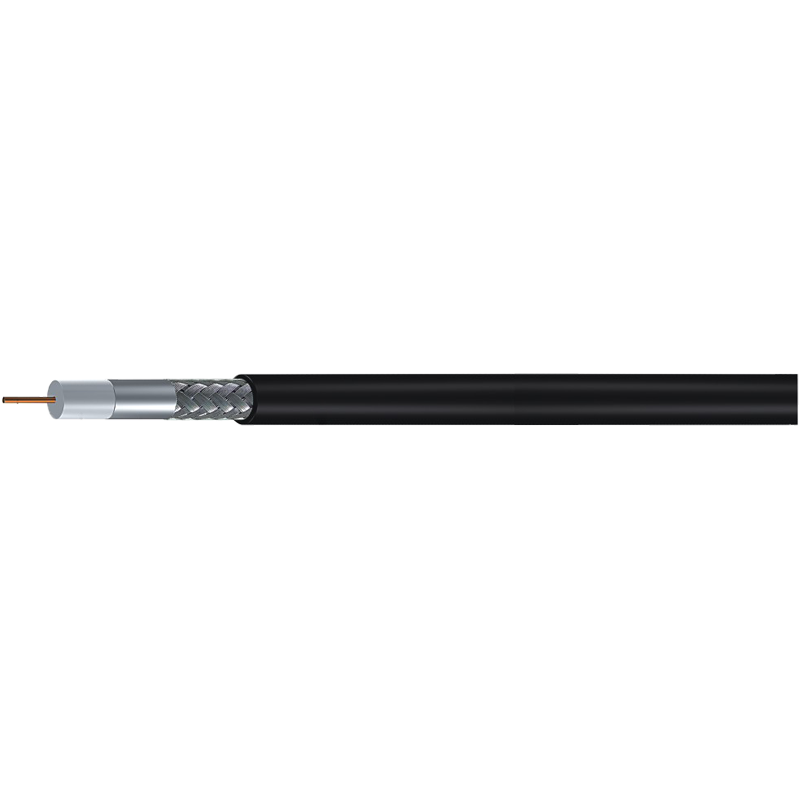
Manufacturers produce dozens of 50 ohm cables, but most of them fall into a few families. The RG series names such as RG58 and RG213 come from military standards and remain widely used for compatible cable. Low-loss types like LMR200, LMR400, and the DFB series use foam dielectric to improve performance. The table below compares the key types.
RG174 — Miniature Jumper Cable
RG174 is one of the thinnest common 50 ohm cables, with an outer diameter around 2.8 mm. It is easy to route inside crowded enclosures and is often used for short jumper cables between RF modules and test equipment. Its small center conductor and thin dielectric lead to high attenuation, typically more than 0.3 dB per metre at 1 GHz, so it should only be used for short runs of a metre or two. Keep RG174 for low power receive-only connections and avoid it for transmit feeders above a few hundred milliwatts.
RG58 — General Purpose Workhorse
RG58 is probably the most widely used small-diameter 50 ohm cable. At around 5 mm outer diameter, it provides a reasonable balance of flexibility, cost, and performance. At 100 MHz, attenuation is roughly 5 to 6 dB per 100 metres, but at 2.4 GHz the loss rises steeply, so RG58 is best suited to runs under 5 metres at microwave frequencies. It is common in amateur radio jumpers, short antenna feeds, and laboratory patch cords. For most of these applications, an RG58 50 ohm coaxial cable is a safe and economical choice.
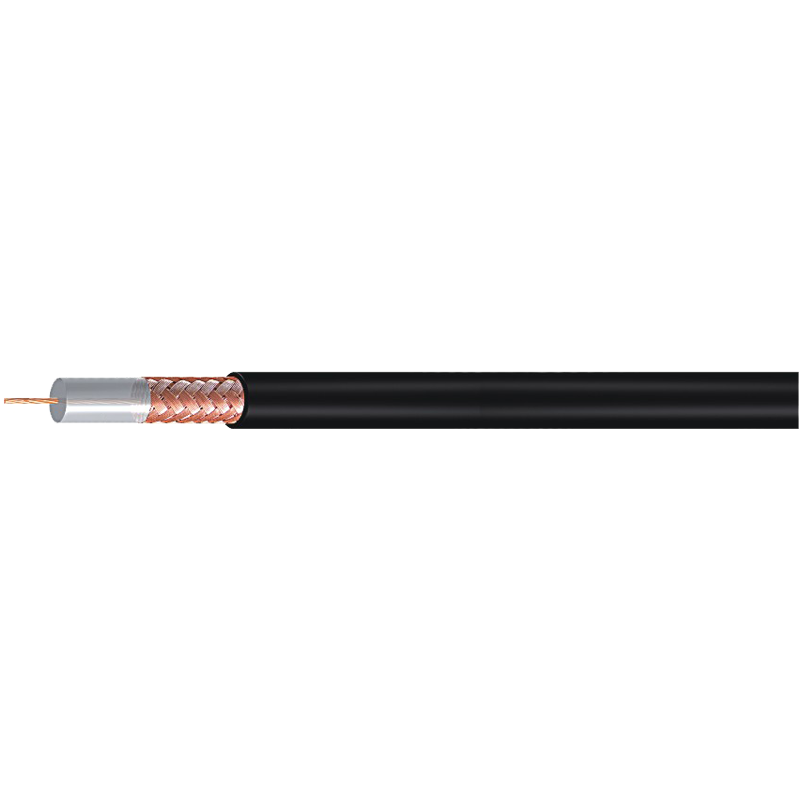 RG58 50 Ohm Low Loss Flexible Coaxial Cable Manufacturers, OEM/ODM Factory - ZhZhejiang CommSpace Cable Co., Ltd is China Custom RG58 50 Ohm Low Loss Flexible Coaxial Cable Manufacturers and OEM/ODM Factory, The bet...View Product →
RG213 — Larger Cable, Lower Loss, Higher Power
RG213 steps up to an outer diameter of about 10.3 mm. It uses a solid polyethylene dielectric and a braided copper shield, which lowers attenuation and increases power handling compared with RG58. Expect roughly 2.8 dB per 100 metres at 100 MHz, and significantly better performance on HF bands. RG213 is a favoured cable for amateur radio base stations, marine radio installations, and low-VSWR transmit systems. The stiff jacket makes it harder to route indoors, and the thick construction is difficult to bend around tight corners.
LMR200 and LMR400 — Low Loss Flexible Alternatives
LMR-style cables are designed as direct upgrades for RG series cables. They combine a foam polyethylene dielectric, a solid or stranded aluminum-copper center conductor, and a laminated outer shield to achieve much lower loss than conventional RG cables of similar diameter. LMR200 is close in size to RG58 but offers about 30 to 40 percent less attenuation. LMR400, with a diameter around 10.3 mm, approaches the loss of RG213 at a fraction of the minimum bend radius. For a long outdoor feed line, an LMR400 low-loss flexible cable is a practical upgrade that simplifies pulling through conduit and routing around antennas.
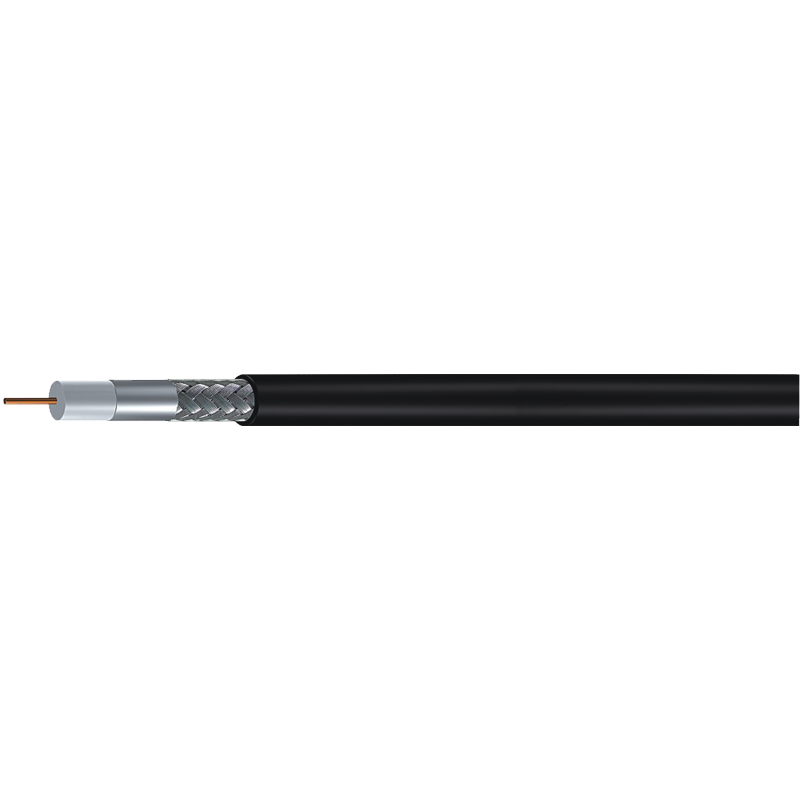 LMR400 50 Ohm High Frequency Low Loss Flexible Coaxial Cable Manufacturers, OEMZhejiang CommSpace Cable Co., Ltd is China Custom LMR400 50 Ohm High Frequency Low Loss Flexible Coaxial Cable Manufacturers and OEM/ODM...View Product →
DFB Series — Foam Dielectric Low-Loss Cables
The DFB series includes 4DFB, 5DFB, 7DFB, 8DFB, 10DFB, and 12DFB. The number indicates the approximate outer diameter in millimetres, so the series spans compact indoor cables to thick main feeders. These cables use physical foamed polyethylene dielectric, which preserves a high velocity factor and reduces attenuation. The braided and foil shields provide good EMI rejection for base station feeder runs and other permanent RF links. A 10DFB low-loss RF coaxial cable is often used for runs of 30 metres or more at frequencies up to several gigahertz.
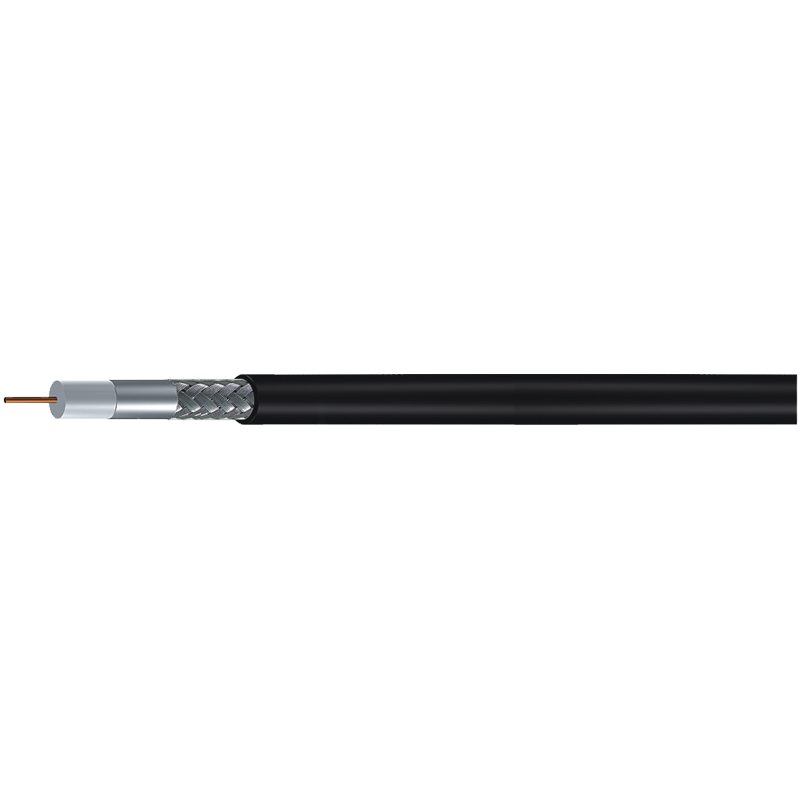 10D-FB 50 Ohm Low Loss RF Coaxial Cable Manufacturers, OEM/ODM Factory - ZhejiaZhejiang CommSpace Cable Co., Ltd is China Custom 10D-FB 50 Ohm Low Loss RF Coaxial Cable Manufacturers and OEM/ODM Factory, Physical Co...View Product →
| Type | Outer Diameter | Relative Loss | Flexibility | Common Uses |
|---|---|---|---|---|
| RG174 | 2.8 mm | High | Very flexible | Short jumpers, internal wiring |
| RG58 | 5 mm | Medium-high | Flexible | Short feed lines, test leads |
| RG213 | 10.3 mm | Low-medium | Stiff | Higher power, longer runs |
| LMR200 | 4.9 mm | Medium | Flexible | Jumpers, short outdoor runs |
| LMR400 | 10.3 mm | Low | Moderately flexible | Long feed lines, base stations |
| 4DFB | 4 mm | Medium | Flexible | Short RF links |
| 5DFB | 5 mm | Medium | Flexible | Indoor and short outdoor runs |
| 7DFB | 7 mm | Low-medium | Moderately flexible | Feeder runs |
| 8DFB | 8 mm | Low | Stiff | Base station feeders |
| 10DFB | 10 mm | Low | Stiff | Long feeders, high-performance links |
| 12DFB | 12 mm | Very low | Stiff | Main feeders, high power |
How to Choose the Right 50 Ohm Cable
Match Cable Diameter to Run Length and Operating Frequency
The first thing to calculate is your loss budget. Attenuation in coaxial cable scales with length and frequency. If you are operating below 1 GHz with runs under 10 metres, RG58 is usually good enough. At 2.4 GHz or 5 GHz, even a 5-metre run benefits from a low-loss cable such as LMR200 or 7DFB. For runs longer than 30 metres, RG213, LMR400, or 10DFB keep the loss within a tolerable range. Always check the attenuation figure per metre at your actual operating frequency rather than the convenient 100 MHz number printed on some datasheets.
Confirm Power Handling
Transmit power determines how much current the center conductor and dielectric must carry without overheating. RG174 is fine for receivers and very low power transmitters, but it is not a safe choice for a 50 W radio. RG58 can handle moderate power at VHF, while RG213, LMR400 and the larger DFB cables handle higher power levels. In addition to average power, consider peak envelope power and the maximum voltage the cable can withstand under a high-VSWR condition. A mismatch can double or triple the voltage at the antenna end of the cable.
Evaluate Mechanical and Environmental Factors
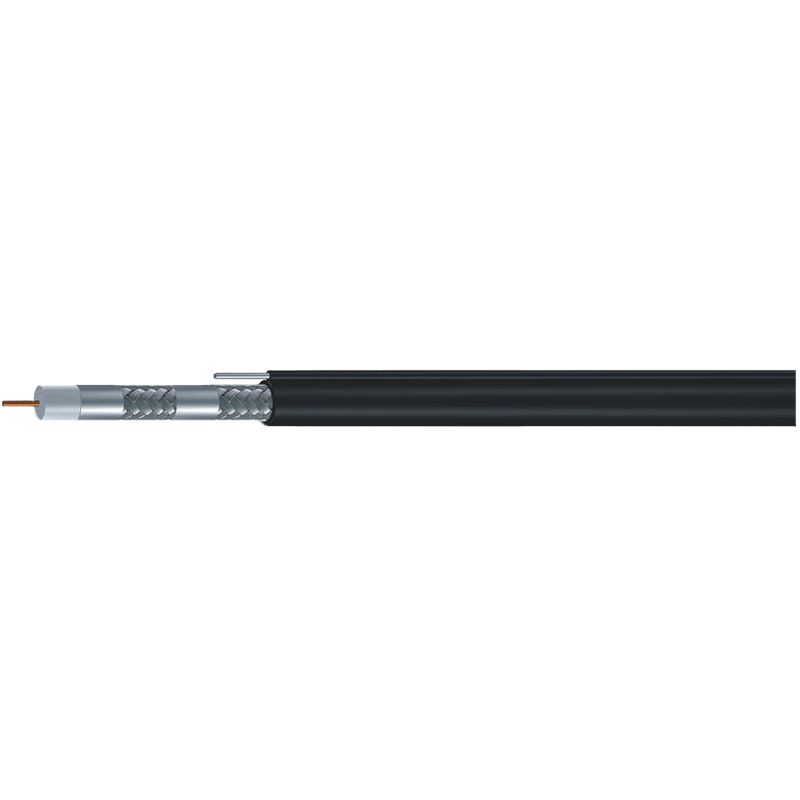
Mechanical constraints often decide between two electrically similar cables. For indoor jumpers that must bend around tight corners, RG174, LMR200, and 5DFB are easier to work with. For outdoor aerial runs, a UV-resistant jacket and a messenger wire that supports the cable weight are essential. If the cable will be repeatedly flexed, choose a stranded center conductor and check the manufacturer bend radius. For industrial installations, the 50 ohm coaxial cable product range includes both flexible and semi-rigid options that can be matched to your specific routing plan.
Plan Connectors and Installation
Connectors matter as much as the cable itself. N-type connectors are a good all-round choice for outdoor RF and base station work, SMA suits small modules and high-frequency test gear, and BNC is common for low-power lab connections up to 1 GHz. UHF connectors such as PL-259 are still used for HF and VHF, but their impedance is not strictly controlled, so avoid them above 300 MHz. When preparing the cable end, strip the dielectric without scoring the inner conductor, fold the braid evenly, and tighten the connector to the recommended torque. Finish outdoor connections with self-amalgamating tape and a UV-resistant outer wrap to keep moisture out of the dielectric.
Conclusion
There is no universal 50 ohm cable that suits every job. RG174 and RG58 cover short, low-cost indoor connections; RG213 and 10DFB step up for longer runs and higher power; LMR200 and LMR400 add flexibility and lower loss for demanding installations. Before ordering, write down your operating frequency, expected run length, transmit power, and routing constraints. Compare those numbers with the attenuation and power data for each cable, and verify that your connectors fit the cable diameter. That simple process will point you to the right 50 ohm coaxial cable type without guessing.